Sources tell CBS News that commanders rejected options to relocate the 103rd Sustainment Command to Saudi bases despite intelligence warning the Port of Shuaiba could be targeted. On March 1 an Iranian drone strike at Shuaiba killed six U.S. service members and wounded more than 20. Survivors and Gold Star families say the post lacked adequate fortifications and medical support. Lawmakers are pressing for public hearings while a completed Army probe has not been released.
Commander's Decision to Keep Troops at Port of Shuaiba Draws Scrutiny After Deadly Drone Strike
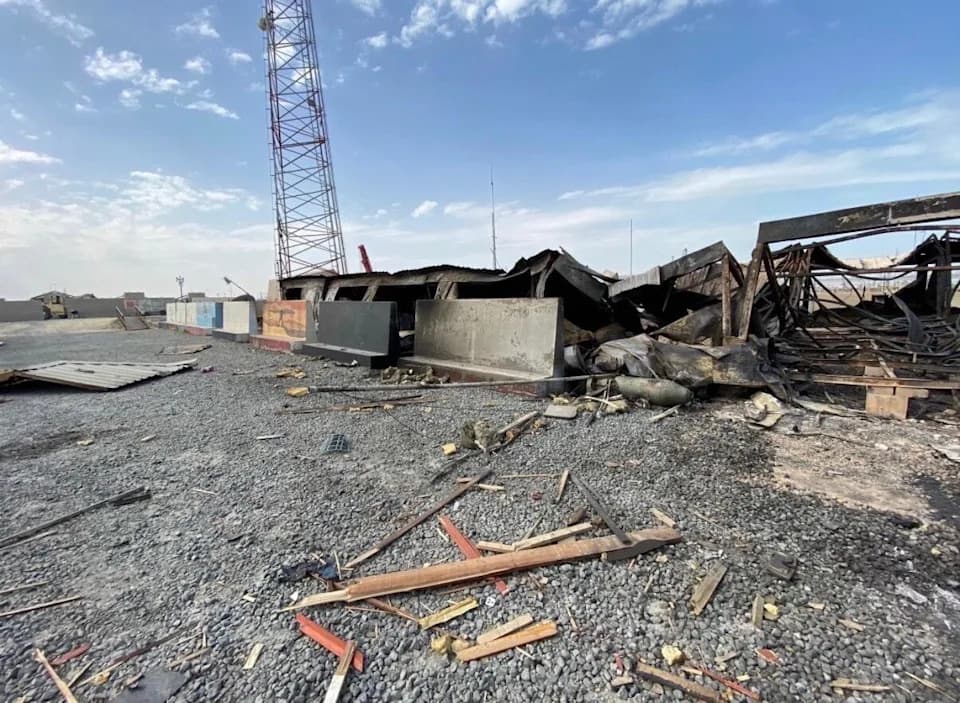
Photo obtained by CBS News shows damage from the Iranian drone attack that killed six U.S. service members in Kuwait on March 1, 2026.
Multiple sources told CBS News that dozens of U.S. service members struck by Iranian drones at a small Kuwaiti port could have been moved to safer sites in western Saudi Arabia, but the unit’s commanding general rejected those relocation plans despite intelligence warnings that the post was a potential target.
What Happened
About a week before Operation Epic Fury began, most U.S. soldiers and Air Force personnel based in Kuwait were repositioned to Jordan and Saudi Arabia to move them beyond reported Iranian missile range. The 103rd Sustainment Command — an Army Reserve unit responsible for CENTCOM logistics — scouted at least two alternative postings: Logistical Support Area (LSA) Jenkins near Yanbu and Prince Sultan Air Force Base (PSAB) southeast of Riyadh.
Decision To Move To Port Of Shuaiba
Sources say Brig. Gen. Clint Barnes favored a different option: mirroring the previous unit’s temporary redeployment to the Port of Shuaiba during the 12-day conflict between Israel and Iran the prior July. Army intelligence briefed Barnes in January that Shuaiba was a potential target, yet the 103rd was moved there in the days before Operation Epic Fury.
"Shuaiba was the easy button," one service member told CBS News.
Casualties, Survivors' Accounts And Allegations
On March 1, an Iranian drone strike at Port of Shuaiba killed six U.S. service members and wounded more than 20. Survivors and Gold Star families have sharply criticized leadership decisions and site preparations. They say the post lacked robust fortifications, medical personnel, a fixed aid station and adequate evacuation resources. Witnesses described improvised triage, use of makeshift bandages and civilian vehicles to carry wounded to Kuwaiti hospitals.
Jim and Stacey Khork, the parents of Maj. Cody Khork — one of the unit’s force-protection officers killed in the strike — told CBS News their son repeatedly warned leadership about the site’s vulnerability. "My son died unnecessarily," Stacey Khork said. Other survivors have similarly faulted senior leaders for failing to act on warnings and requests for resources.
Official Responses And Investigation
The Pentagon has pushed back on claims the Army downplayed the incident. A Pentagon spokesperson said in March that "every possible measure has been taken to safeguard our troops" and described the facility as fortified. U.S. Army Central and Third Army ordered a Pentagon probe "to determine the facts and circumstances" of the Port of Shuaiba attack. An Army spokesperson told families and reporters this month that the internal investigation concluded in early July but has not been publicly released.
Congressional Reaction
More than 20 congressional Democrats from both chambers have urged the House and Senate Armed Services Committees to hold public hearings into the strike and the decisions that preceded it. In a new letter to committee chairmen, lawmakers urged that Congress seek answers about preparedness, medical care for the wounded and the Pentagon's handling of survivors and families.
Broader Context
Prince Sultan Air Force Base — one of the relocation options the 103rd considered — was also reportedly struck by Iranian fire around the same period; images obtained by CBS News showed damage to a large Air Force aircraft there, though no U.S. deaths were reported from those hits. Separately, the Senate recently rejected a resolution that would have limited the president’s authority to use force against Iran without new congressional authorization.
The Army and Brig. Gen. Barnes did not respond to requests for comment for this report. Survivors, families and some lawmakers continue to press for transparency, release of the Army investigation and public hearings into what many describe as preventable failures.
Help us improve.