The Guna people of Panama are debating a proposal that would bring an underwater power connection and a two‑lane highway through their territory, potentially linking Gunayala to the Pan‑American Highway and benefiting more than 20,000 residents. Supporters cite urgently needed access to schools and services; opponents warn of threats to sacred sites, wildlife and the Darién Gap. Local authorities have launched consultation processes, and many Guna insist any development must remain under Guna control.
Guna Community Weighs Trade-Off: Undersea Power Link and Highway Could Open Remote Lands
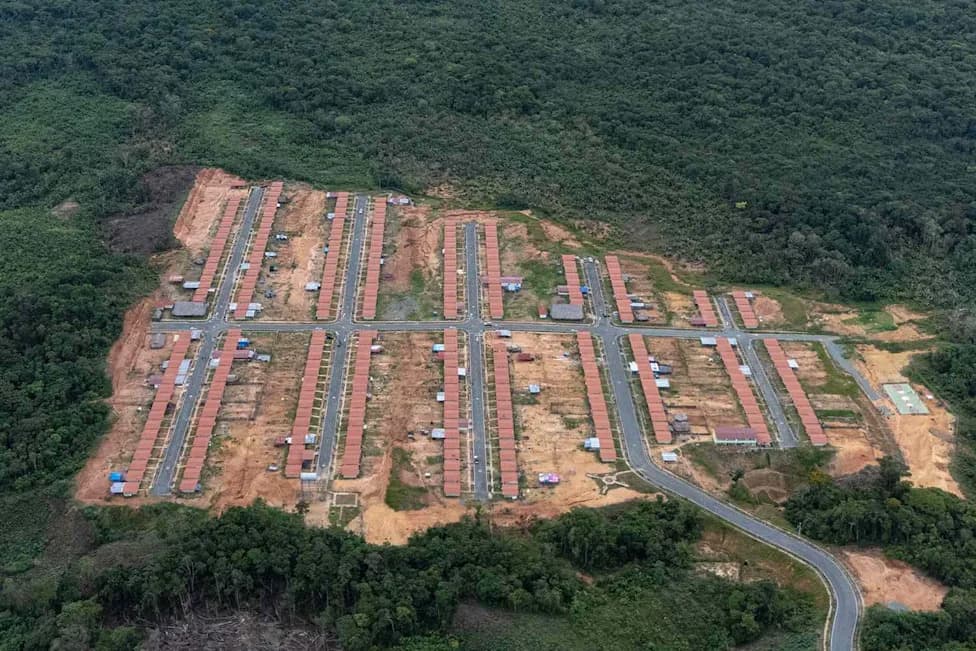
A view of a newly-built neighborhood in Gunayala, Panama in May 2025.Credit: MARTIN BERNETTI/AFP via Getty
An isolated indigenous society in Panama, the Guna, is debating whether to allow a large infrastructure project that would bring an underwater power connection—and a two‑lane highway—through their territory. The proposal has stirred a tense debate over sovereignty, development and environmental protection in one of the world’s most intact rainforests.
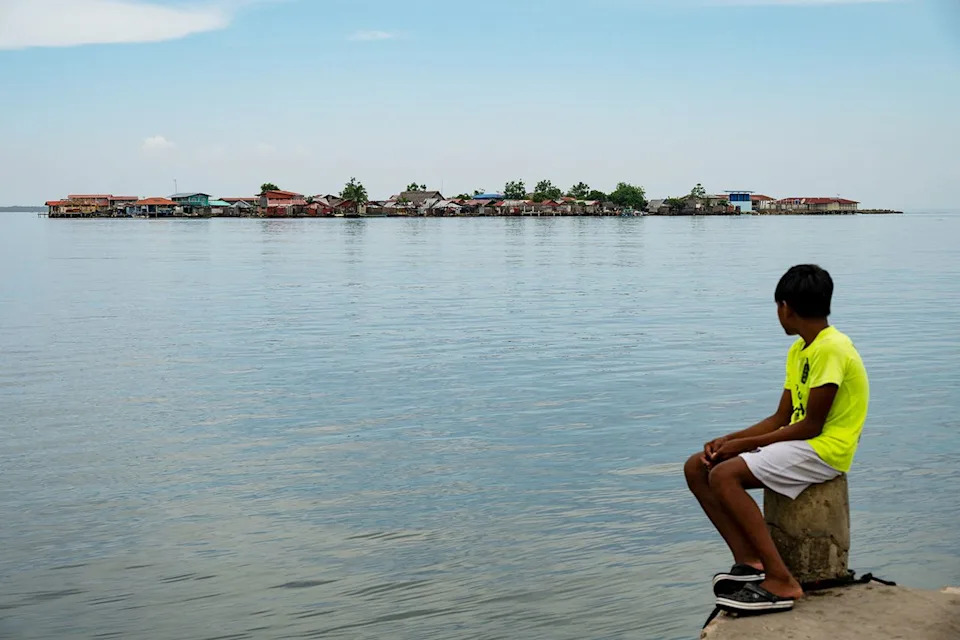
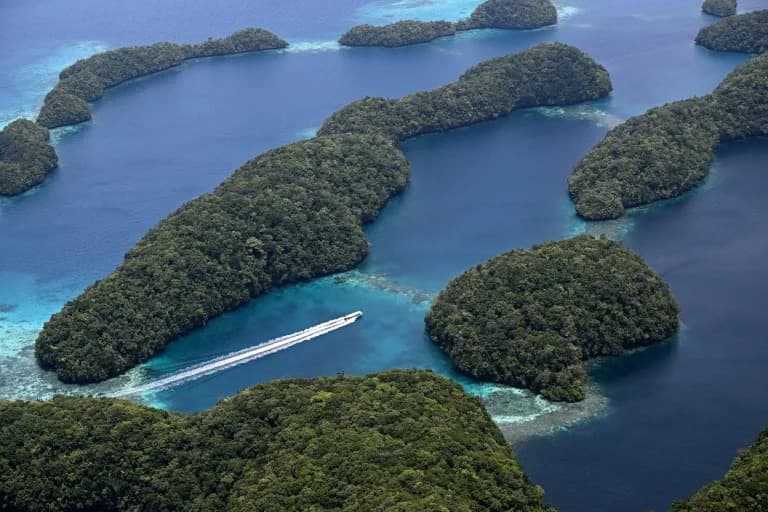
A child looks at Carti Tupile Island from Gardi Sugdub island, in the Gunayala Archipelago, Panama on May 27, 2025.Credit: MARTIN BERNETTI/AFP via Getty
Project Overview
Journalist Benjamin Howe, writing for the New York Times Magazine, reports that the proposed Interconexión would link high‑voltage transmission lines between Panama and Colombia (with underwater segments) and connect the Gunayala region to the Pan‑American Highway. Logistical work would require cutting a wide access route across dense rainforest and building dozens of bridges to transport heavy machinery. Panamanian reporting suggests the project could benefit more than 20,000 residents and that the highway portion is estimated at roughly $100 million.
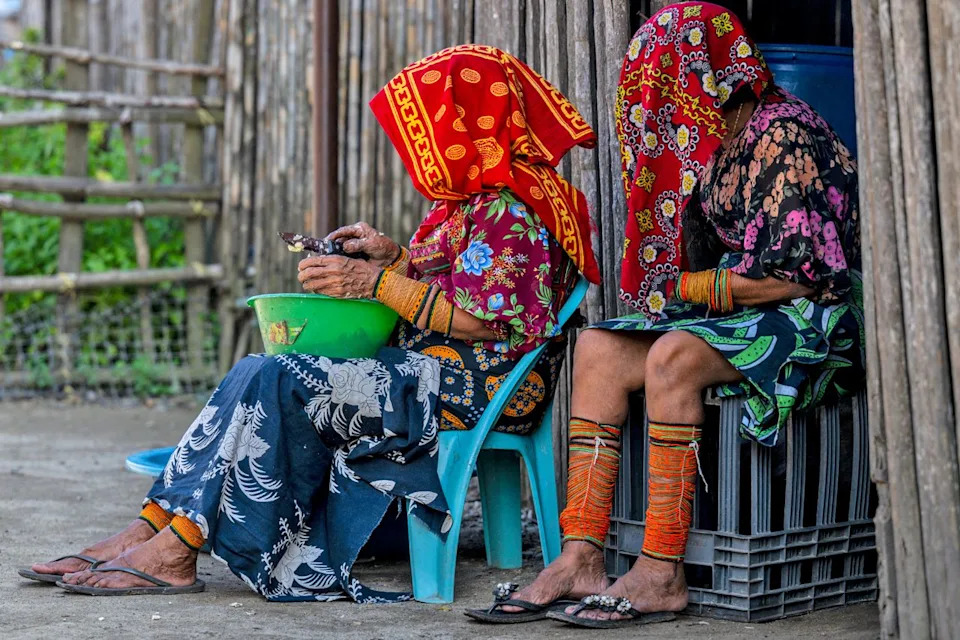
Two indigenous Guna women are seen preparing food on the island of Carti Sugtupu, in Gunayala, Panama, on August 29, 2023.Credit: LUIS ACOSTA/AFP via Getty
Why Some Guna Support Development
Parts of the Guna community have expressed support for improved land access and services. Remote villages face treacherous travel: air connections diminished after the COVID‑19 pandemic, leaving many people reliant on risky boat journeys, and some families once had to hike for days to reach schools or trade goods. In recent years, community volunteers have already started carving small paths by hand; some residents have even begun widening routes with machetes in hopes of improving access.
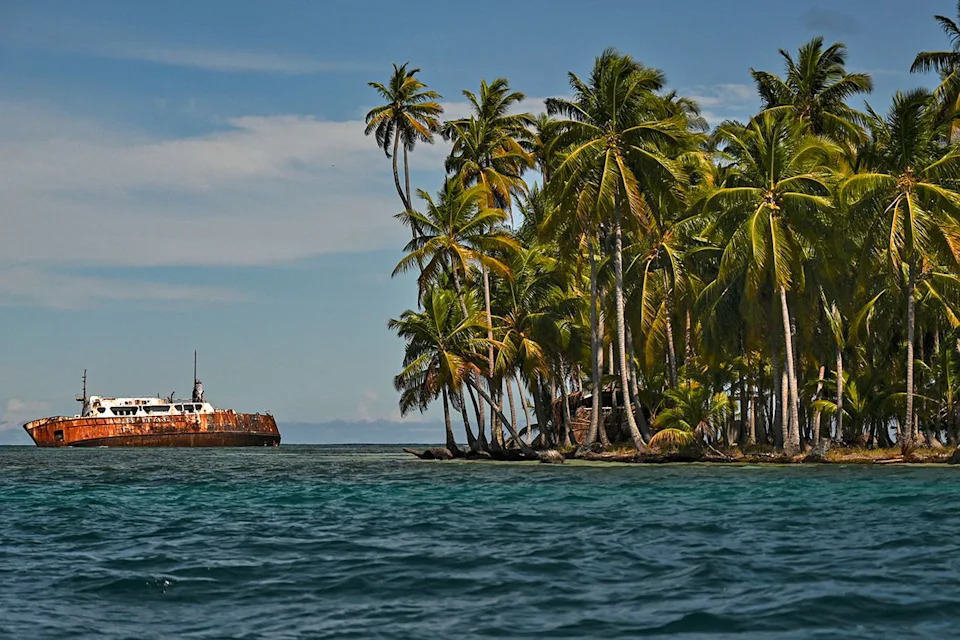
A stranded ferry is pictured on the reefs of the Guna Yala archipelago, Panama, on November 28, 2024.Credit: MARTIN BERNETTI / AFP via Getty
Cultural Autonomy and Local Governance
The Guna maintain a long history of near‑autonomy within Panama. The nation’s three main Guna regions—Gunayala, Guna Madugandí and Guna de Wargandí—are governed in part by traditional leaders known as the six Sagladummagan (caciques) who balance cultural stewardship with political decisions. For many Guna, support for development is conditional: they want projects carried out under Guna control with meaningful consultation and protections for sacred sites.
Environmental and Cultural Concerns
Opponents warn that a highway through the Darién rainforest could accelerate deforestation, open the door to illegal logging and land speculation, and damage sacred sites and wildlife. Conservation groups such as Alianza por Matusagaratí caution that incremental infrastructure can erode the Darién Gap—the swampland and rainforest that forms the only land bridge between North and South America—by enabling gradual encroachment rather than through any single decision.
Where Things Stand
Local leadership in Wargandí recently voted to begin consultation and consent talks with the Panamanian government; Gunayala is scheduled to start a similar process in October. Negotiations continue as proponents pursue fundraising for the project and officials consider bundling highway funding with the Interconexión. Many Guna people appear open to development that improves access and services—so long as the community retains meaningful control and safeguards cultural and environmental values.
Key questions remain: Can improved access and services be delivered without irreversible harm to Guna sovereignty, sacred places and one of the region’s most biodiverse rainforests?
Reporting references: New York Times Magazine (Benjamin Howe), El Siglo, and reporting aggregated in People and other outlets.
Help us improve.