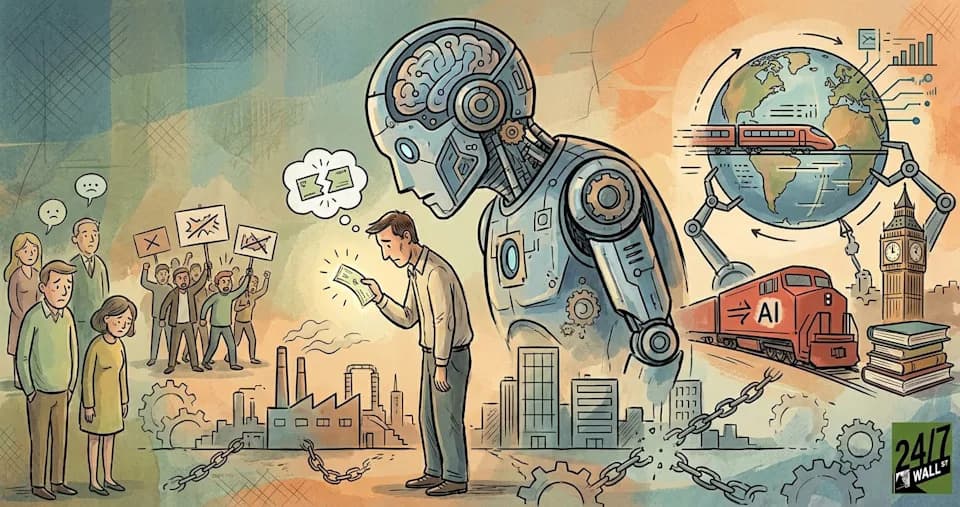
This week’s HR headlines spotlight state-level efforts to regulate workplace AI alongside persistent pay inequities and role confusion. A National Women’s Law Center analysis finds Black women earned $0.64 for every dollar paid to White, non-Hispanic men last year. ResumeBuilder.com reports 20% of workers face unclear daily duties, and an IBM survey reveals 80% of CHROs say AI rollout creates additional, often unseen work for employees.
This Week in 5 Numbers: CHROs Warn AI Creates 'Invisible' Work; Pay Gap Persists

The icon for Google's Gemini AI app is seen through a flame as it is displayed on a screen in London, England, on September 16, 2026.
Another U.S. state is moving forward with rules to govern artificial intelligence in the workplace, while new data highlight persistent pay gaps and growing role ambiguity for employees. Below is a concise snapshot of the key HR figures making headlines this week and what they mean for employers and workers.
By the numbers
$0.64 — Black women earned 64 cents for every dollar paid to White, non-Hispanic men last year, according to a National Women’s Law Center analysis of U.S. Census Bureau data. This stark wage gap underscores continuing racial and gender inequities in pay.
3 — The number of colleagues a former chief diversity officer at Purdue University unsuccessfully identified as comparators in a race discrimination and retaliation lawsuit, court documents show. The details highlight challenges in proving comparator-based claims in employment litigation.
6 — The number of states that have enacted laws specifically addressing the use of AI in hiring. State-level regulation is accelerating as policymakers try to balance innovation with worker protections.
20% — The share of workers who told ResumeBuilder.com that their daily responsibilities are frequently unclear and unpredictable. Role ambiguity can damage engagement and performance if not addressed by managers.
80% — The proportion of chief human resources officers who told IBM in a recent survey that AI rollout often generates additional, largely unseen tasks for employees — so-called "invisible" work, such as data cleanup, monitoring AI outputs and handling exceptions.
Why this matters: Together these numbers point to three persistent HR priorities: closing pay gaps, clarifying roles and responsibilities, and managing the human impact of AI adoption. Employers should audit pay practices, clarify job expectations, and plan for the hidden work AI may create to avoid burnout and compliance risks.
Help us improve.