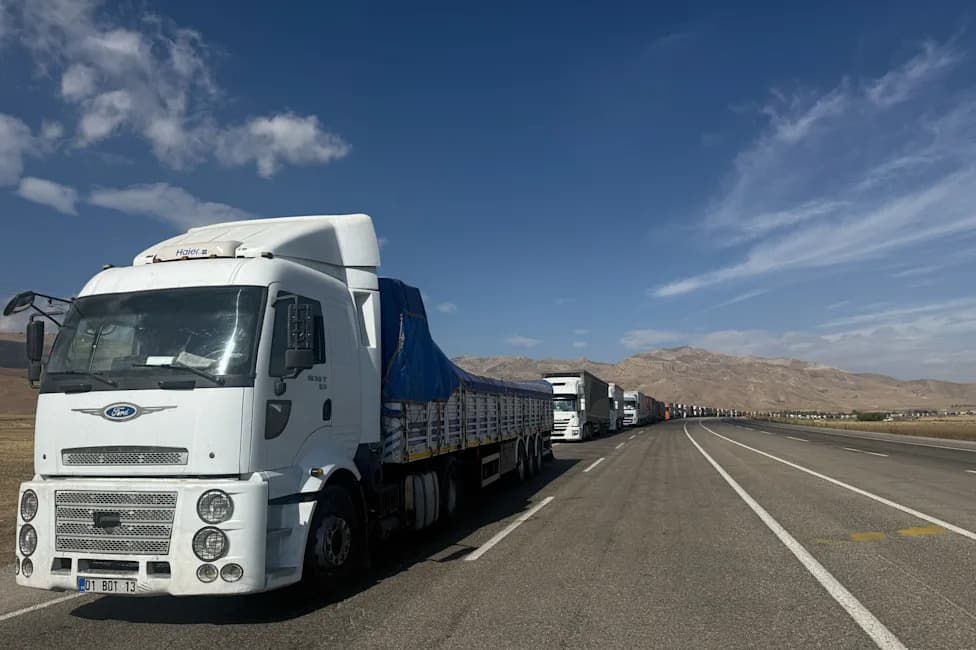
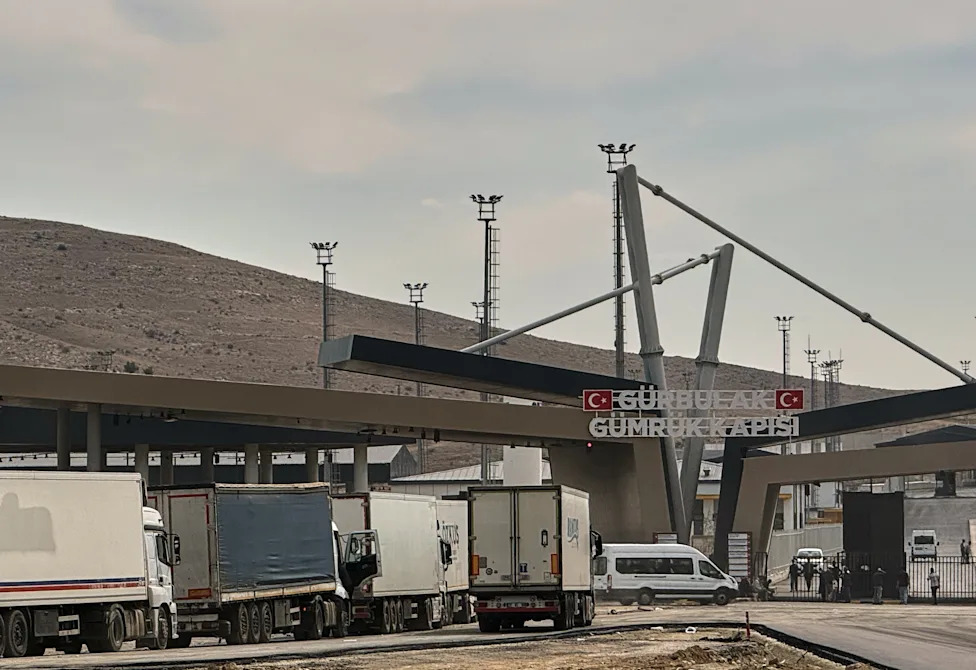
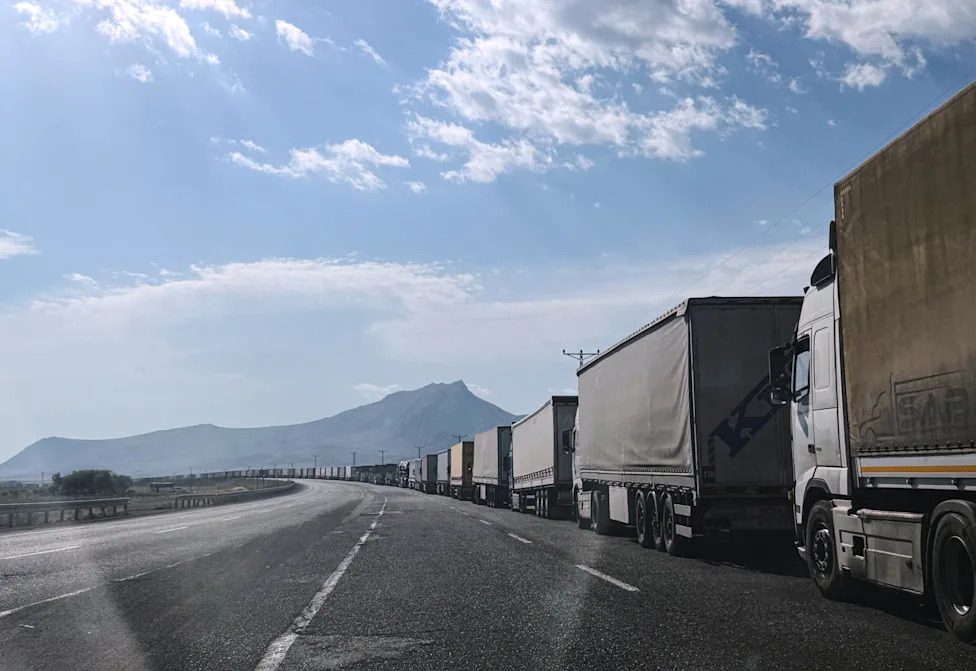
At the Gürbulak border crossing on Turkey's mountainous eastern frontier, hundreds of trucks are queued for days as Iran scrambles to move trade overland after a U.S. naval blockade severely curtailed maritime commerce. Once a busy but manageable gateway, the crossing has become a critical lifeline for Tehran as imports fall and oil and gas exports are blocked.
Trucks queue at the Gurbulak border crossing on the Turkish-Iranian border in Agri province, eastern Turkey, Tuesday, Sept. 22, 2026. (AP Photo/Serra Yedikardes)(AP Photo/Serra Yedikardes)
Border Bottleneck and Human Cost
Truck drivers and officials describe long delays, overcrowded holding areas and deteriorating conditions. Drivers at the scene told the Associated Press that waiting times at Gürbulak have risen from typical waits of up to three days to five days or more. On the Iranian side, customs queues have been reported as long as 12 to 25 days, and one queue stretched approximately seven kilometers (4.3 miles).
Trucks queue on the road leading to the Gurbulak border crossing on the Turkish-Iranian border in Agri province, eastern Turkey, Tuesday, Sept. 22, 2026. (AP Photo/Serra Yedikardes)(AP Photo/Serra Yedikardes)
"I've been driving through this border gate for 15 years. I've never had to wait as long as now," said Muhammed Rıza Shiri, 55, who waited four days to carry a load of rubber into Iran.
Economic Pressure and Political Response
Iranian President Masoud Pezeshkian has urged authorities to accelerate land trade to soften the impact of the blockade. "They are trying to create difficulties wherever they can," Pezeshkian said, accusing the United States of closing air, land and sea routes and attempting to foment internal divisions. Iran has insisted it will not change its negotiating stance with Washington and demands an end to the blockade before allowing commercial shipping to resume through the Strait of Hormuz.
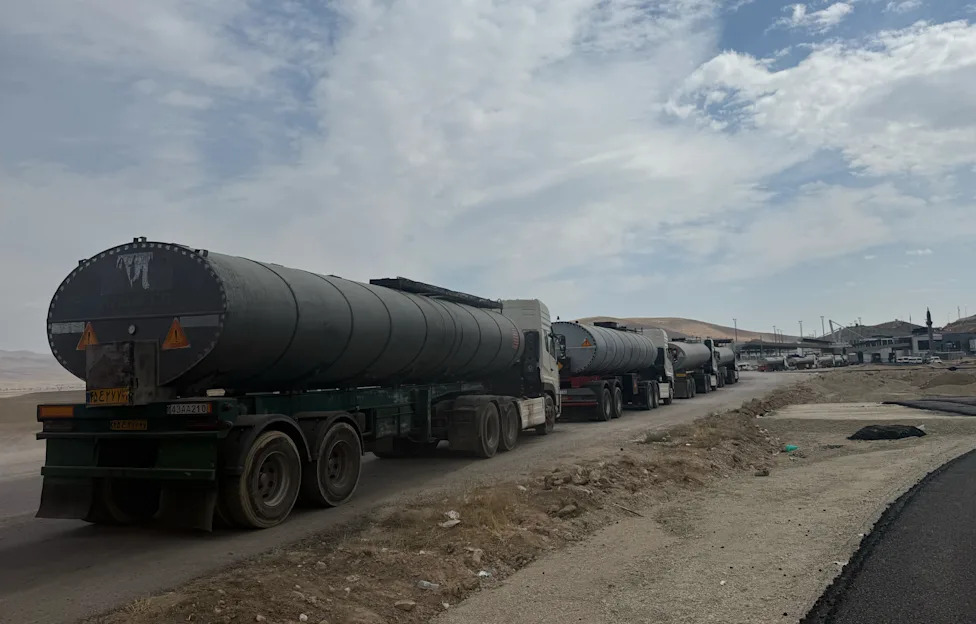
Trucks drive on the road leading to the Gurbulak border crossing on the Turkish-Iranian border in Agri province, eastern Turkey, Tuesday, Sept. 22, 2026. (AP Photo/Serra Yedikardes)(AP Photo/Serra Yedikardes)
Before the conflict, more than 80% of Iran's trade flowed through the Gulf, making the shift to overland corridors a massive logistical challenge. Economist Mohammad Farzanegan warned that limited infrastructure, regulatory controls and other bottlenecks mean overland routes "would not basically be able to substitute or compensate for the blockade." Iran's statistics agency reported the economy shrank by more than 10% in the quarter after March 20, while the non-oil economy contracted 4.6%. The rial has lost value and inflation has surged since late February.
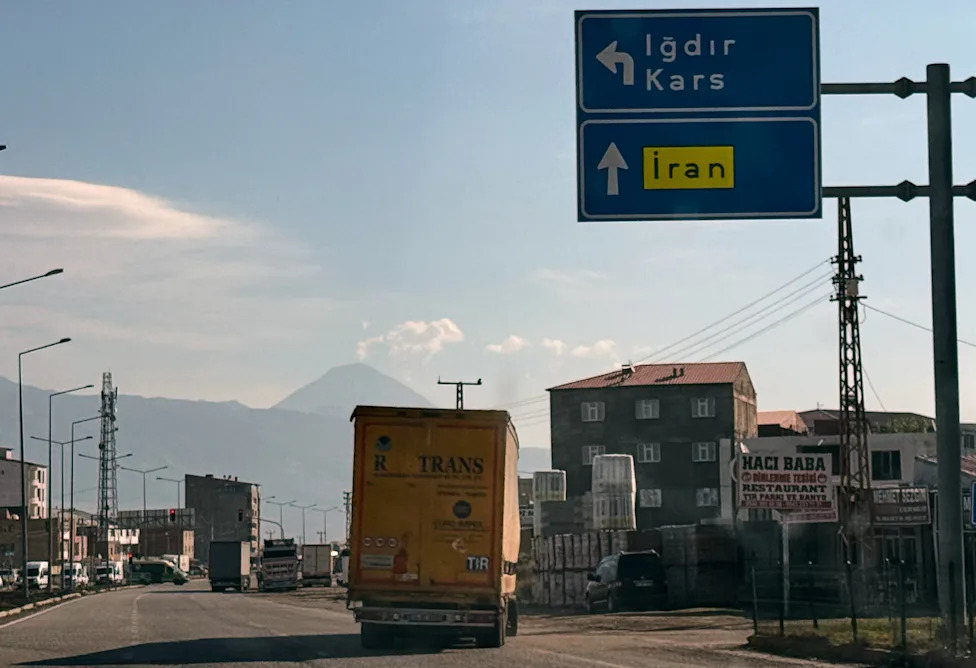
Trucks queue on the road leading to the Gurbulak border crossing on the Turkish-Iranian border in Agri province, eastern Turkey, Tuesday, Sept. 22, 2026. (AP Photo/Serra Yedikardes)(AP Photo/Serra Yedikardes)
Capacity Strains and Mitigation Efforts
Officials say truck numbers at Gürbulak have jumped sharply. Amir Roshanbakhsh Ghanbari, deputy head of an Iranian trade promotion agency, told a semiofficial outlet that truck volume rose from about 200 to roughly 1,200 — overwhelming destination capacities. The International Transporters Association of Turkey reports that waiting times at Gürbulak have more than quadrupled since the war began.
Turkey has begun expanding infrastructure at Gürbulak, adding lanes and increasing X-ray scanning capacity. Ersin Şimşek, the association's Gürbulak representative, said Turkish customs reduced vehicle wait times from about 30 to 22 days by increasing lanes at fuel-measurement stations and doubling scanning equipment. Iran and Pakistan have also agreed to keep some crossings open 24 hours a day and to open a new crossing at Kuhak to boost flows.
Drivers' Plight
Truckers report shrinking incomes and worsening working conditions. Many say fuel-price rises, tighter fuel quotas, higher maintenance costs and fewer loads have halved their earnings. Some Iranian drivers complain that wealthier or local drivers can bribe their way forward at the Turkish checkpoint, a practice they cannot afford. Waiting drivers describe inadequate sanitary facilities and dire living conditions while stuck in long queues.
"With the rising costs, increased maintenance expenses, high prices for tires and parts and, on the other hand, reduced cargo loads and decreased driver income, it has become very difficult for many of us to continue working," read a message on a Telegram channel used by drivers, which is filled with complaints.
Outlook
While infrastructure upgrades and operational changes seek to ease congestion, analysts caution that the scale of trade once handled via the Gulf cannot be fully replaced by overland corridors in the short term. Regulatory hurdles, limited border capacity and the sheer volume of diverted commerce mean bottlenecks and economic pain are likely to persist as long as the blockade remains in place.
Reporting by the Associated Press. Additional details from ILNA and statements by Iranian and Turkish officials.