This article lays out a hypothetical worst-case timeline for a Yellowstone supereruption. It follows how concentrated earthquake swarms, accelerating ground uplift and hydrothermal changes could prompt escalating alerts and wide evacuations. Violent eruptions could produce pumice and ash carried hundreds to thousands of miles, crippling infrastructure, agriculture and transport. Stratospheric sulfur aerosols could cool global temperatures by roughly 3–4 °C for a period, with lasting social, economic and health impacts.
What If Yellowstone Blew? A Science-Based Worst-Case Timeline
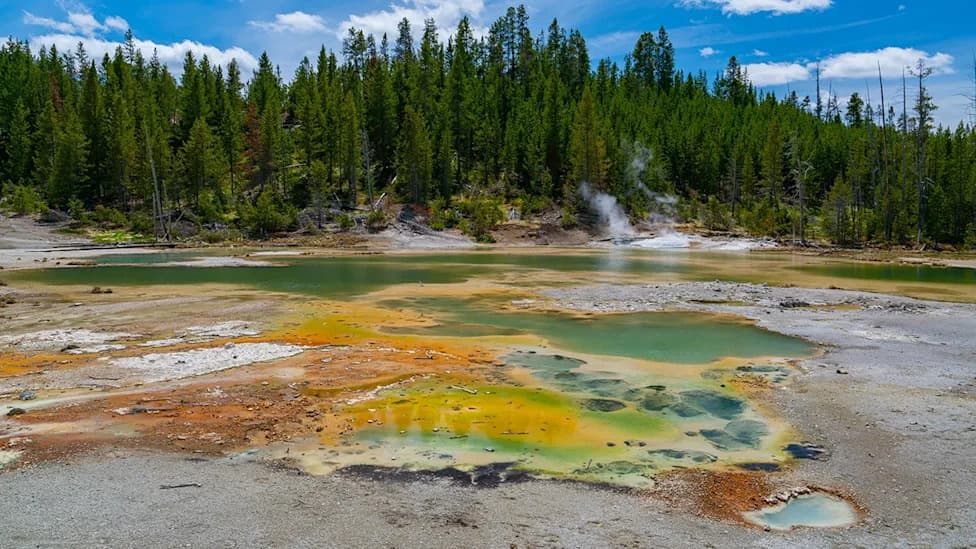
General views of Crackling Lake in the Norris Geyser Basin at Yellowstone National Park on May 27, 2021 in Yellowstone National Park, Wyoming.
Roughly 631,000 years ago a massive volcanic event at Yellowstone spread ash across much of North America and altered global climate. This article presents a hypothetical, worst-case reconstruction—based on volcanological research and standard monitoring practice—of how a similar event might unfold today. It is a scenario built from scientific models and observations, not a prediction.
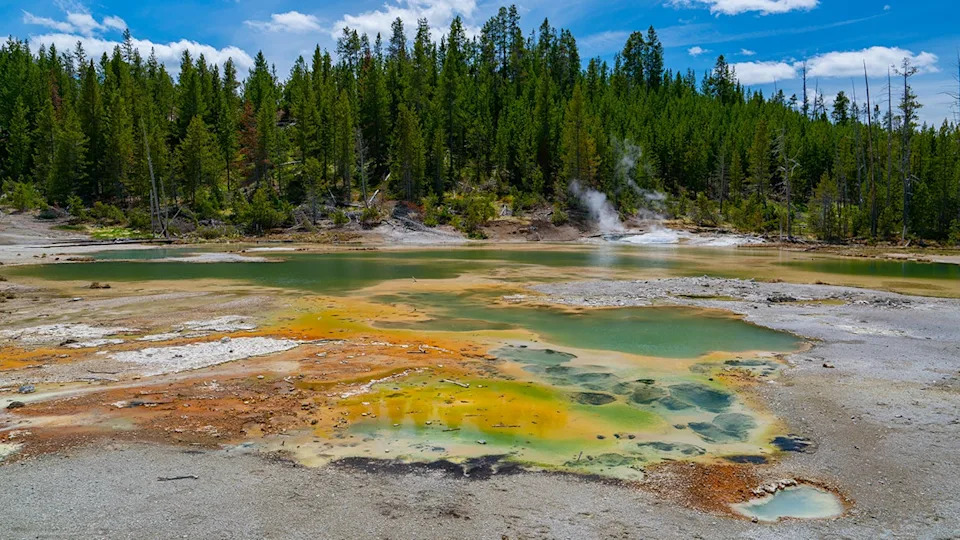
General views of Crackling Lake in the Norris Geyser Basin at Yellowstone National Park on May 27, 2021 in Yellowstone National Park, Wyoming.
Early Detection
Shortly after 6 a.m., analysts note an unusually concentrated cluster of earthquakes beneath Yellowstone’s caldera. Swarms are common at Yellowstone, but scientists take particular note when seismicity becomes concentrated, migrates upward, or coincides with other anomalous signals.
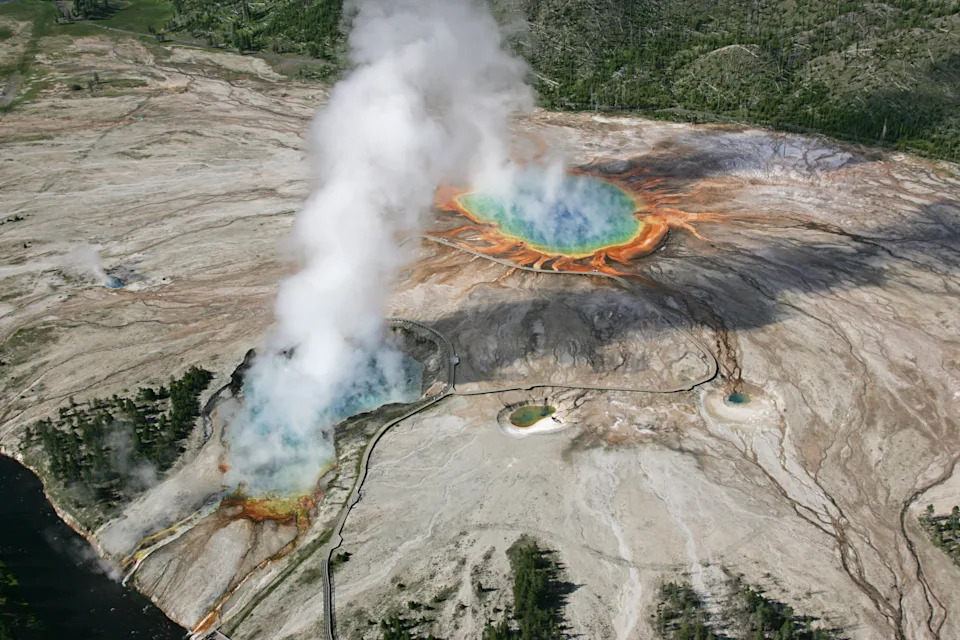
An aerial photograph of Excelsior Geyser and Grand Prismatic Spring in the Midway Geyser Basin, Yellowstone National Park, Wyoming.
Escalation (Weeks)
Four weeks of persistent, shallowing earthquakes are followed by ground deformation: GPS stations show the surface moving apart, instruments record increasing strain, and satellites detect accelerating uplift across a broad area of the roughly 34–43 mile caldera. Hydrothermal changes—altered geyser behavior, changes in spring chemistry and gas emissions—raise concern that magma may be intruding.
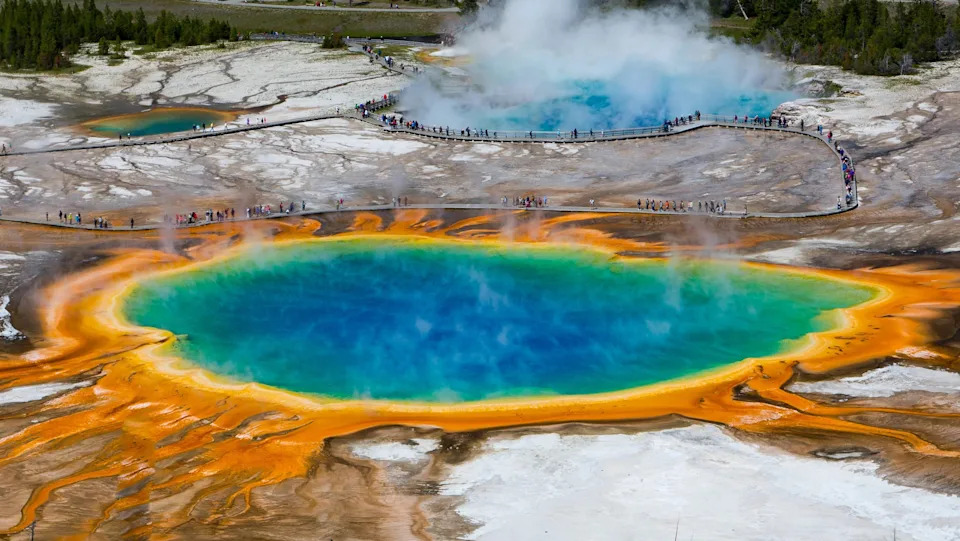
The largest hot spring in Yellowstone National Park is Grand Prismatic Spring.
Alerting Authorities
Officials raise Yellowstone’s volcanic alert from Normal to Advisory and then to Watch as the pattern intensifies. In this hypothetical reconstruction, scientists estimate an 85–92% probability of a catastrophic eruption within three weeks after unrest accelerates. An evacuation zone extending roughly 62 miles beyond the park is established, affecting about 200,000 residents and thousands of visitors. Aviation color codes and travel restrictions are implemented.
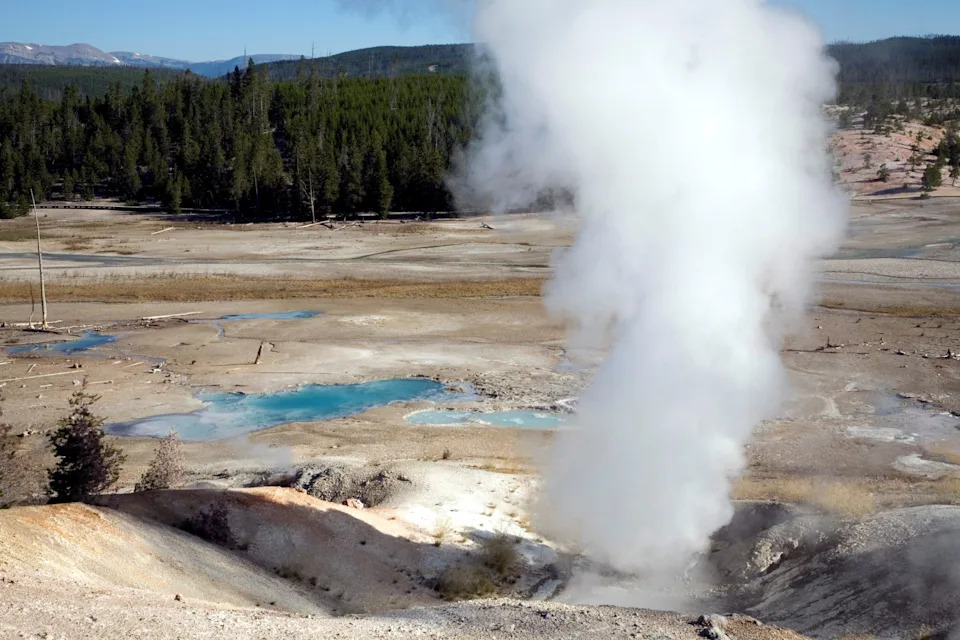
Norris Geyser Basin. Yellowstone National Park. Wyoming. United States of America
Imminent Eruption
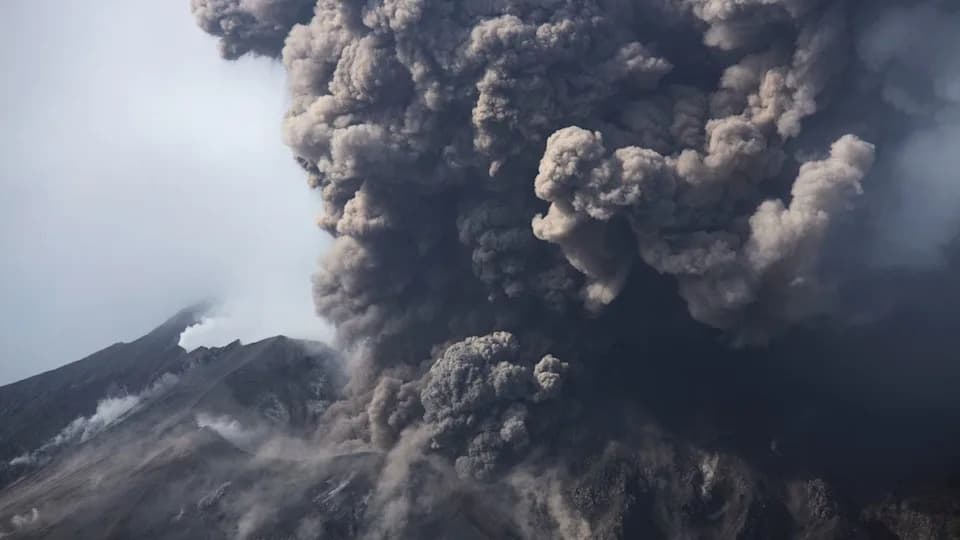
Seismic instruments are overwhelmed by shallow earthquakes and volcanic tremor. Magma pushing into the hydrothermal system flashes huge volumes of water to steam, triggering violent phreatic explosions that hurl steam, mud, ash and rock into the atmosphere. Authorities raise the alert to Red.
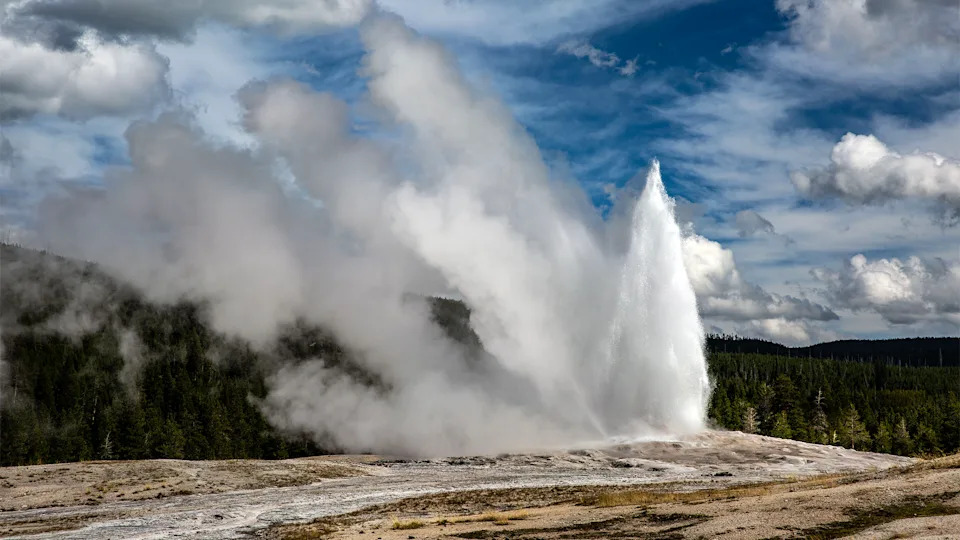
The iconic Old Faithful Geyser springs to life (every 90 minutes) in Yellowstone National Park's Upper Geyser Basin on September 18, 2022, in Yellowstone National Park, Wyoming.
Eruption Day and Immediate Impacts
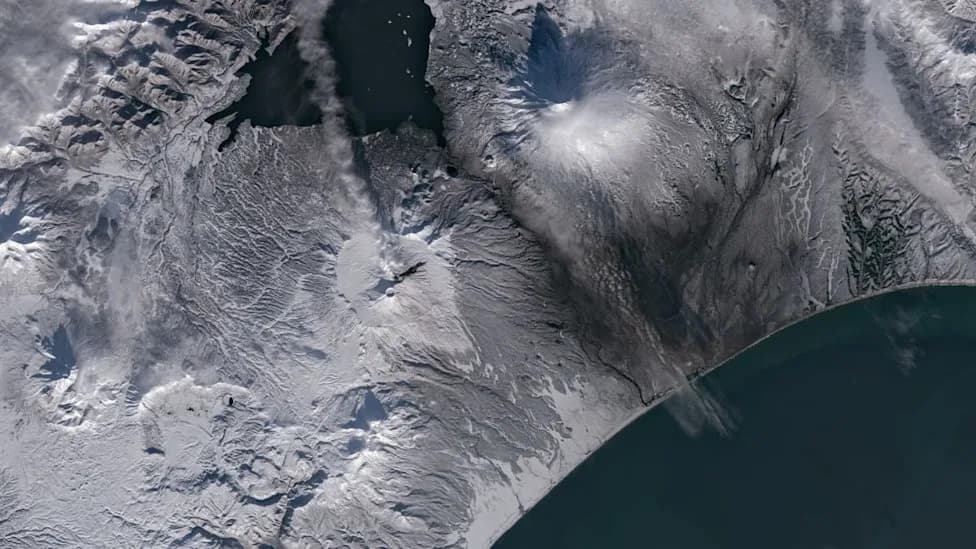
Hours later gas-rich magma reaches the surface, with vent temperatures potentially around 650–800 °C. Magma fragments into pumice and ash and produces a towering eruption column. Coarse material falls near the source and pyroclastic flows devastate nearby areas; fine ash is injected into high-altitude winds and can travel hundreds to thousands of miles.
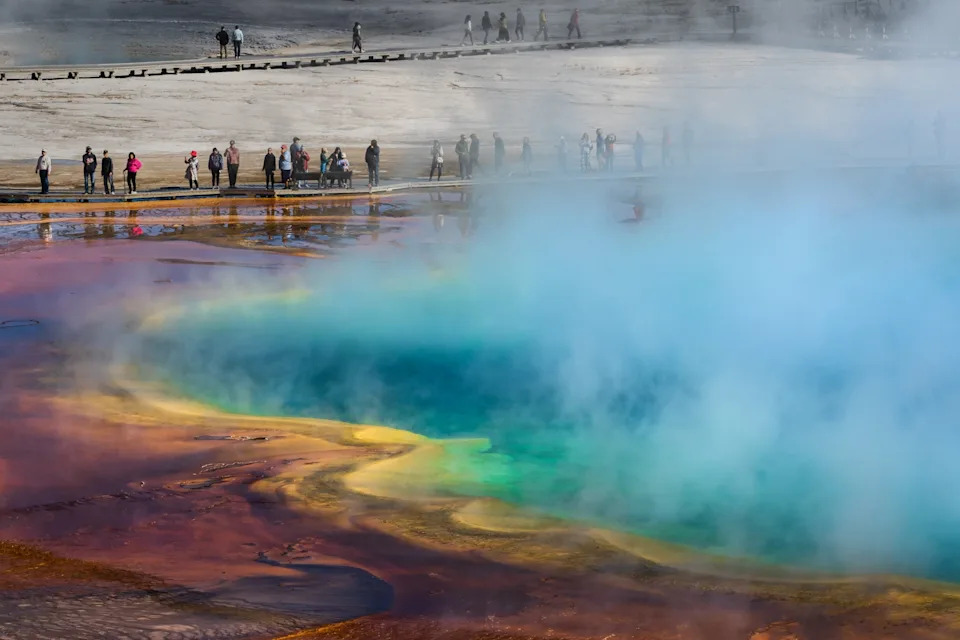
Tourists visit the Grand Prismatic Spring in Yellowstone National Park, Wyoming.
Downwind regions see rapid ashfall. Roads and runways become impassable, visibility drops, and power and communications systems begin to fail. Ash can abrade and short-circuit electrical equipment, clog machinery, and collapse roofs under its weight. Agricultural land can be buried or contaminated, threatening crops and livestock.
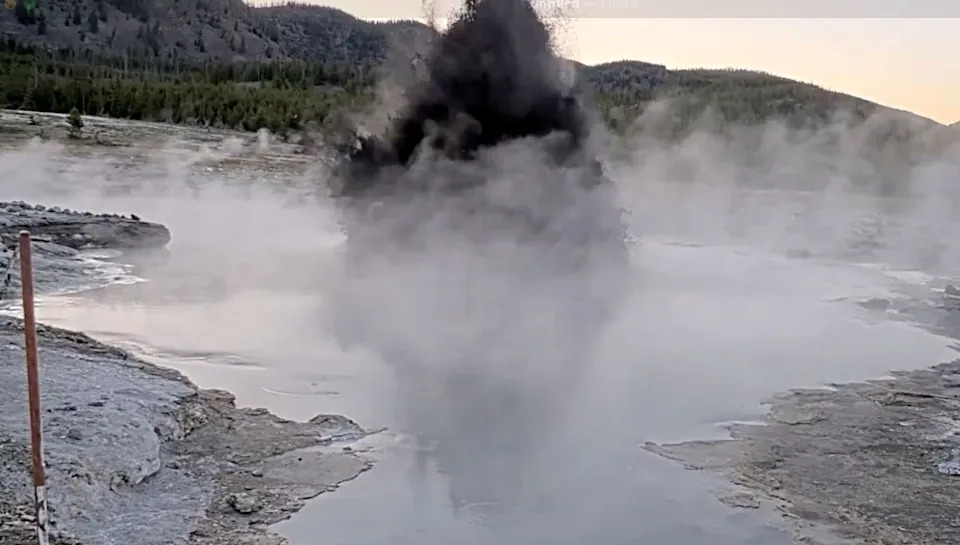
Water and debri shoot into the air during an eruption at Black Diamond Pool in Yellowstone National Park in Wyoming on May 31, 2025.
Days to Weeks
Three days into sustained eruption, substantial ashfall affects large swaths of North America. Model projections in this scenario suggest some cities downwind could receive inches to feet of ash in the worst-affected zones. Airports across the continent close or operate at reduced capacity because ash damages jet engines. Logistics, freight and food-supply chains are severely disrupted.
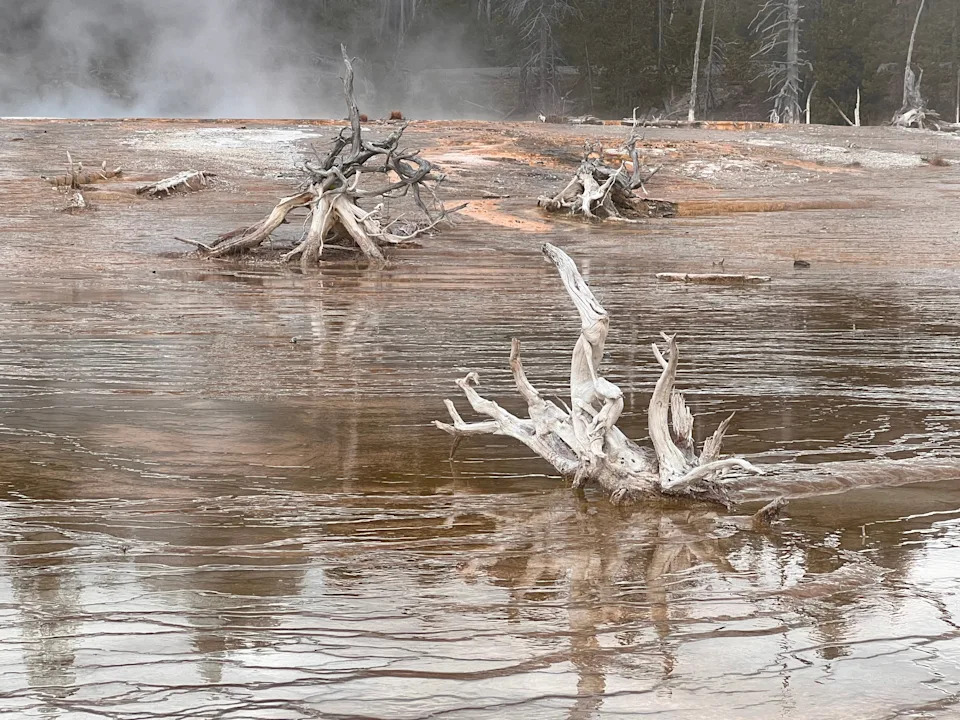
Images from Yellowstone and Grand Tetons National Parks.
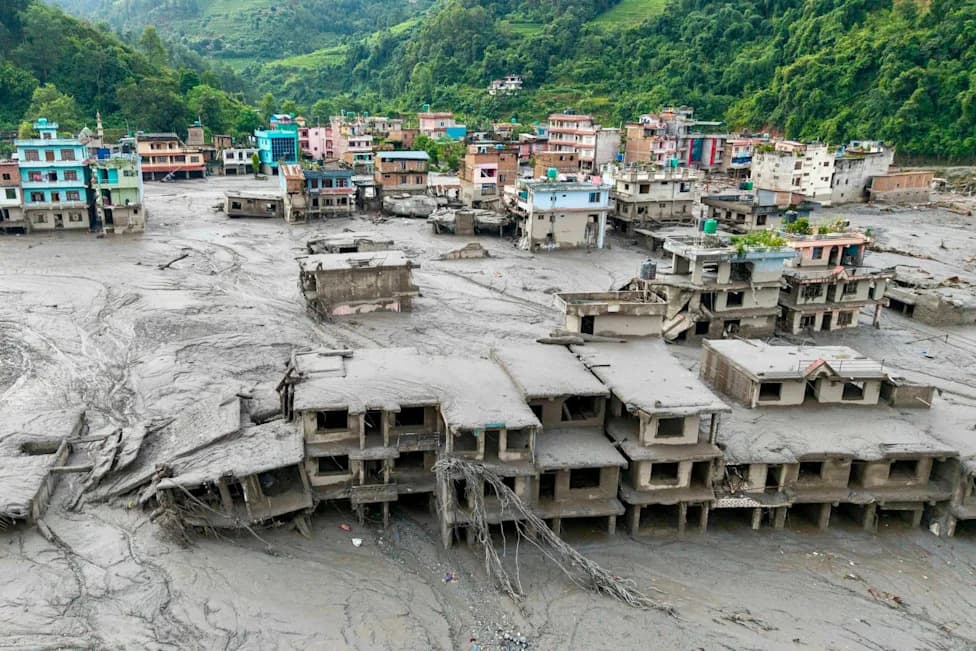
Repeated ashfall, rain-driven ash slurries, and wind reworking of deposits complicate cleanup. Hospitals face surges of patients with eye, throat and respiratory irritation; chronic conditions are exacerbated. Water and sanitation systems, power plants and fuel distribution are strained or fail in some regions.
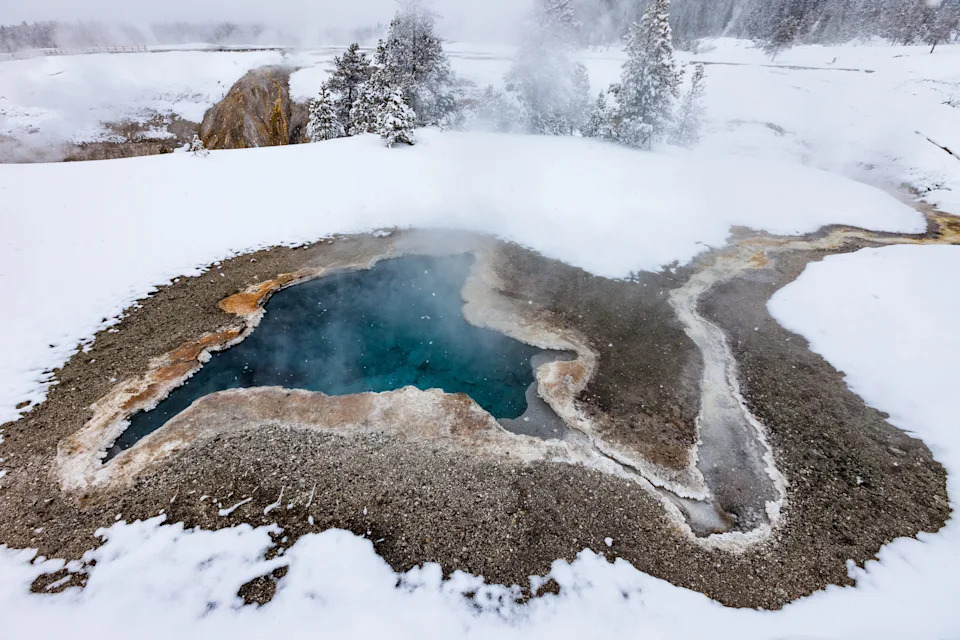
Blue Star Spring steams on a cold winter day in Yellowstone National Park, Wyoming. The spring's piping hot heat comes from molten rock churning within the floors of Yellowstone.
Months to Years
Sulfur dioxide injected into the stratosphere forms sulfate aerosols that reflect sunlight and can cool the planet. In the modeling cited for this scenario, global average temperatures could temporarily fall by roughly 3–4 °C (about 3.2 °C in central estimates), with some regions experiencing larger, longer-lasting effects on climate and growing seasons. Agriculture and food security suffer; food prices rise and recovery can take years.
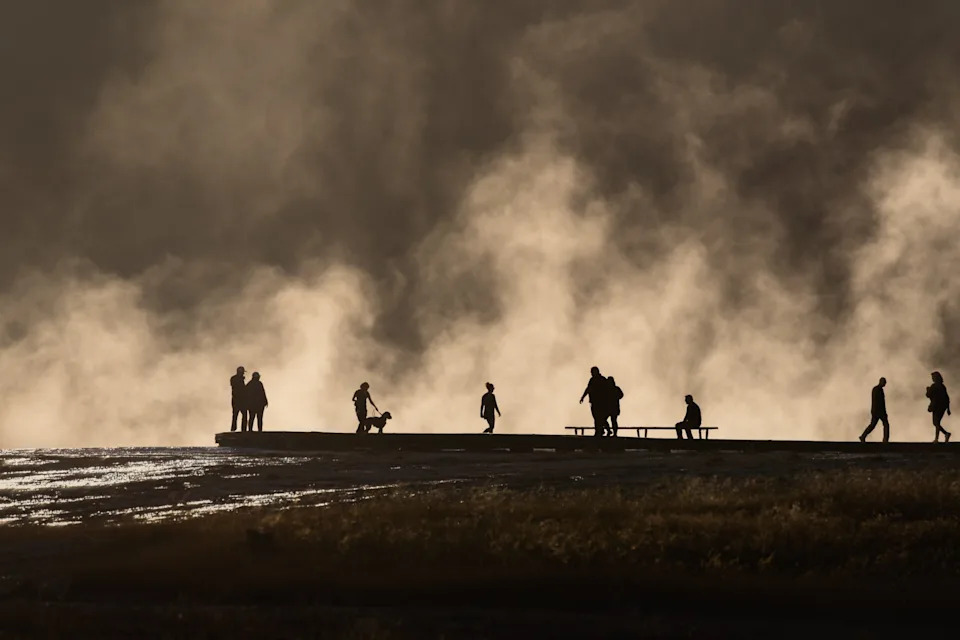
Tourists visit the Grand Prismatic Spring on October 8, 2024 in Yellowstone National Park, Wyoming.
Communities rebuild transportation networks, repair water systems, and adapt agriculture—greenhouses and controlled-environment farming may become more important. Public-health impacts from prolonged ash exposure would be studied for years; fine ash can damage lungs and worsen respiratory disease.
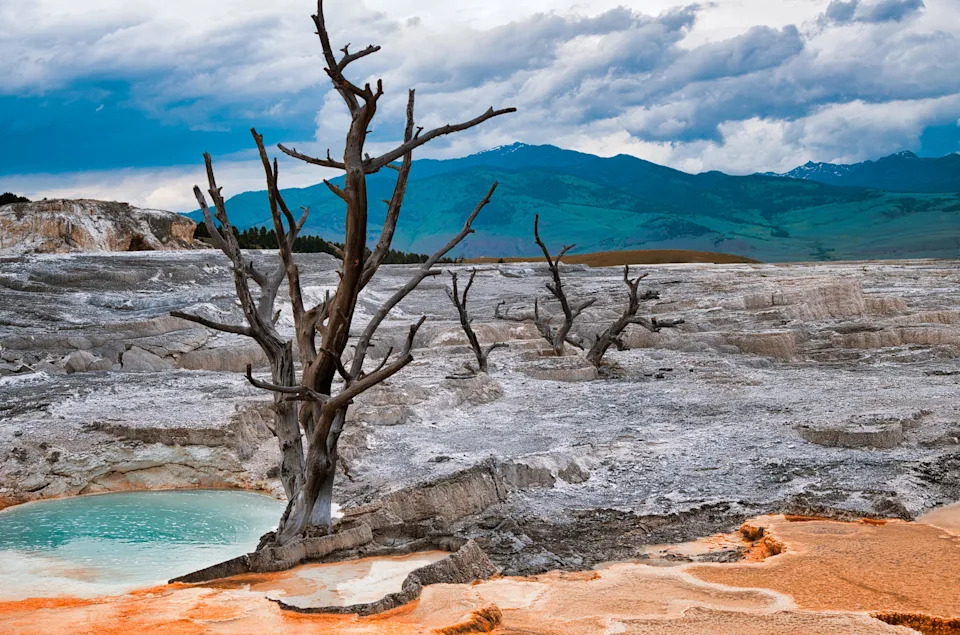
The temperature and chemistry of some hot springs make them inhospitable for most organisms.
Long-Term (Centuries to Millennia)
On geological timescales the eruption becomes a feature in the rock record. A million years later, plant and animal life would have recolonized, and the caldera would remain a scar geologists could study to infer the past catastrophe.
Important: This reconstruction describes a hypothetical worst-case sequence of events based on scientific modeling and monitoring scenarios. It does not represent a forecast or imminent threat. Yellowstone is closely monitored by multiple agencies, and a variety of signs and probabilities guide responses.
Help us improve.