INS Drakon, a German-built Dolphin II submarine equipped with Air-Independent Propulsion, joins the Israeli Navy with greater submerged endurance and enhanced payload flexibility. At over 70 metres and roughly 30% larger than earlier Dolphins, Drakon carries 10 forward tubes (six 533 mm and four 650 mm) and may accommodate additional launch or mission modules. Delivery caps a 12+-year development effort and highlights deep Israeli–German naval cooperation, with Dakar-class boats expected from 2031.
INS Drakon: German-Built Dolphin II Submarine Boosts Israel’s Underwater Endurance and Firepower
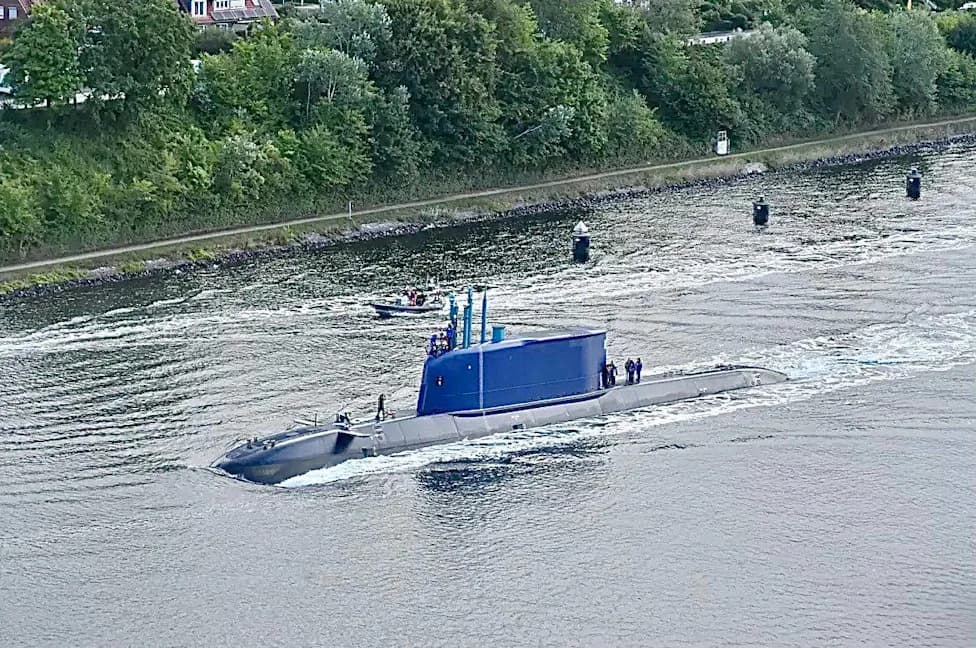
New German-made Israeli submarine
The German-built INS Drakon will be formally accepted into the Israeli Navy at a ceremony this week. Israeli defense officials say the Dolphin II–class boat carries stronger weapons and benefits from an Air-Independent Propulsion (AIP) system that significantly extends its submerged endurance compared with earlier Israeli submarines.
Key Capabilities
Air-Independent Propulsion (AIP): The Dolphin II configuration on Drakon uses an AIP system that allows the submarine to generate electrical power and recharge batteries while remaining submerged for long periods without access to atmospheric oxygen. Media reporting indicates the system employs hydrogen and oxygen in fuel-cell-type power generation to extend covert underwater operations.
Size and Design: Drakon measures more than 70 metres in length—roughly 30% larger than the original Dolphin-class boats. Less than one-fifth of the hull is visible above the waterline, and neither Israel nor manufacturer ThyssenKrupp Marine Systems (TKMS) has disclosed the full internal configuration of the enlarged hull.
Armament and Possible New Systems
The submarine carries 10 forward torpedo tubes: six standard 533 mm tubes and four larger 650 mm tubes. The wider tubes can accept heavier munitions, specialized payloads and some types of unmanned underwater vehicles (UUVs).

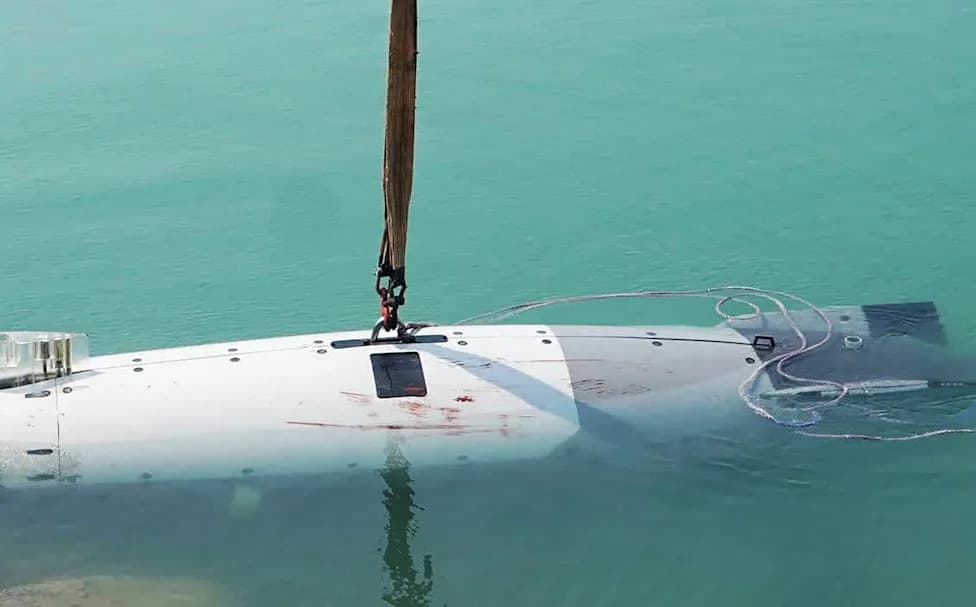
New German-made Israeli submarine 'INS Drakon' embarks from Germany for Israel, September 21, 2026. (credit: ARMY RADIO)
Analysts have speculated that the larger hull volume could make room for vertical launch systems (VLS) or additional mission modules. If present, such launch cells could broaden Drakon’s mission set—enabling cruise missiles, increased weapon loads, UUVs, intelligence packages or platforms for special operations. TKMS and Israeli officials have not publicly confirmed these possibilities.
Strategic Context
Although Israel maintains a policy of deliberate ambiguity about nuclear weapons, many open-source reports long list Israeli submarines as a sea-based leg of a broader deterrent posture alongside land- and air-based systems. The Israeli government does not confirm or deny nuclear capabilities; public commentary by past officials has occasionally alluded to such capabilities.
Delivery, Transit and Development
Drakon’s delivery completes the second generation of German-built submarines for the Israeli Navy and underscores the long-standing defence partnership between Israel and Germany. The transit from the TKMS shipyard in Kiel to Israeli waters covered roughly 4,000 nautical miles (about 8,000 kilometres) and took just over three weeks; such transits can take up to a month depending on routing and conditions.
The project to design, build and ready Drakon for service spans more than a decade of development and testing, with Israeli involvement in the programme reaching back about 20 years. An Israeli project directorate based in Germany oversaw design, construction and trials; Israeli naval officers and engineers participated in multi-year stints abroad and joined sea trials and acceptance testing prior to delivery.
People and Future Platforms
Beyond the platform’s technology, the submarine squadron emphasizes highly trained crews who operate complex combat systems in distant and often austere conditions. Work continues on the next-generation Dakar-class submarines, with initial deliveries expected from 2031 onward.
Note: Some capabilities described in public reporting remain speculative because neither TKMS nor Israeli authorities have released full technical details. This article separates confirmed facts (dimensions, tube count, AIP configuration) from plausible analyst assessments (possible VLS or expanded mission modules).
Help us improve.