The Arctic ice pack often drifts and spreads in ways wind-only models cannot explain. A study in Physical Review Letters shows collisions among individual floes transfer momentum and energy through the ice, accounting for slower spreading and variable speeds. A grain-based simulation validated with Fram Strait observations matched real-world behavior better than wind-only models, offering a path to improved forecasting and insights relevant to other colliding-particle systems.
Floe Collisions, Not Wind Alone, Explain Surprising Arctic Sea-Ice Drift
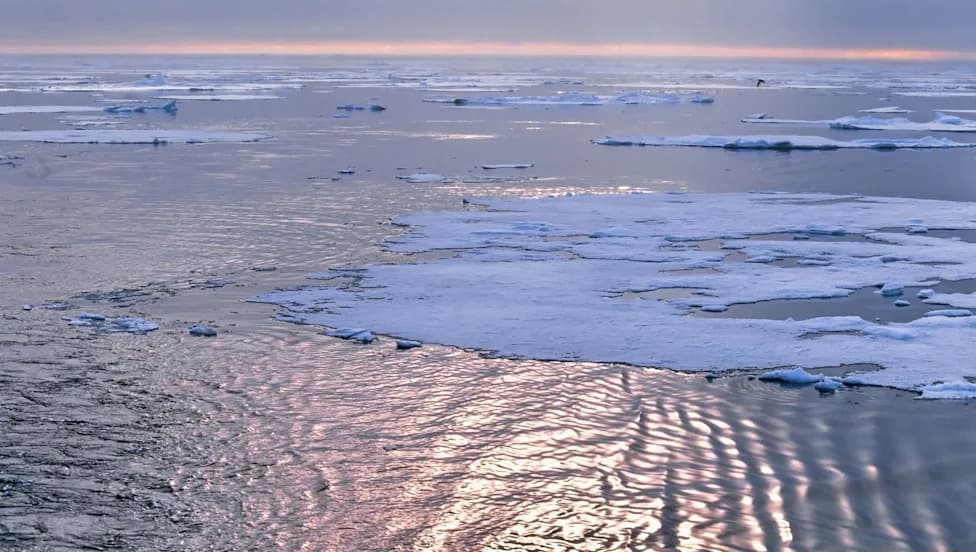
Photo Credit: iStock
Arctic sea ice is drifting and spreading in patterns that wind-based models alone cannot account for. A new study shows that collisions between individual ice floes — not just wind forcing — play a central role in shaping the large-scale motion of the ice pack.
What the Study Found
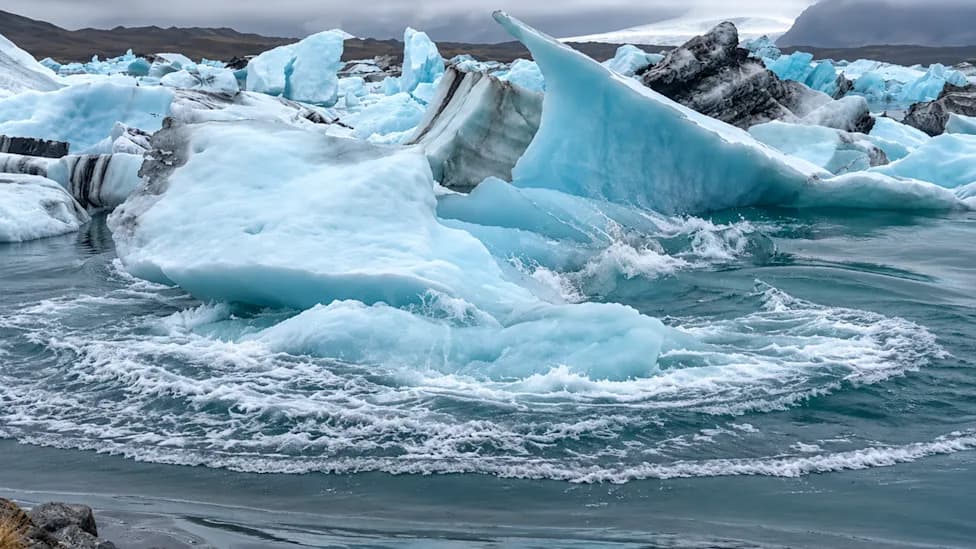
Sea ice in the Arctic is not a single continuous sheet but a mosaic of floes ranging from a few feet to several miles across. While wind pushes these floes across the ocean surface, observations have long shown two persistent mismatches with simple wind-only predictions: the ice pack often spreads more slowly than expected, and its speed varies in ways basic models don’t capture.
Researchers Bryan Shaddy, Alex Greaney and Bhargav Rallabandi published a paper in Physical Review Letters and described in an accompanying press release how including floe–floe collisions resolves those discrepancies. In their approach, the ice is treated as many interacting, grain-like pieces. Turbulent wind applies noisy forcing to individual floes, while ocean drag and repeated impacts among floes redistribute momentum and energy through the assemblage.
"We showed that that's the only ingredient you need to explain these observations," said Bhargav Rallabandi in the release.
Model Validation and Implications
The team validated their computer simulation against observational data from the Fram Strait — the passage between Greenland and Svalbard where Arctic ice flows toward the Atlantic — and found significantly improved agreement when collisions were included. That suggests a relatively simple, physically plausible mechanism can explain both slower-than-expected spreading and nonintuitive speed changes in the ice pack.
Incorporating floe collisions into regional and global sea-ice models could improve forecasting of ice drift, reduce uncertainty in Arctic projections, and better inform navigation and ecosystem studies. The authors also note broader applicability: any system with noisy forcing and colliding mobile elements — for example avalanches or landslides — may show similar collective dynamics.
Broader Arctic Context
Beyond the dynamics of floe collisions, researchers are documenting other surprising Arctic changes: aerosol particles appear to influence melt more than many models assumed, and thinning ice is altering underwater light patterns in unexpected ways. Together, these findings underscore the need to refine physical models as the Arctic continues to warm rapidly.
Next steps: The immediate priority is to integrate collision-aware, grain-based representations of sea ice into larger forecasting systems and climate models, and to test them across different regions and seasons.
Help us improve.