PISA 2025 finds girls outperforming boys in reading in 89 of 90 education systems; Rwanda is the only system where boys led by six points. The OECD-average gap is 30 points and widened by five points since 2022 as boys’ scores fell more sharply (−17 vs −12). Within OECD countries, 37% of boys failed to reach baseline reading proficiency compared with 25% of girls. Researchers point to early-grade differences and lower reading enjoyment and confidence among boys as likely contributors, with implications for higher education and future earnings.
PISA 2025: Girls Outscore Boys In Reading In 89 Of 90 Systems — Rwanda The Only Exception
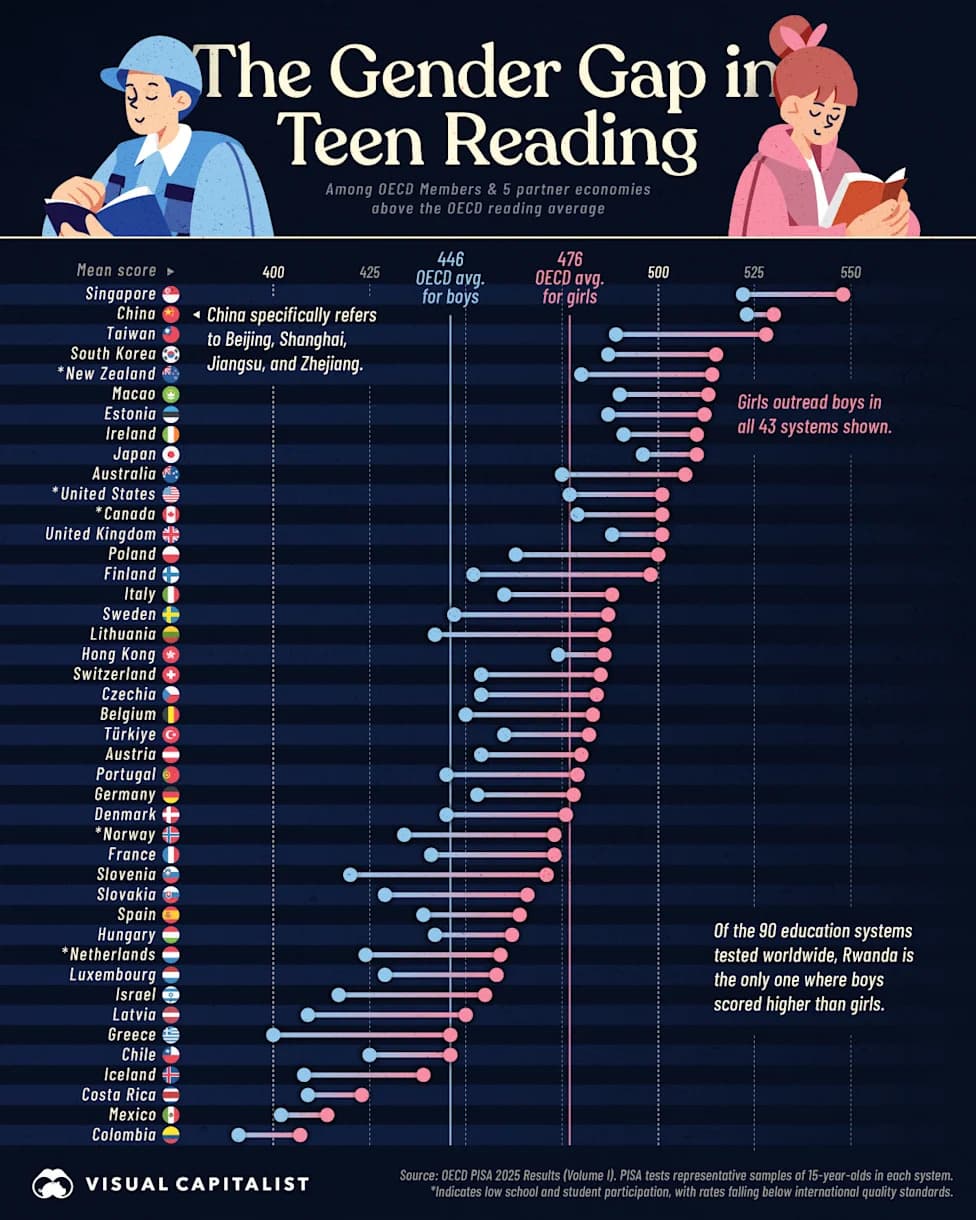
Gender gap in teen reading scores by country based on OECD PISA 2025 results
The latest PISA (Programme for International Student Assessment) results for 2025 show a striking gender pattern in reading: girls recorded higher mean reading scores than boys in 89 of the 90 education systems tested. Rwanda was the lone exception, where boys led by six points.
Top-Line Numbers
OECD average: Girls 476 vs Boys 446 — a 30-point gap that widened by five points since 2022, as boys' scores fell more sharply.
Selected Highlights
- Rwanda: The only system where boys outscored girls (boys ahead by 6 points).
- Decline 2022–2025: Boys fell by 17 points OECD-wide; girls fell by 12 points — widening the gap by 5 points.
- Proficiency: Within OECD countries, 37% of boys failed to reach baseline reading proficiency versus 25% of girls.
- Top performers and large gender gaps: Several systems show very large gaps favoring girls — for example, the Palestinian Authority (56 points), Slovenia (52), Bulgaria (49), Croatia (47), Malta (47), Finland (46) and Greece (46).
What This Means
These gender differences appear well before age 15. Multicountry research finds a female reading advantage emerging in early primary grades, and U.S. studies show gaps from around fourth grade. Engagement appears important: UNESCO and other studies report that boys typically express less enjoyment of and confidence in reading — factors that affect practice and skill development beyond innate ability.
"Reading proficiency influences access to higher education and can shape earnings and workforce opportunities later in life."
Implications and Context
The widening gap has policy implications. Lower male engagement and larger recent declines for boys suggest the need for early interventions that boost reading enjoyment and confidence, targeted support in classrooms, and family- and community-level encouragement of reading among boys. Policymakers should also note differences in participation: several systems in the dataset marked with an asterisk had low school or student participation, which can affect reliability of some comparisons.
Note: The full PISA 2025 dataset from the OECD provides country-by-country means and further methodological notes (including flags for low participation rates).
Help us improve.