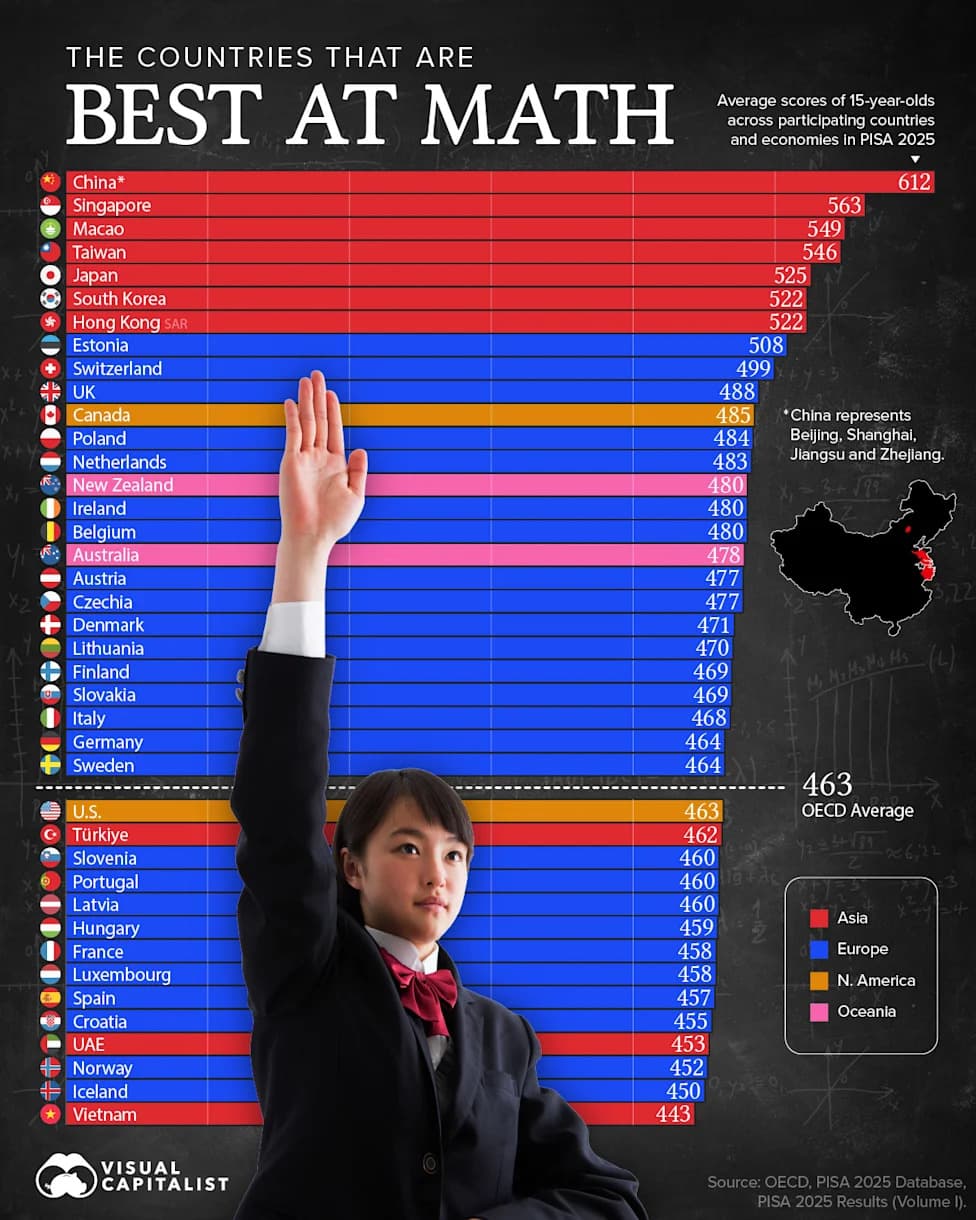
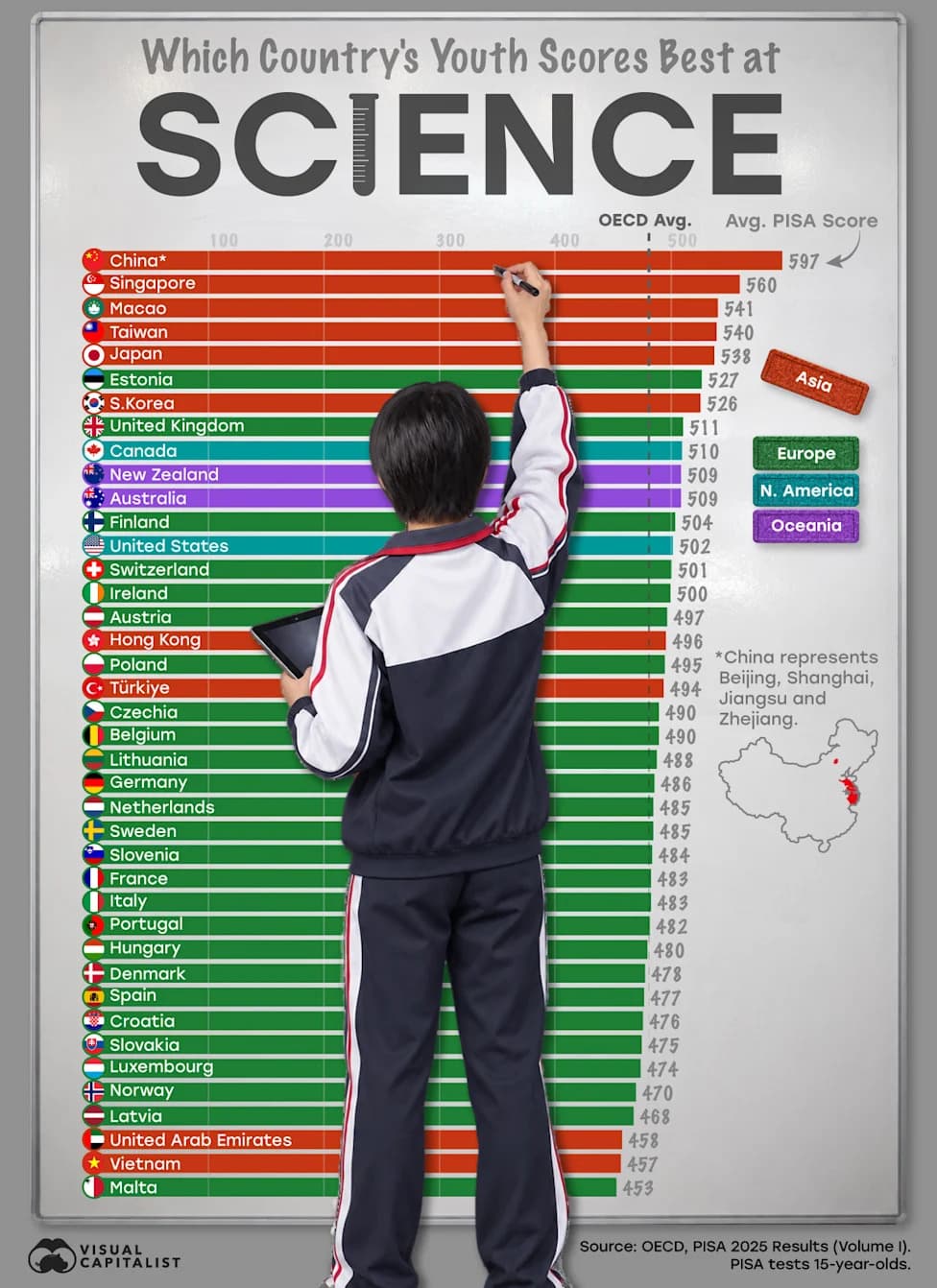
The OECD's PISA 2025 results—based on assessments of more than 760,000 students across 91 countries—report the lowest average scores ever recorded in reading, math and science for 15-year-olds. The OECD did not pin the decline solely on AI but noted that higher-performing students tend to avoid using AI, and that the biggest reading losses relate to critical-thinking skills. Experts recommend stronger foundational instruction, clear AI-use rules in schools, and explicit AI and media literacy to help students evaluate AI outputs.
OECD's PISA 2025: 15-Year-Olds' Scores Fall to Record Lows — Is AI Partly to Blame?

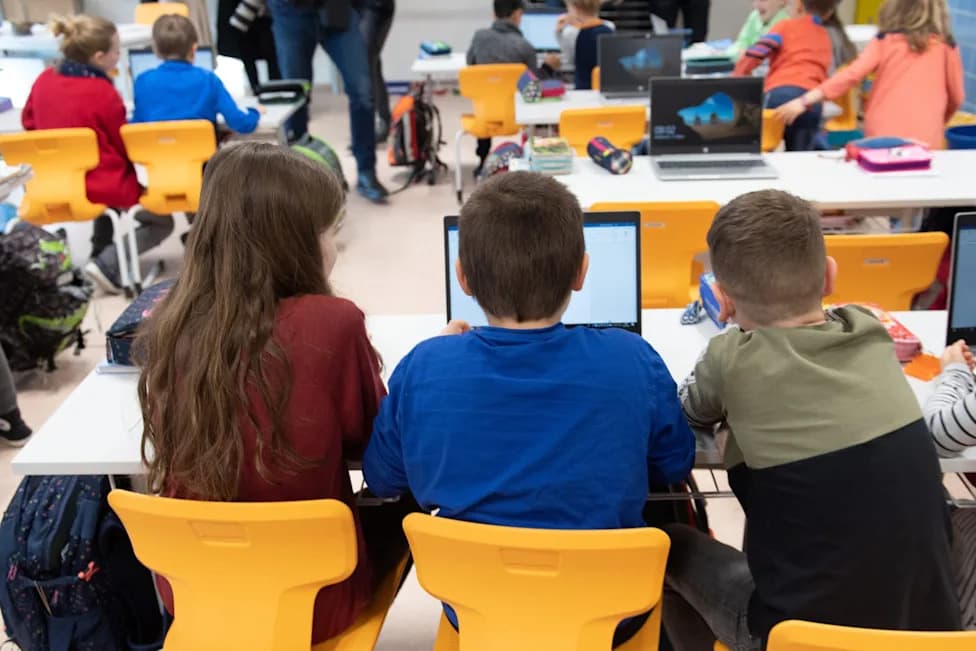
Photo Credit: iStock
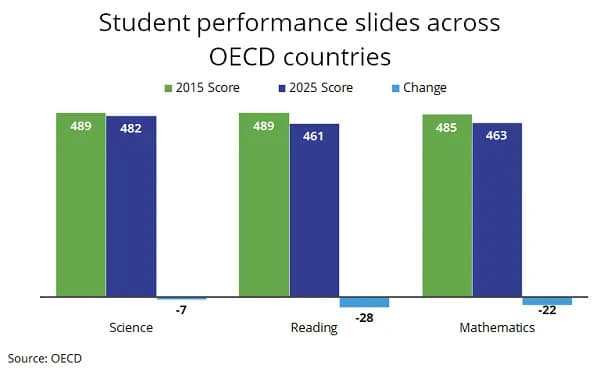
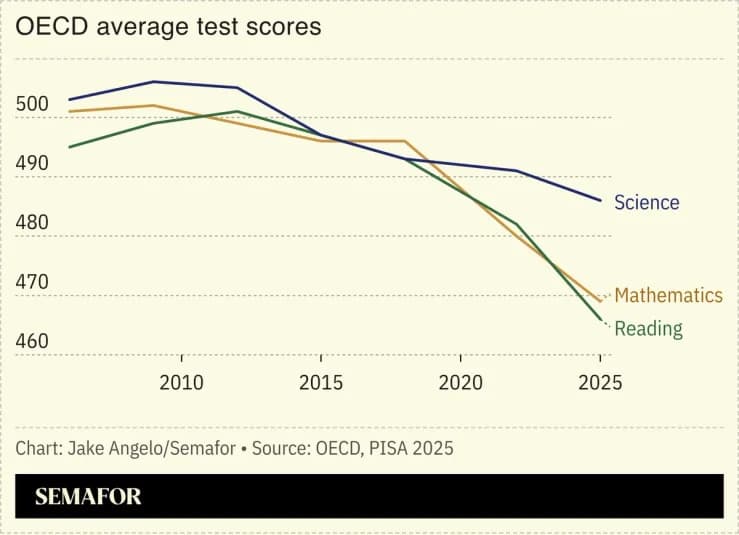
The Organization for Economic Co-operation and Development (OECD) released results from PISA 2025 showing that 15-year-olds across 91 countries and economies scored at the lowest average levels ever recorded in reading, mathematics and science.
What the Data Show
The PISA 2025 dataset draws on assessments from more than 760,000 students, representing roughly 33 million 15-year-olds. According to the OECD, average performance in all three core subjects sits at "the lowest average levels of performance ever observed in science, reading, and mathematics." The organization has documented a downward trend in scores over the past two decades.
AI's Role: Not The Whole Story, But A Factor
The OECD did not attribute the decline solely to artificial intelligence. It noted that "moderate" AI use may not harm learning, while also observing that "higher-performing students tend to be those who do not use artificial intelligence." The agency emphasised that AI can support better learning outcomes when students are explicitly taught how to interpret and assess AI-generated information.
Key OECD finding: Reading skills have declined most sharply in areas tied to critical thinking, such as evaluating evidence and distinguishing fact from opinion.
Why This Matters
Weak reading and numeracy skills can persist into adulthood and limit creativity, employment opportunities and wages. They also reduce people's ability to assess information and make informed decisions. Families can face higher costs for tutoring and more home stress when students fall behind, while economies may see fewer people prepared for essential roles.
Practical Responses For Schools And Families
- Policy and Guidance: Schools and policymakers should set clear, thoughtful rules for AI use that prevent it from replacing core instruction and practice.
- Foundations First: Reinforce foundational reading and numeracy through classroom practice and assessments that require students to show their work and explain reasoning.
- Teach AI Literacy: Incorporate media and AI literacy so students learn to evaluate AI outputs and check facts; the OECD plans a 2029 report focused on this topic.
- Home Practices: Encourage independent reading, establish screen-free homework blocks, and use AI as a tool to check understanding—not as a shortcut for producing answers.
Emerging Reactions
Some school systems have already acted: New York City and Los Angeles public schools banned generative AI for the school year amid concerns. Meanwhile, reports say some wealthy families are investing heavily—reportedly up to $75,000—for AI-focused schooling, with former staff describing those programs as experimental.
Conclusion
Declining performance on PISA is a complex problem with multiple likely causes, including how technology is integrated into childhood learning. The OECD's findings highlight the need for stronger emphasis on critical thinking, targeted AI literacy education, and practical steps by educators and families to ensure AI supplements rather than supplants core learning.
Help us improve.