At the AI Horizons 2026 Summit in Pittsburgh, Gov. Josh Shapiro criticized the Trump administration for approving exports of Nvidia H200 AI chips to vetted Chinese customers, arguing the policy risks giving China a technological edge. He urged that AI top the agenda when President Trump meets Xi Jinping and called for international standards, stronger federal oversight and independent reviews of advanced models. Shapiro also cited state actions — including an executive order on data-center projects and a lawsuit against Character.AI — as steps to address gaps in federal regulation.
Shapiro: Trump Authorized Nvidia H200 Exports, Giving China an Edge in the AI Race
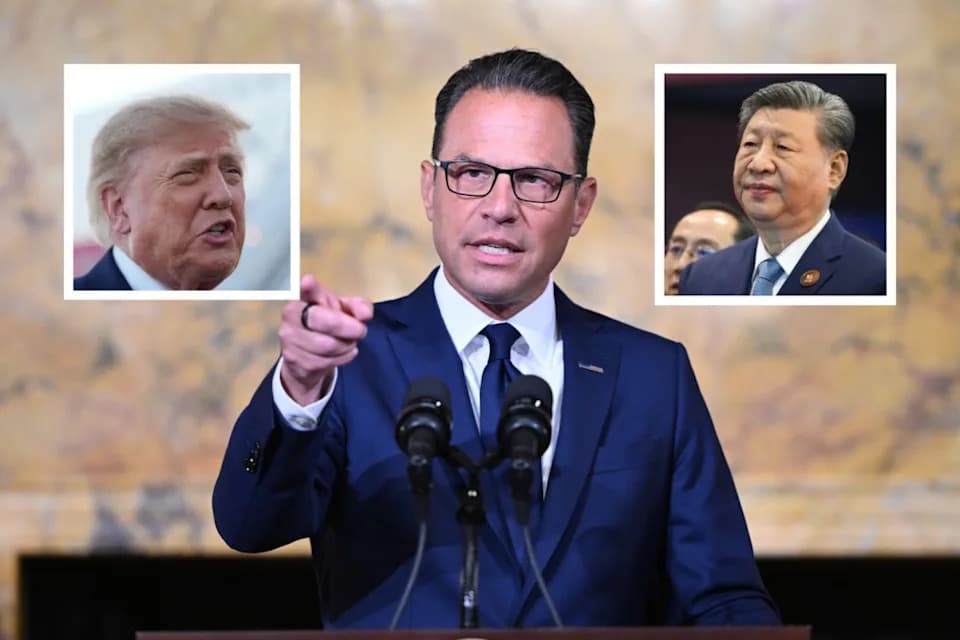
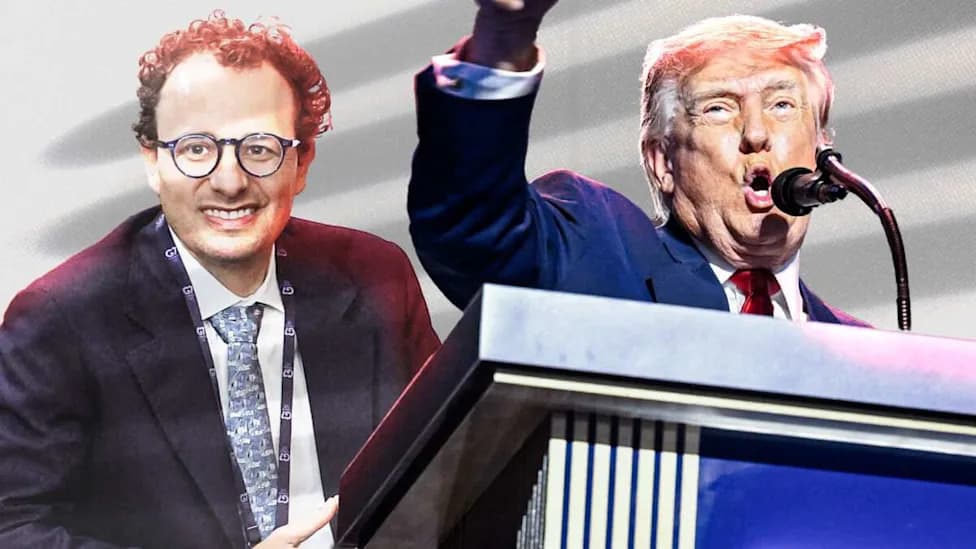
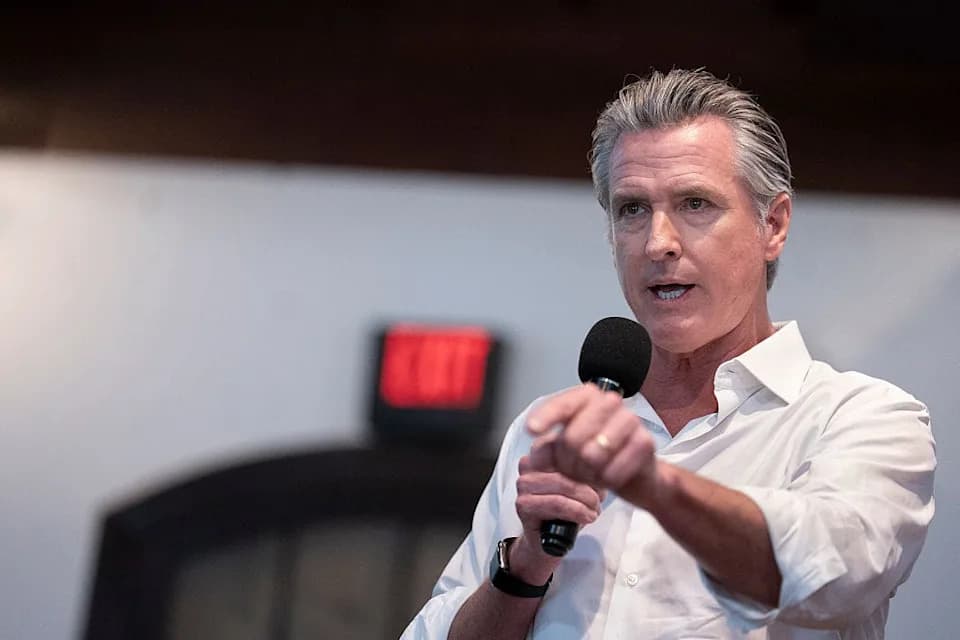
Pennsylvania Gov. Josh Shapiro speaks during a news conference at the state Capitol, Tuesday, August 18, 2026, in Harrisburg, Pennsylvania. Inset Left: Donald Trump. Inset Right: Xi Jinping.
Pennsylvania Governor Josh Shapiro on Thursday accused President Donald Trump's administration of helping China gain ground in the race for advanced artificial intelligence technologies by permitting Nvidia to export H200 AI chips to approved Chinese customers under revised licensing rules.
Speaking at the AI Horizons 2026 Summit in Pittsburgh, Shapiro said the move undercut Republican rhetoric about outpacing Beijing and urged that AI be a top item on President Trump's agenda when he meets Chinese leader Xi Jinping.
What Shapiro said
“And while Donald Trump talks a big game about beating China on AI development, his administration cut a deal to sell some of our most advanced chips to Chinese companies, giving them a leg up over American entrepreneurs,” Shapiro said. “That is a mistake. Real leadership means keeping America ahead of China in AI innovation, pushing Beijing on practical guardrails to reduce risks to the American people, and putting effective safety measures in place here at home.”
Shapiro appeared to be referring to a policy first announced in December and formally implemented in January that allows Nvidia to export its H200 artificial intelligence accelerators to vetted customers in China under new licensing guidelines. Administration officials and Nvidia contend that the policy preserves U.S. competitiveness while imposing safeguards intended to protect national security.
Critics — including some bipartisan congressional hawks — say the measure risks accelerating China’s AI capabilities. Representative Brian Mast (R-Fla.), chairman of the House Foreign Affairs Committee, warned earlier this year that companies are seeking to sell large volumes of advanced chips that could bolster competitors’ computing power.
Policy Debate
The dispute highlights a larger strategic question: should the United States restrict access to cutting-edge technology to limit rivals' capabilities, or allow American firms to compete in global markets under strict controls? The Trump administration has defended its approach as a balance between competitiveness and national-security safeguards. Nvidia said critics may unintentionally promote foreign competitors and that U.S. industry should be able to pursue vetted commercial business that supports American jobs.
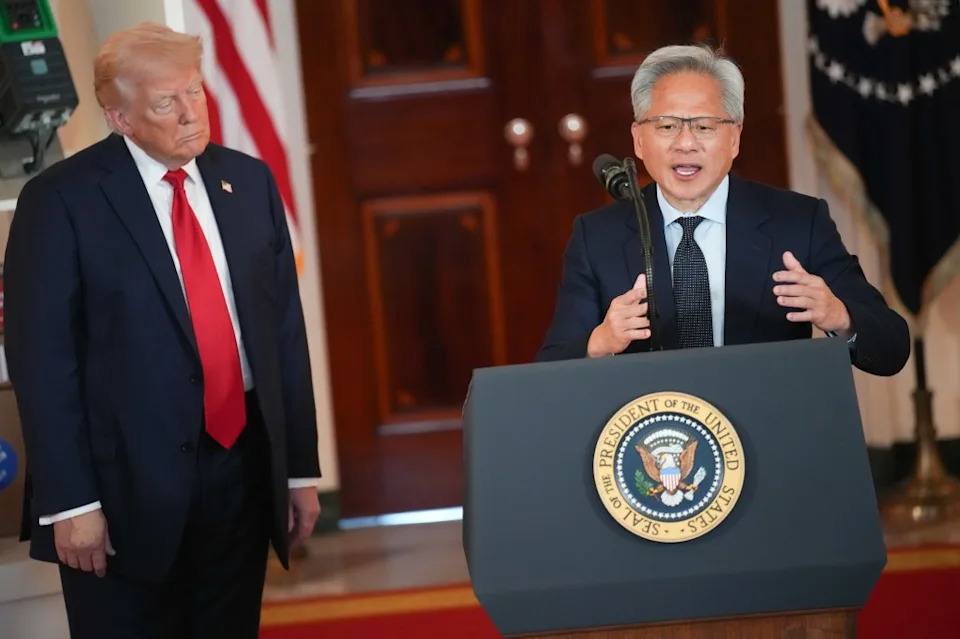
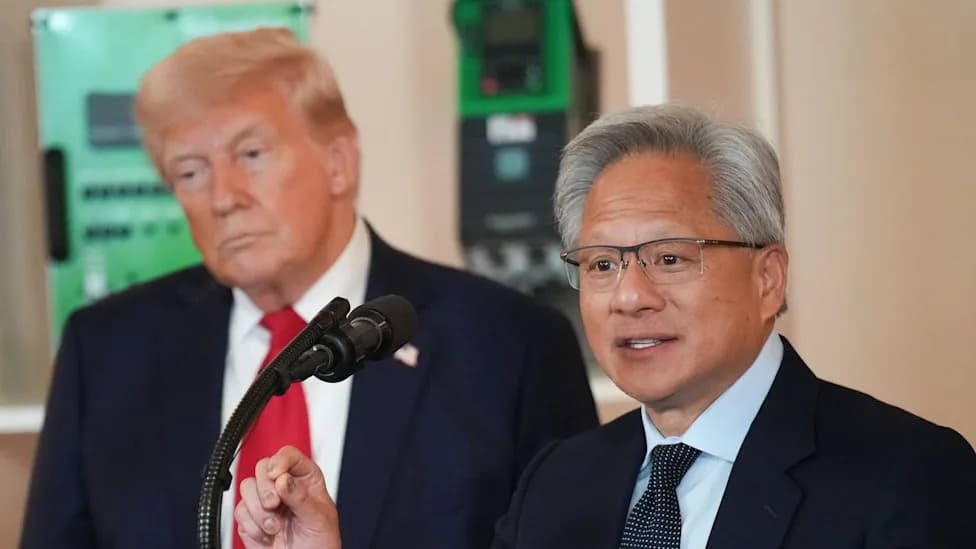
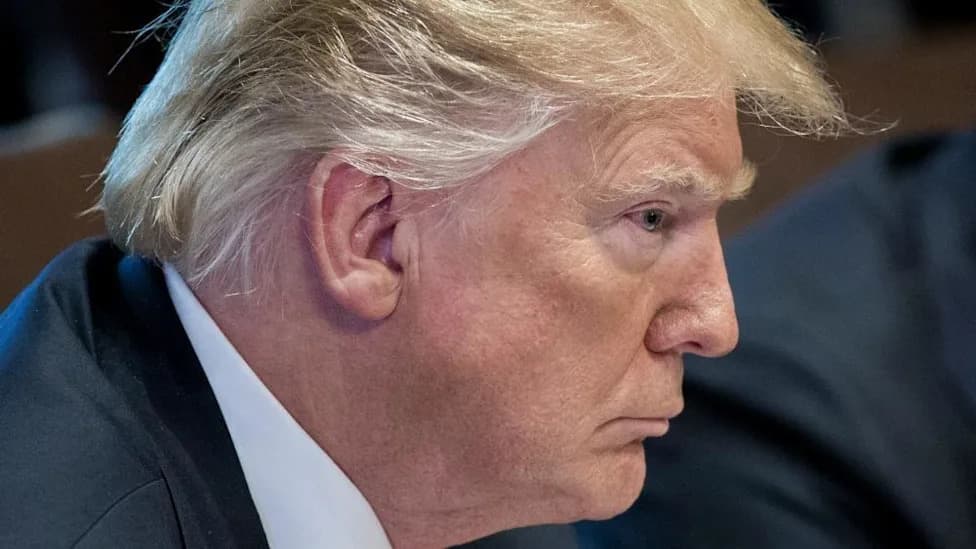
U.S. President Donald Trump listens as Nvidia CEO Jensen Huang speaks in the Cross Hall of the White House during an event on "Investing in America" on April 30, 2025, in Washington, DC.
Calls For Federal Leadership And International Standards
Shapiro urged the federal government to lead international discussions on safety standards for frontier AI systems, to require independent reviews of advanced models before wide deployment, and to strengthen transparency rules. He called for the issue to be high on the agenda when President Trump meets Xi, arguing that the U.S. should both compete and build common guardrails with allies and partners.
State-Level Actions
The governor also pointed to state initiatives. Last month, Shapiro signed an executive order, Protecting Pennsylvania Consumers From Data Center Projects, which imposes new requirements on AI data-center projects amid concerns about energy use, transparency and local impacts. He cited Pennsylvania’s lawsuit against Character.AI as an example of state efforts to mitigate perceived gaps in federal oversight.
Shapiro warned that congressional inaction could allow the technology to advance significantly before lawmakers return to Washington, and stressed he is not opposed to AI development — noting Pennsylvania companies using AI in infrastructure, health care and agriculture — but that stronger oversight is necessary to manage risks like misinformation, cyber threats and harmful automated advice.
Newsweek reached out to the White House and Nvidia for comment.
Photo caption: Pennsylvania Gov. Josh Shapiro speaks during a news conference at the state Capitol, Aug. 18, 2026, in Harrisburg. Insets: Donald Trump and Xi Jinping.
Help us improve.