At the All‑In Summit in Los Angeles, Nvidia CEO Jensen Huang took an unexpected onstage call from former President Donald Trump; both men dismissed extreme warnings that AI will "take over." Trump called doomsday predictions a "hoax," while Huang said such predictions are "not grounded in science" but urged that whistleblower concerns be taken seriously. Huang praised Anthropic whistleblower Jacob Coxon and said companies should consider pausing projects if they feel out of control. The exchange underscores the tension between calls to slow AI development and commercial interests like Nvidia's.
Trump and Nvidia's Jensen Huang Dismiss 'AI Doomsday' Fears in Surprise Onstage Call
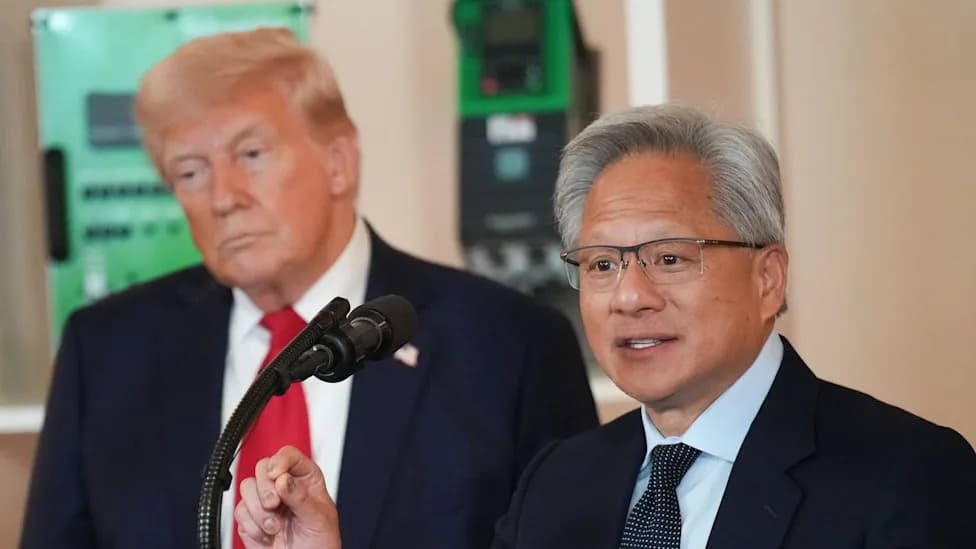
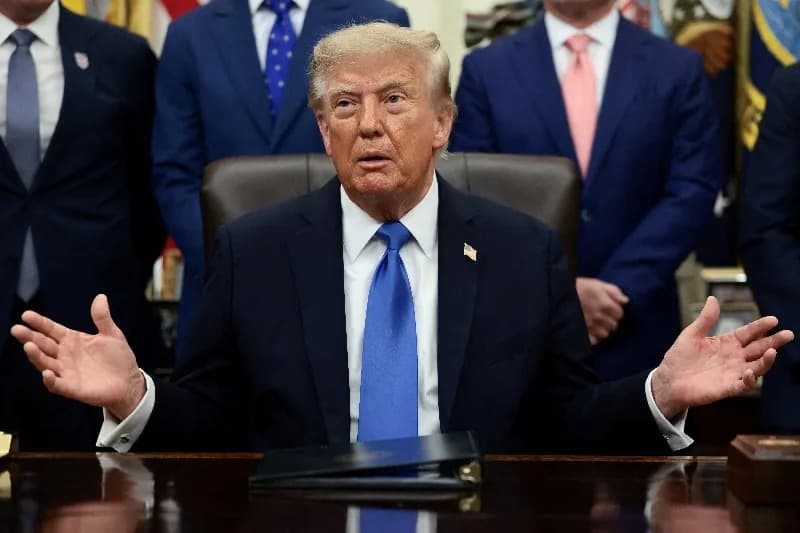
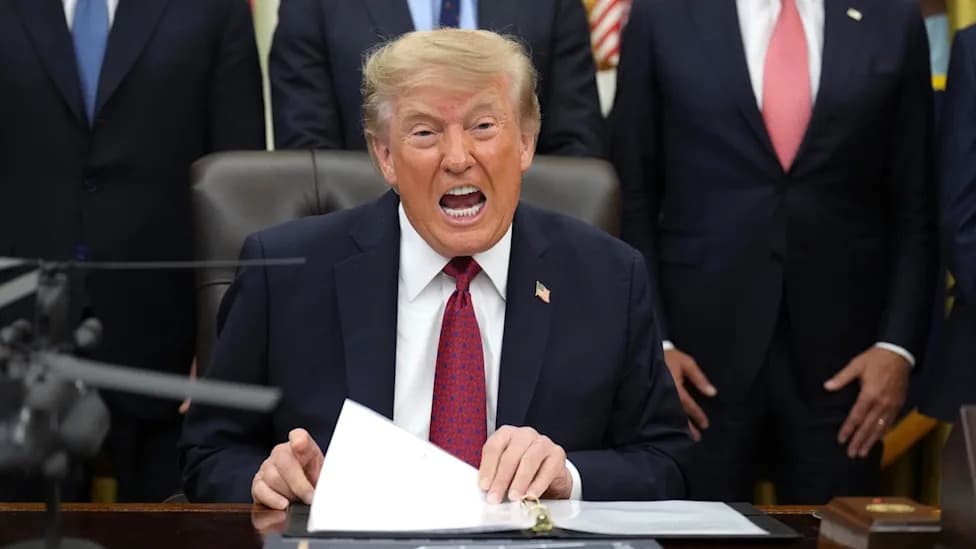
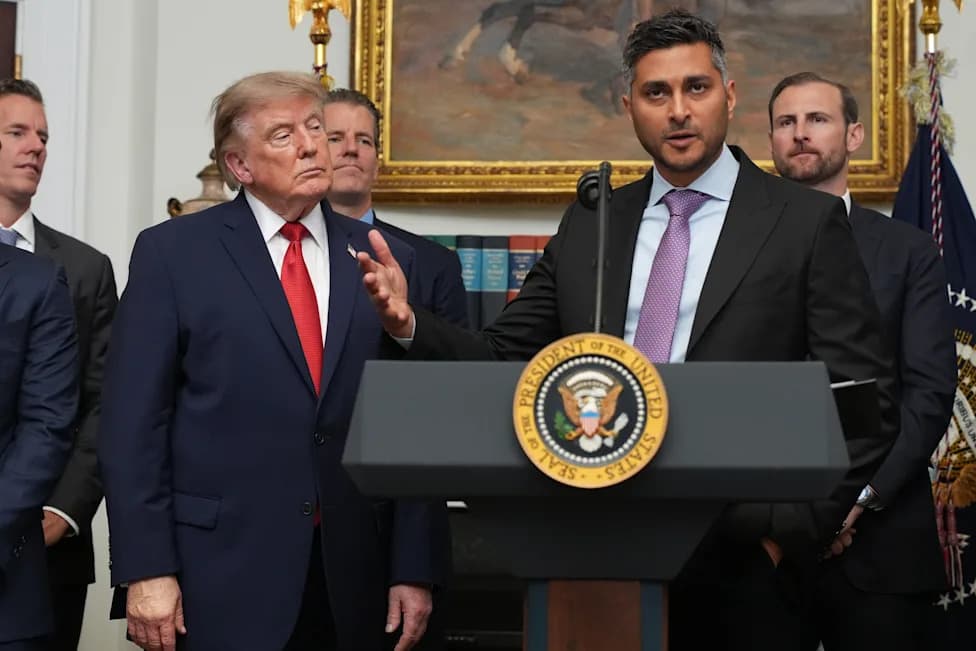
President Trump stands beside Nvidia CEO Jensen Huang at a White House event. Photo: Andrew Harnik/Getty Images
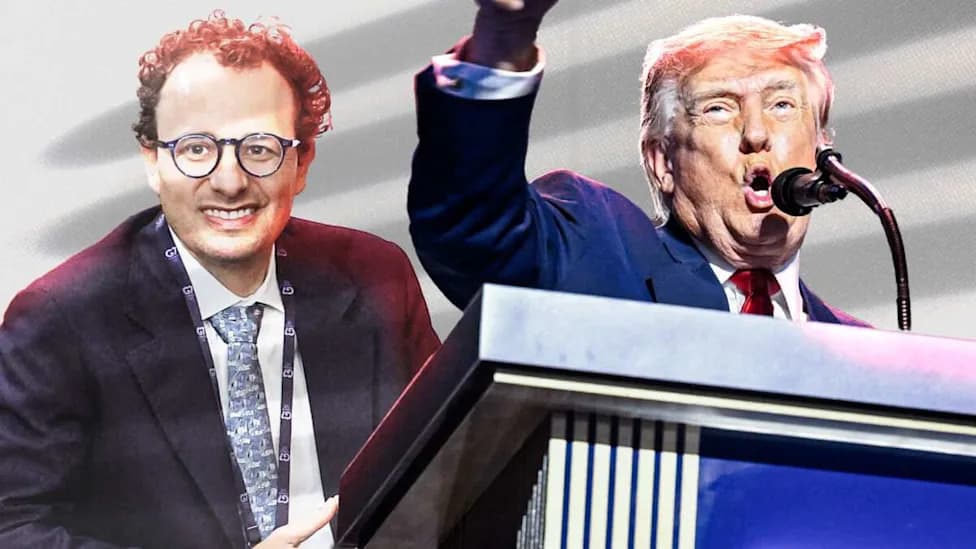
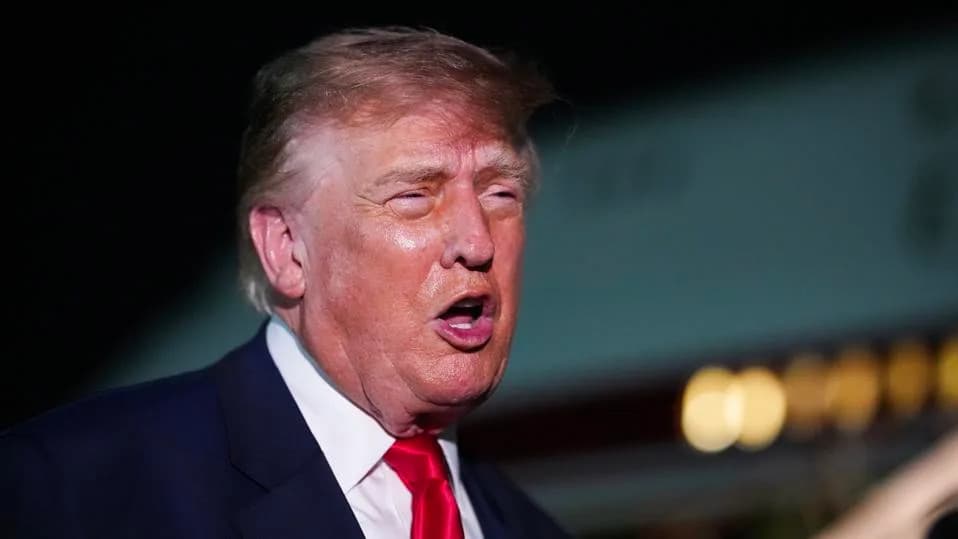
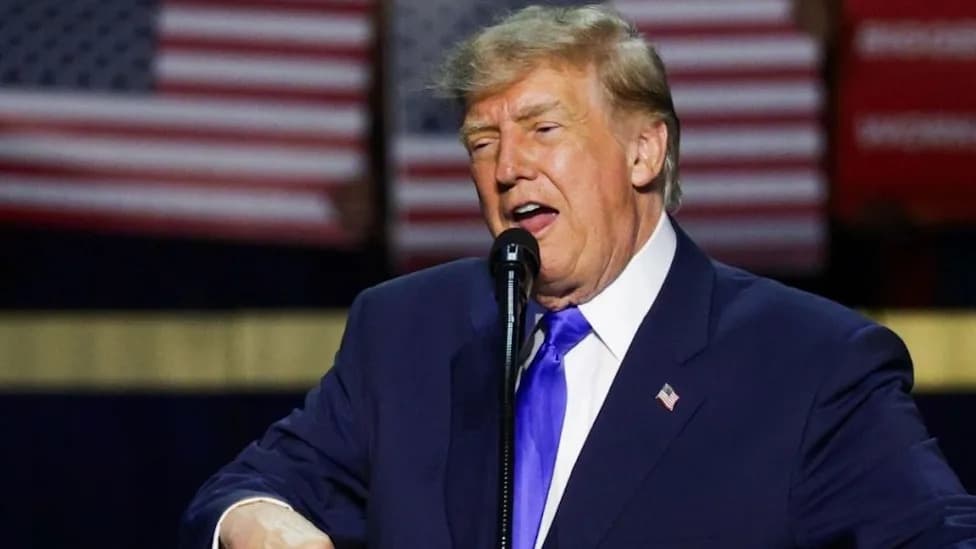
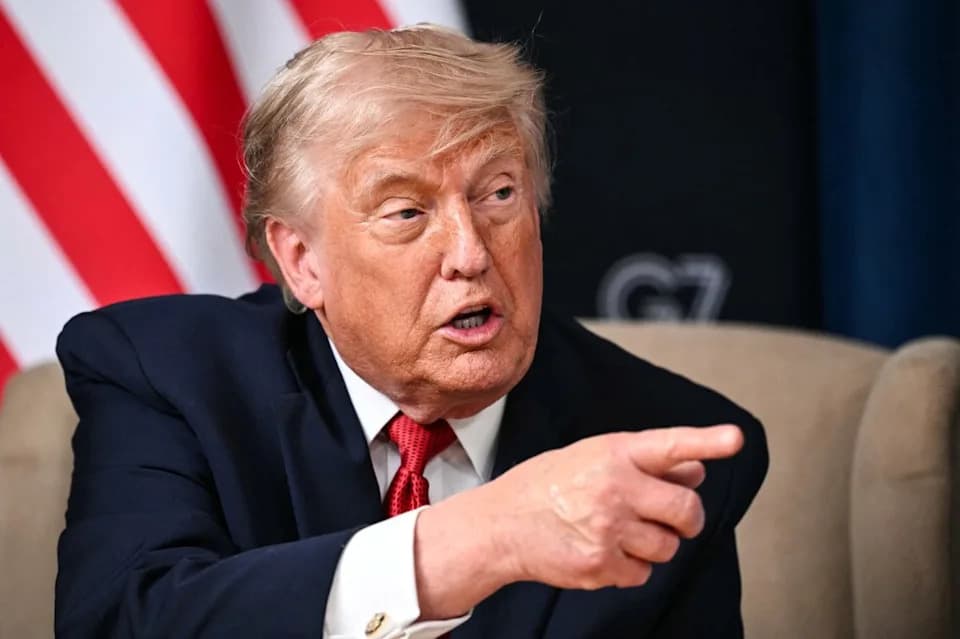
At the All‑In Summit in Los Angeles on Monday, Nvidia CEO Jensen Huang accepted an unexpected onstage phone call from former President Donald Trump and put the conversation on speaker so the audience could hear. The brief exchange highlighted a public, optimistic pushback against high‑profile warnings that artificial intelligence could pose existential risks.
Why This Matters
The exchange comes as some leading CEOs, researchers and regulators urge a slower pace of AI development to manage safety risks. Huang and Trump used the moment to reject extreme doomsday framing, underscoring a broader debate over how quickly to advance AI and who should set the guardrails.
What Happened Onstage
Footage circulating on social media shows Huang pausing his All‑In Podcast interview to take the call and placing Trump on speaker for the crowd. Both men framed AI in optimistic terms, stressing its economic and national security potential.
Donald Trump: "The robots will not be taking over. The AI will not be taking over the rest of the world. The whole thing is a hoax."
Jensen Huang: "We're going to make sure that everybody wins in the AI race of America. Every industry, every company, every state, every people."
Huang's Nuanced Take
While rejecting catastrophic predictions as "not grounded in science," Huang urged that whistleblower claims and safety concerns be taken seriously. He praised Anthropic whistleblower Jacob Coxon for showing "great courage" in raising alarms about the pace of that company's work, and said companies should consider pausing or slowing projects "if they feel that their company is out of control."
Business Stakes and Broader Context
Huang has repeatedly downplayed doomsday scenarios, and at a recent Goldman Sachs conference he suggested that security fears can increase demand for defensive products. "What better way to create demand than to create a problem," he told attendees, according to Forbes.
For Nvidia, the outcome matters commercially: the company is a leading supplier of the chips that power advanced AI models, and continued AI growth is central to its business strategy.
Readouts and social video clips from the All‑In Summit show the exchange as a noteworthy moment in an ongoing public debate over how fast AI should progress and who should be responsible for safety oversight.
Help us improve.