The Trump Administration has proposed reallocating $52 million in foreign military financing from Iraq, North Macedonia, Slovakia and Tunisia to Colombia, Ecuador, Panama and Peru to fight narcoterrorism and help secure the Panama Canal. The move is framed as limiting adversary influence in the Western Hemisphere and ties into a broader "Trump Corollary" approach to Latin America. Experts warn the shift risks eroding long-term trust with European and Middle Eastern partners, weakening NATO capabilities, and making U.S. assistance vulnerable to political conditionality or misuse.
U.S. Redirects $52M in Military Aid to Latin America, Sparking Alliance Concerns
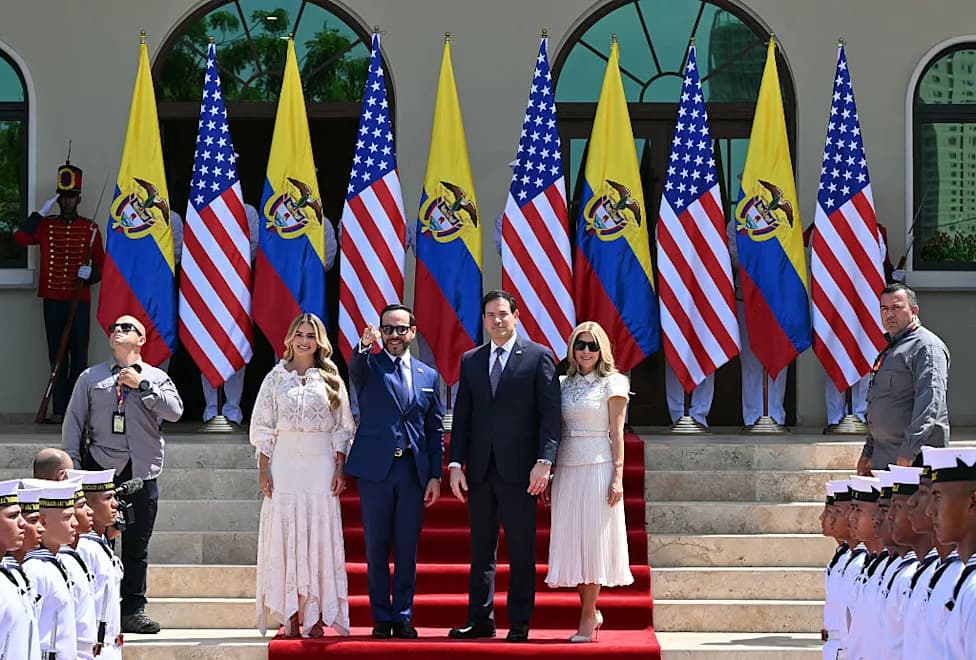
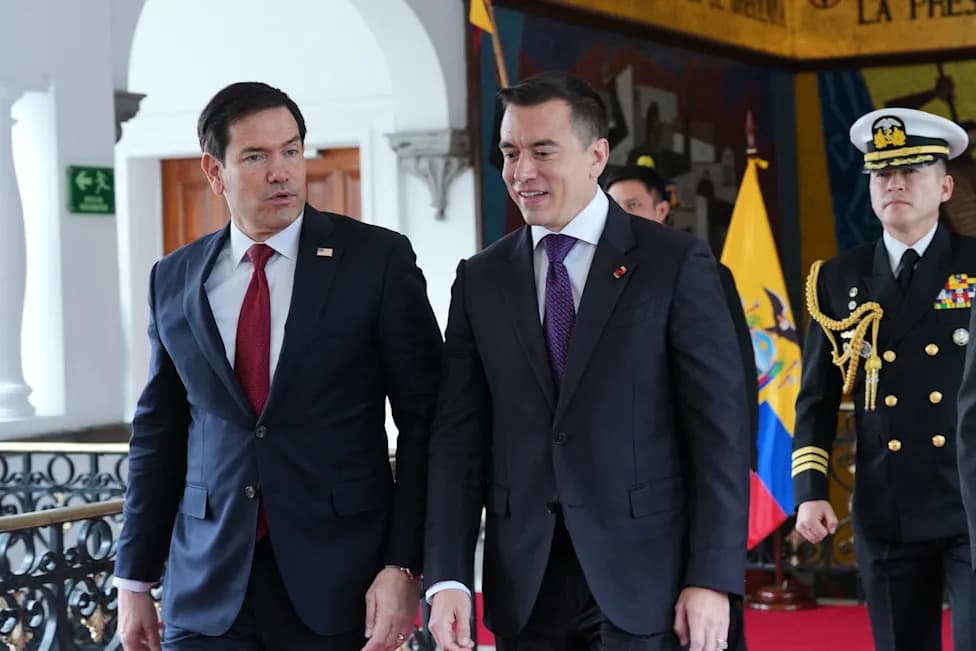
Secretary of State Marco Rubio (2nd R) and his wife Jeanette Dousdebes are welcomed by by Colombia's President Abelardo de la Espriella and his wife Ana Lucia Pineda upon their arrival in Barranquilla, Colombia, on September 8, 2026. —Luis Acosta—AFP/Getty Images
The Trump Administration has notified Congress of a proposed reprogramming that would divert $52 million in Foreign Military Financing (FMF) originally intended for Iraq, North Macedonia, Slovakia and Tunisia to Colombia, Ecuador, Panama and Peru. The State Department said the funds would be used to "combat narcoterrorism in our own backyard" and to "help continue to secure the Panama Canal." The department has not specified how much support, if any, the European and Middle Eastern recipients will retain after the shift.
Administration Rationale
Officials argue the move will shrink opportunities for rival powers to gain strategic footholds in the Western Hemisphere. A State Department official told TIME that "the proposed reprogramming in the Western Hemisphere will reduce opportunities for adversaries to establish or sustain strategic footholds in our hemisphere." The reallocation aligns with the White House's stated aim of bolstering influence in Latin America to counter narcotics trafficking and limit the influence of actors such as China.
Policy Context
Late last year the White House published a national security strategy that emphasizes a more hands-off posture in parts of Europe and the Middle East, encouraging partners to become more militarily self-reliant. The administration has described its Latin America approach as a modern reiteration of the Monroe Doctrine—branded by President Trump as the "Trump Corollary" or "Donroe Doctrine"—and has signaled a willingness to favor governments broadly aligned with U.S. policy priorities.
Experts Warn of Long-Term Costs
Security analysts and former officials tell TIME the reprogramming risks eroding trust and undermining long-term alliances. "You're eroding silently, quietly, bit by bit, this trust in the United States," said Jim Townsend, who served as Deputy Assistant Secretary of Defense for European and NATO Policy in the Obama administration. "And then when we need them to do something … well, you're turning to a weaker country because you have been pulling their assistance and all of these tools that we have to make them a stronger ally."
Rebecca Bill Chavez, former Deputy Assistant Secretary of Defense for Western Hemisphere Affairs, cautioned: "U.S. security relations are built over time. If assistance becomes tied to particular governments rather than to countries and institutions, that is risky. We have to show the region that we are a reliable partner, and consistency is a key part of that."
Operational Activity And Risks
The administration has increased some military assistance and operations in the region, including joint operations with partner countries and strikes on vessels U.S. officials said were transporting narcotics. These actions have drawn criticism across the political spectrum in Washington. Critics also warn that diverting FMF from NATO members and other partners could reduce their ability to buy U.S. equipment, train with U.S. forces and maintain interoperability—key elements of collective deterrence.
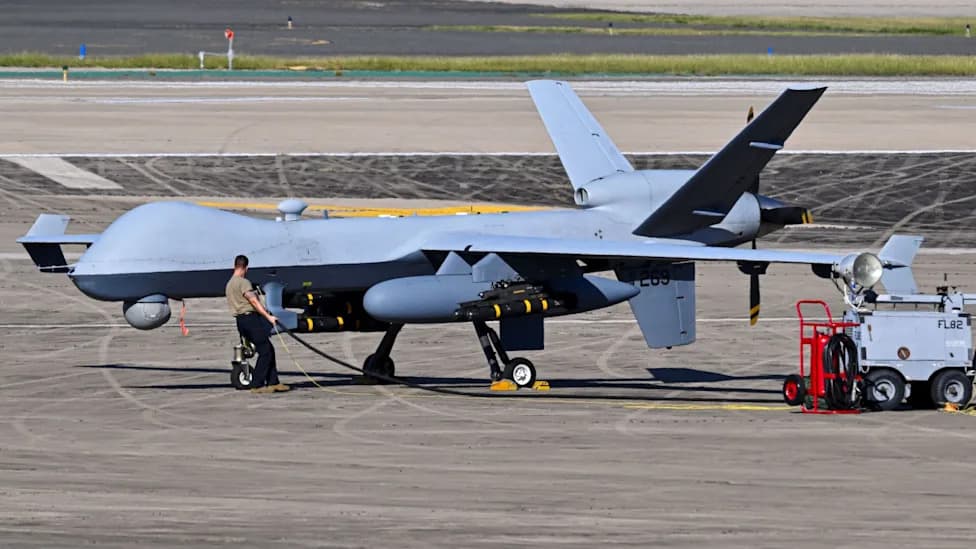
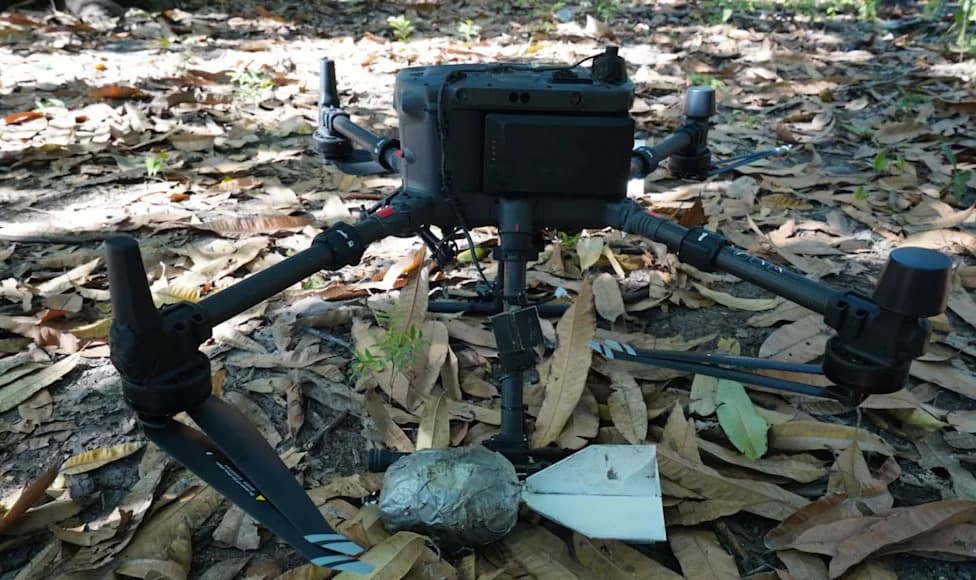
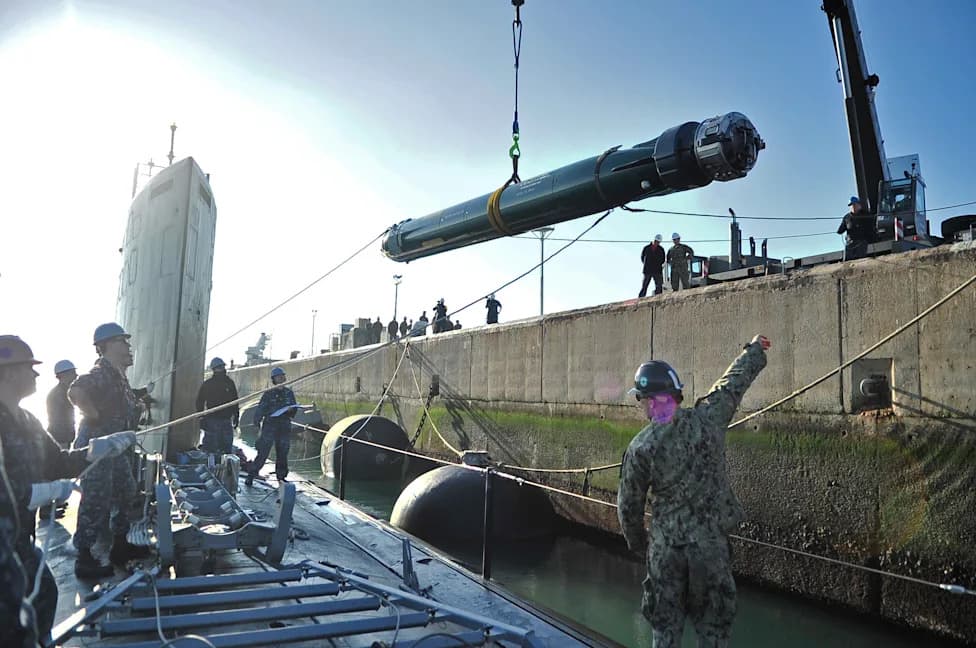
FMF enables partner countries to purchase U.S. military equipment and participate in joint training. Without it, countries may struggle to acquire defensive systems such as drones and aircraft, weakening the collective defense posture. Townsend warned this can "create allies who are not as strong as they could have been" and less integrated with U.S. operations.
Concerns About Political Conditionality And Misuse
Observers worry assistance decisions tied to political alignment could undermine long-term relationships and stability in the region. Townsend also highlighted a historical risk: assistance can sometimes be diverted or used by regimes to repress opposition. "It's been a very spotty record in terms of assistance that we give to countries in the Caribbean or in Central America, Latin America, where this money ends up going to the wrong people," he said.
As Congress reviews the notification, lawmakers and analysts will weigh the trade-offs between an intensified Western Hemisphere focus and the potential long-term costs to alliances in Europe and the Middle East.
Help us improve.