Finnish authorities staged a live at-sea boarding in the Gulf of Finland to rehearse responses to suspected undersea sabotage following a string of ruptures to subsea cables and pipelines. Masked coast guard, police and military personnel fast-roped from a helicopter, secured the crew and swept the vessel room by room. Officials say signs of involvement can include abrupt speed or course changes; response times have improved and preparations now cover threats from divers, mini-submarines and remotely operated vehicles. The government is seeking new powers to inspect stateless or falsely flagged ships and counter unmanned underwater vehicles.
Finland Conducts Live At-Sea Boardings To Counter Undersea Sabotage
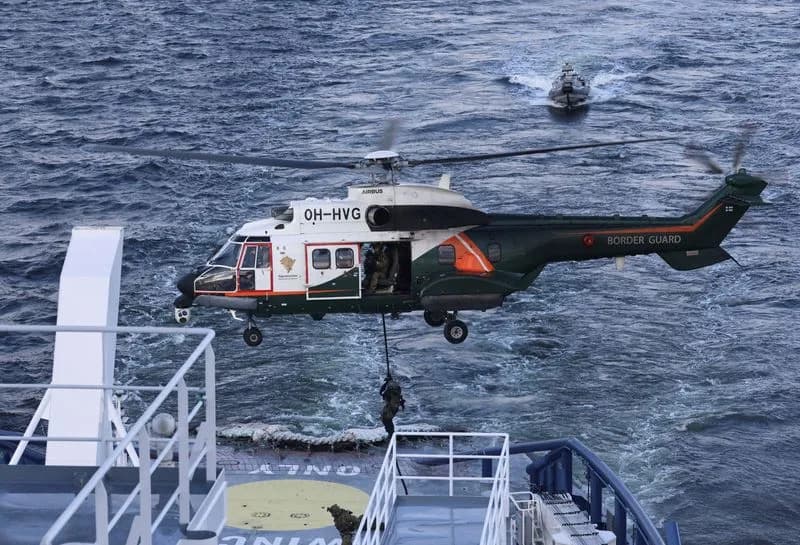
Members of the Finnish security forces board an icebreaker from a coast guard helicopter as part of the MARSEC EU26 exercises at sea in the Gulf of Finland, September 17, 2026. REUTERS/Tom Little
GULF OF FINLAND, Sept 17 — Finnish authorities carried out a live exercise on Thursday in which coast guard, police and military personnel boarded and searched a target vessel in the Baltic Sea to rehearse responses to suspected undersea sabotage.
Masked officers fast-roped from a helicopter onto the ship's deck, secured the crew and conducted a systematic room-by-room sweep, demonstrating coordinated action between the coast guard, police special intervention units and the armed forces.
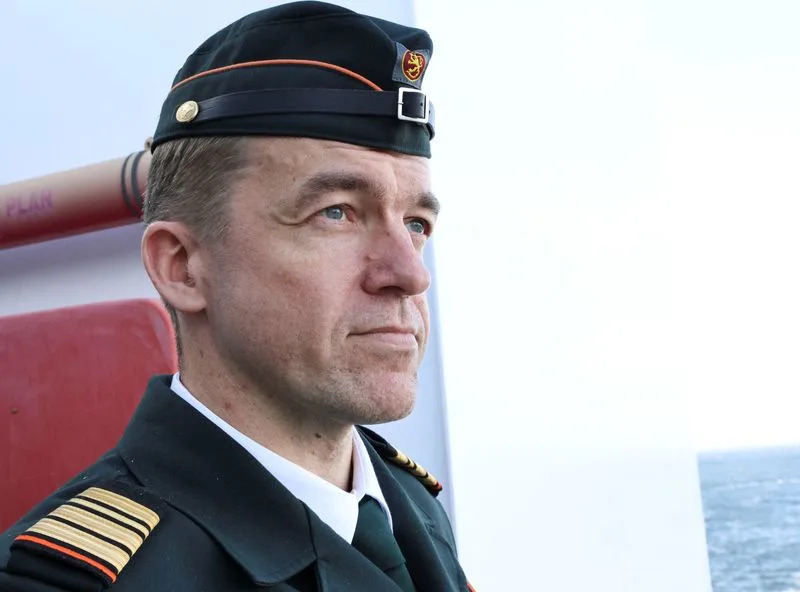
Ilja Iljiin, a commander at the Finnish Border Guards' headquarters who led the Marsec EU 26 exercise, poses for a picture on board an icebreaker at sea in the Gulf of Finland, September 17, 2026. REUTERS/Tom Little
Coast Guard Commander Ilja Iljin, who led the drill, said the exercise reflects what Helsinki regards as "the new normal." "In the past two or three years we've had several incidents in the Baltic related to the damaging of critical underwater infrastructure," Iljin said. "So we have to be ready for when the next event happens."
Since Russia's invasion of Ukraine in 2022, countries around the Baltic have reported ruptures to subsea power cables, telecom lines and gas pipelines, heightening concerns about the vulnerability of critical underwater links. Officials said signs a vessel might be involved include abrupt changes in speed or sudden course alterations as it passes over an undersea line.
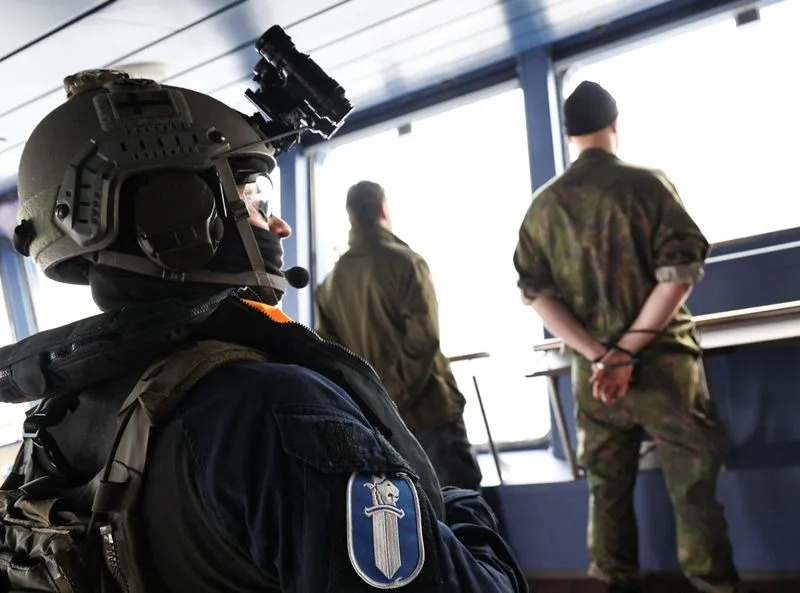
A member of the Finnish police guards people playing the role of detainees on board an icebreaker during the MARSEC EU26 exercises at sea in the Gulf of Finland, September 17, 2026. REUTERS/Tom Little
Authorities say their response capability has improved with each incident: the first suspected ship sailed off before officials could act, while the most recent vessel was brought under control within hours. In an actual emergency, police officers on standby can reach their base within an hour and then deploy by helicopter or boat, according to Chief Inspector Juha Hietala of the police special intervention unit.
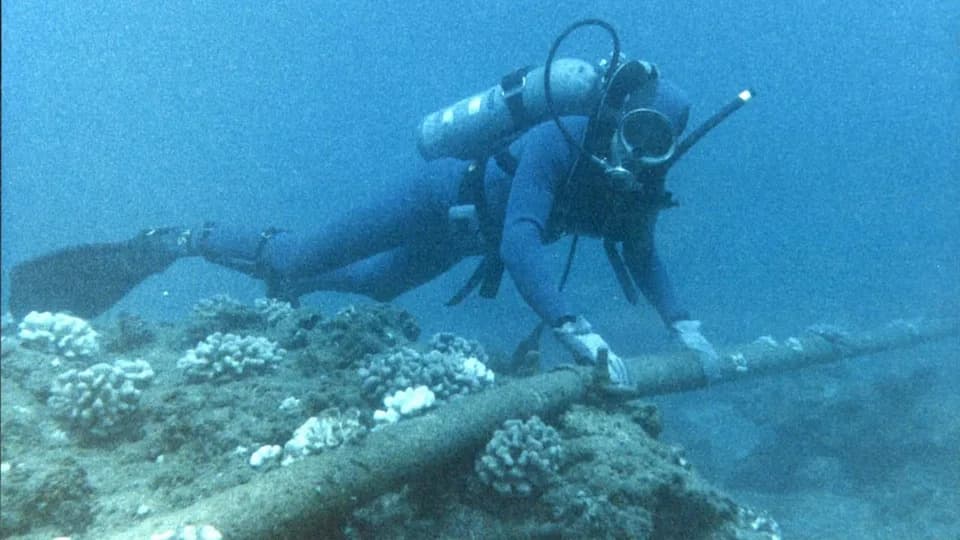
While many past incidents appear to have been caused by ships dragging anchors, officials are also preparing for deliberate sabotage by divers, small submarines or remotely operated underwater vehicles (ROVs) potentially carrying explosives. The Finnish government is seeking new legal powers to allow the Border Guard — including the coast guard — to stop and inspect vessels suspected of being stateless or falsely flagged and to take action against unmanned underwater vehicles.
Why This Matters
Undersea cables and pipelines carry electricity, communications and gas between nations; damage to that infrastructure can have wide-ranging economic and security consequences. Finland's live drill underscores growing regional efforts to detect, deter and respond rapidly to threats beneath the waves.
(Reporting by Tom Little and Essi Lehto; Editing by Terje Solsvik and Timothy Heritage)
Help us improve.