Lockdowns and active-shooter simulations are distinct: lockdowns focus on locks, lights, and moving out of sight, while simulations may include actors, staged gunfire, or fake injuries. By 2025, 37 states required some form of annual drill, but policies and practices vary widely. Research suggests simple lockdowns can reduce casualties and increase preparedness, whereas high-intensity simulations risk psychological harm without clear evidence of real-world benefit. Experts recommend neutral language, age-appropriate explanations, and standardized, low-impact procedures.
Lockdown vs. Active-Shooter Drills: Why the Difference Matters for Children’s Safety and Well‑Being

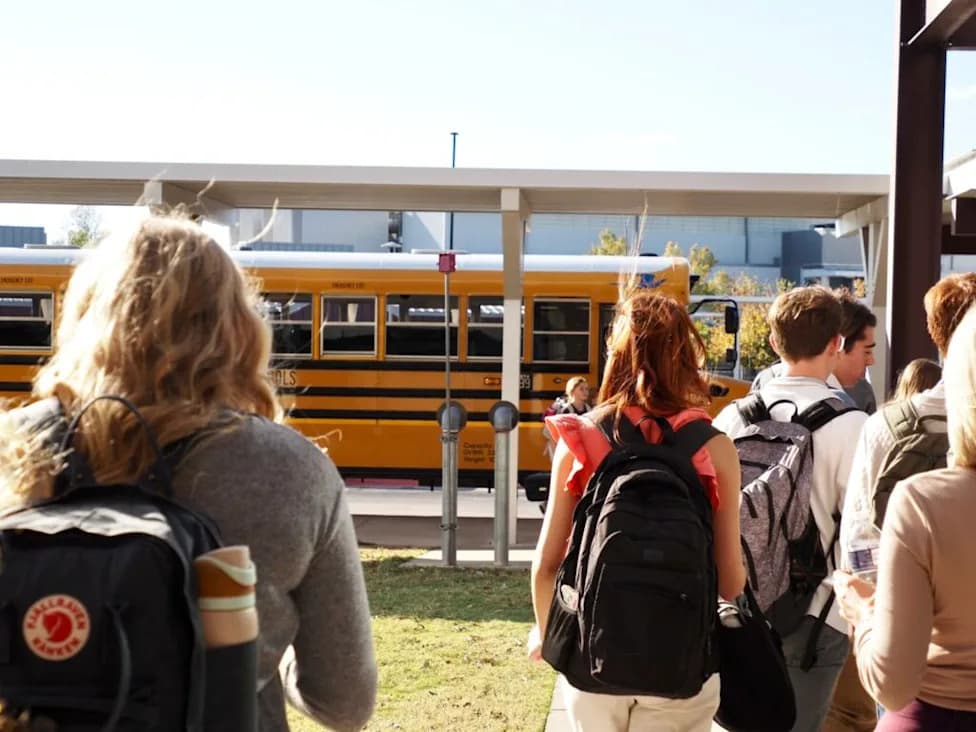
Most states have laws that mandate lockdowns, but the exercises differ greatly in practice.Catherine McQueen/Moment via Getty Images
School safety drills have become a familiar — and often fraught — part of the back-to-school routine. Since the 1999 mass shooting at Columbine High School, many U.S. districts have added intruder-preparedness exercises to their emergency plans. Yet the phrase active shooter drill is frequently used to describe very different practices, and that conflation has real consequences for children, parents, and educators.
Two Very Different Practices
What Is a Lockdown?
A lockdown drill emphasizes three simple, procedural elements: lock the door, turn off the lights, and move out of sight. Teachers and students learn to secure classrooms, remain quiet, and wait for an authorized all-clear from staff or police. Lockdowns are versatile: they can be used for a range of threats from nearby police activity or a volatile parental dispute to wildlife in the building or, in the worst case, an armed intruder.
What Are Active-Shooter Simulations?
Active-shooter simulations are intended specifically to reproduce an armed assailant scenario. These high-intensity exercises sometimes use actors portraying shooters, simulated gunfire, fake blood or staged injuries, and in some cases nonlethal projectiles like BBs or paintballs. A minority of schools use sensory or hyperrealistic elements, while many do not.
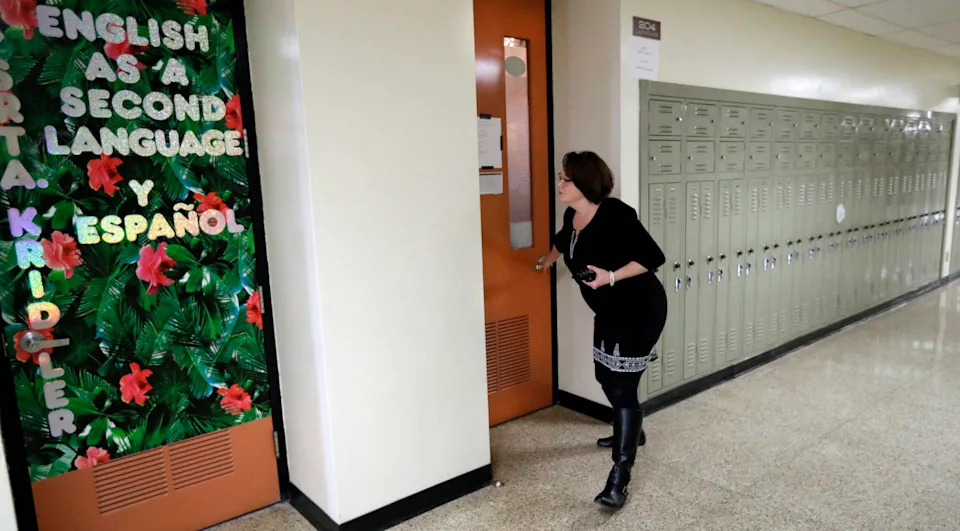
A high school principal checks classroom doors to make sure they are locked during a lockdown drill in Boardman, Ohio, in 2019.Tony Dejak/Associated Press
What the Evidence Says
Research is mixed and often limited by inconsistent definitions and study designs. Observational studies suggest practical benefits to lockdowns: for example, research from Texas State University linked unsecured classroom doors with higher victim counts during school attacks, and other studies associated lockdowns with fewer casualties in mass shootings. Some surveys and district-level evaluations report that students feel better prepared and less fearful after practicing the locks-lights-out-of-sight routine.
By contrast, there is no strong evidence that hyperrealistic active-shooter simulations improve outcomes in real events. Because such attacks are fortunately rare, rigorous studies that demonstrate improved survival or reduced harm from simulations are lacking. Meanwhile, professional organizations warn that high-intensity simulations can cause psychological harm, particularly for younger students and staff who experience them without adequate preparation or follow-up.
Policy, Practice, and Public Perception
State requirements vary widely. By 2025, 37 of 50 states required schools to conduct an active shooter or lockdown drill at least once per year. Federal reports that say 95% of schools conduct drills are most often referring to the low-intensity locks-lights-out-of-sight style, not to hyperrealistic simulations. Ambiguous terminology in reports and media coverage has contributed to public confusion and alarm.
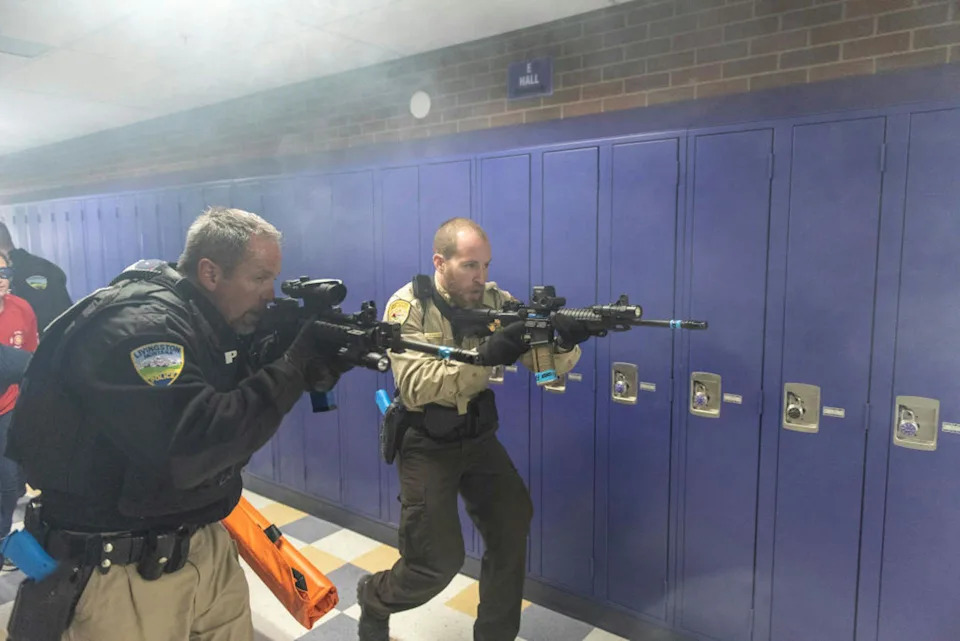
An active shooter drill is performed by police officers at Park High School in April 2018 in Livingston, Mont.William Campbell/Corbis via Getty Images
Some states, including New York and California, limit or ban high-intensity simulations. Others explicitly differentiate between lockdowns and simulations, and many have no specific guidance, leaving practices inconsistent across districts and schools.
Practical Guidance for Parents and Schools
- Use neutral language. The American Academy of Pediatrics recommends calling exercises "lockdown" or "safety drills" rather than using more alarming labels.
- Match the drill to the age group. Very young children can learn the routine without frightening explanations; older students benefit from age-appropriate context about safety and prevention.
- Avoid hyperrealistic staging for younger students and ensure any simulation includes informed consent, trauma-aware instructors, and post-drill debriefing and supports.
- Standardize procedures. Simple, repeatable steps similar to fire drills are less likely to cause harm and easier to evaluate for effectiveness.
Conclusion
Lockdowns and active-shooter simulations are not the same, and conflating them obscures the risks and benefits of each. Evidence supports routine, low-impact lockdown drills as a practical measure that can reduce risk and build readiness. High-intensity simulations raise concerns about trauma and lack clear proof of benefit. Clear terminology, standardized policies, and age-appropriate approaches can help schools keep students safe while minimizing psychological harm.
This article is republished from The Conversation. It was written by Emily Greene-Colozzi, UMass Lowell. The author reports funding from the National Institute of Justice and the Regional Gun Violence Research Consortium.
Help us improve.