New research shows extreme heat seasons are expanding beyond summer, arriving earlier in spring and persisting later into fall across many regions. The study compared the 1980s with 2015–2024 data and found dry heat has expanded across just over half of global land while humid heat has expanded across just under half. Regional patterns vary, and the timing shifts increase the risk of overlapping hazards like wildfires and hurricanes. The authors say rising temperatures linked to climate change are likely a primary factor.
Study: Extreme Heat Is Creeping Out of Summer — Spring and Fall Are Getting Hotter
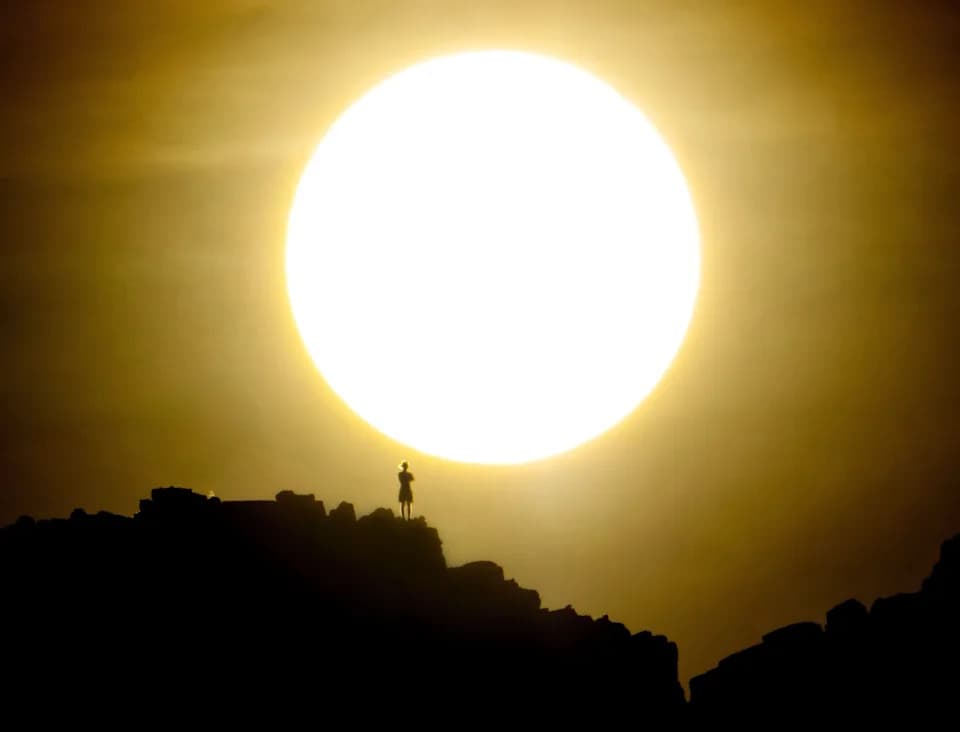
Climbers watch the sunrise on the summit of Piestewa Peak during an extreme heat wave in Phoenix in 2023.
Across much of the globe, extreme heat is no longer confined to the traditional summer months. A new study led by Casey (Catherine) Ivanovich of Columbia University finds that heat extremes are arriving earlier in spring and lingering later into fall, expanding the seasons of dangerous temperatures over large parts of Earth's land surface.
What the Study Found
The peer‑reviewed analysis, published Sept. 10 in AGU Advances, compares patterns of extreme heat from the 1980s with observations from 2015–2024. The authors report that the season of extreme dry heat has expanded across just over half of the world’s land area, while humid heat seasons have expanded across just under half. These shifts are uneven: some regions are gaining heat earlier in spring, others are seeing the heat season extend further into fall.
Why Timing Matters
“Heat waves in the spring can catch us off guard before our bodies have acclimated to the heat and before we're ready to utilize cooling strategies,” Ivanovich said. “In the fall, heat waves can be more dangerous if we've already experienced repeated extreme heat events that leave our bodies stressed.”
Changes in timing make preparedness harder. Cooling centers, public warnings and infrastructure planning are typically organized around a summer calendar; heat arriving outside that window can expose vulnerable people who are unprepared.
Regional Patterns And Hazards
The analysis highlights regional differences: eastern China, northern Africa and eastern Europe have seen extreme heat become more common in the two months after their historical heat seasons. By contrast, western Europe, southern Africa and northwestern India have seen increases primarily in the two months before the traditional season. In the United States, the study found larger expansions into fall than into spring.
Those shifts can increase overlap with other seasonal hazards — notably wildfire season in the West and the Atlantic hurricane season in the East — creating compound risks that are more damaging than single events occurring in isolation.
Dry Versus Humid Heat
The authors distinguish dry and humid heat because their impacts differ: dry heat tends to stress crops and ecosystems, while humid heat is more dangerous to human health because high humidity reduces the body’s ability to cool by sweating. Adapting to one kind of heat does not necessarily prepare communities for the other.
Causes And Next Steps
Using observations alone, the study cannot fully apportion how much of the timing change is due to human‑caused climate change versus other factors such as land‑use change or natural variability. However, Ivanovich and colleagues note that rising temperatures linked to climate change are likely the primary driver. The team calls for further research to quantify the relative contributions of climate change, land‑use shifts and natural variability.
Implications
Earlier springs and longer falls with extreme heat mean public health systems, emergency services and infrastructure planners must rethink seasonality. Improved monitoring, flexible heat‑response calendars and targeted communication can help communities better prepare for the extended threat of extreme heat.
Reporting credit: Doyle Rice/USA TODAY. Study published Sept. 10 in AGU Advances.
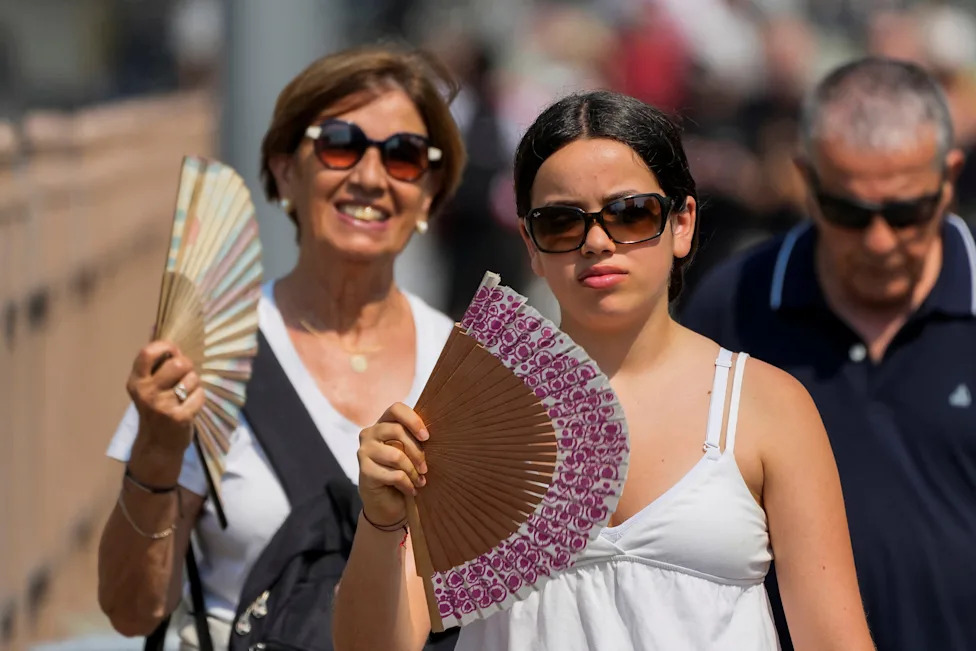
Women use hand fans to cool themselves amid high temperatures in New York City, July 15, 2026.Record-breaking temperaturesand sweltering heat indexes have been felt across much the US during the summer of 2026.(Eduardo Munoz, REUTERS)
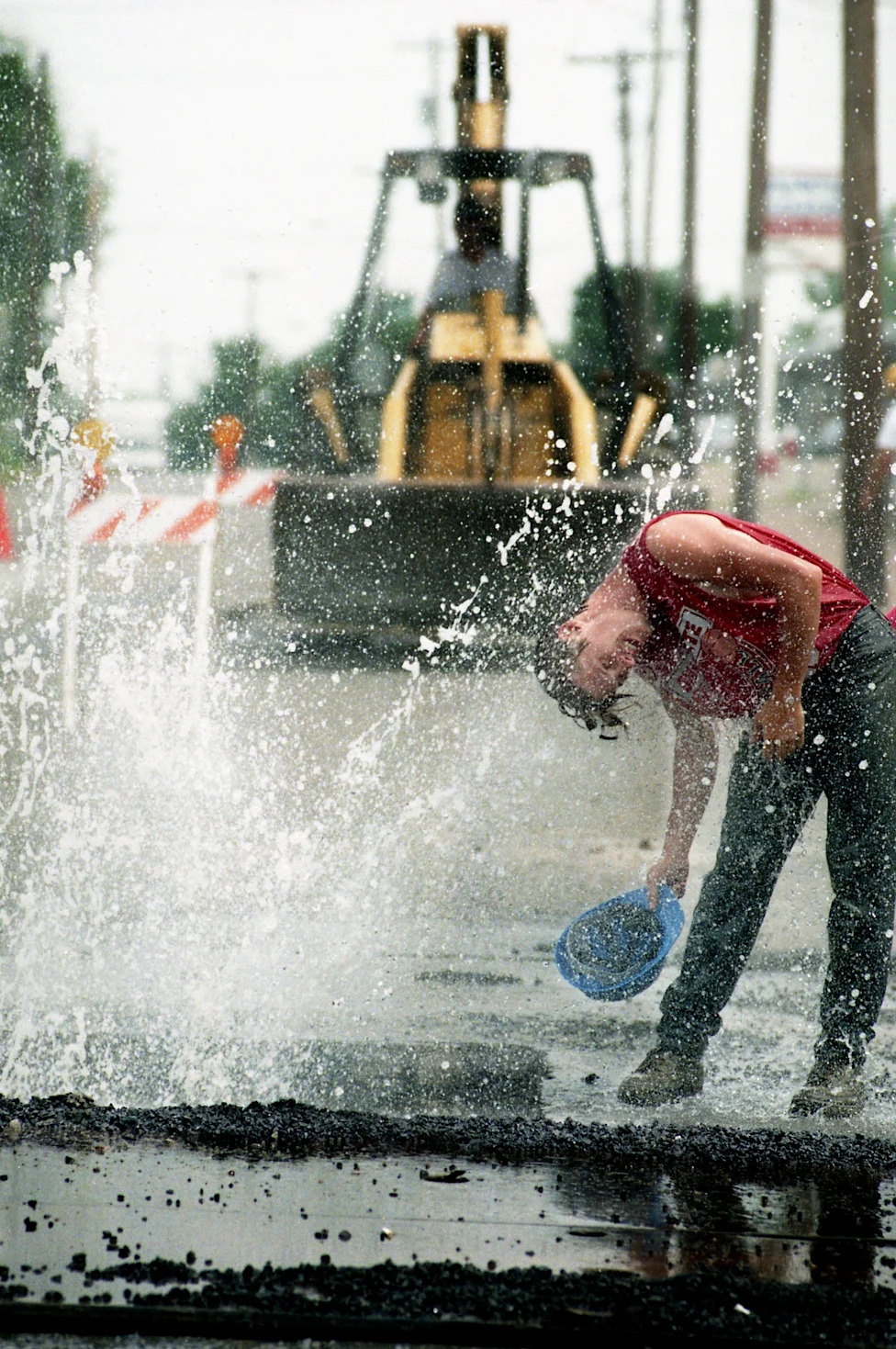
Getting relief from theheat, David Cox, employee of King Pipeline, cools off in the spray of a burst water main in Nashville on July 2, 1996. The pipe was damaged while workers were digging a gas main.(Nina Long / The Tennessean)

A child drinks water during a summer heat wave, at Coney Island, Brooklyn in New York City, July 4, 2026.(Jordan Tovin, REUTERS)
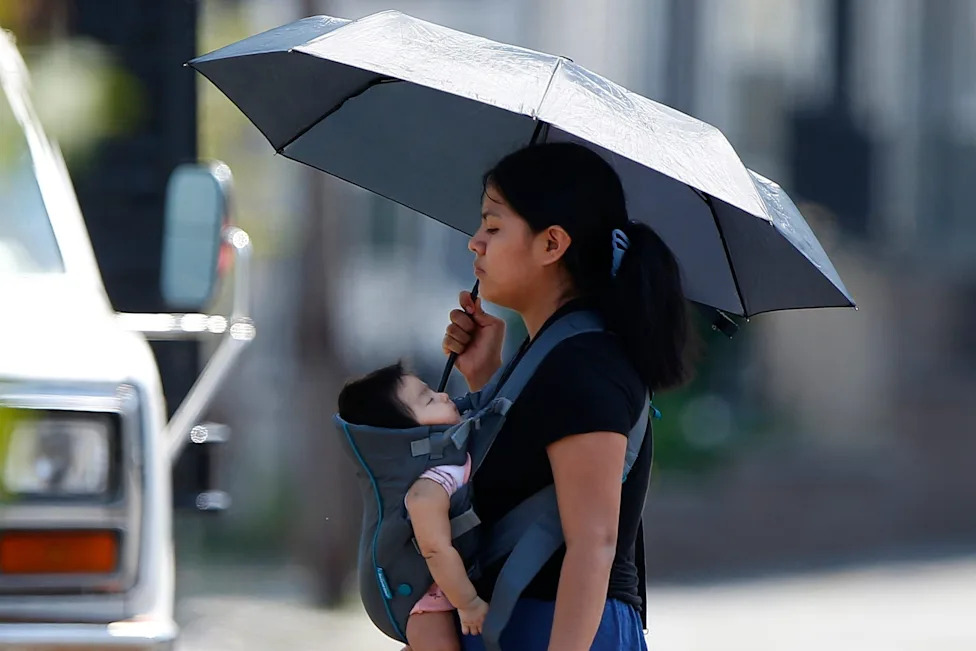
A woman uses an umbrella to shield the sleeping baby from the intense heat, as she walks up N Front Street in New Bedford.(PETER PEREIRA/The Standard-Times, PETER PEREIRA/The Standard-Times / USA TODAY NETWORK)
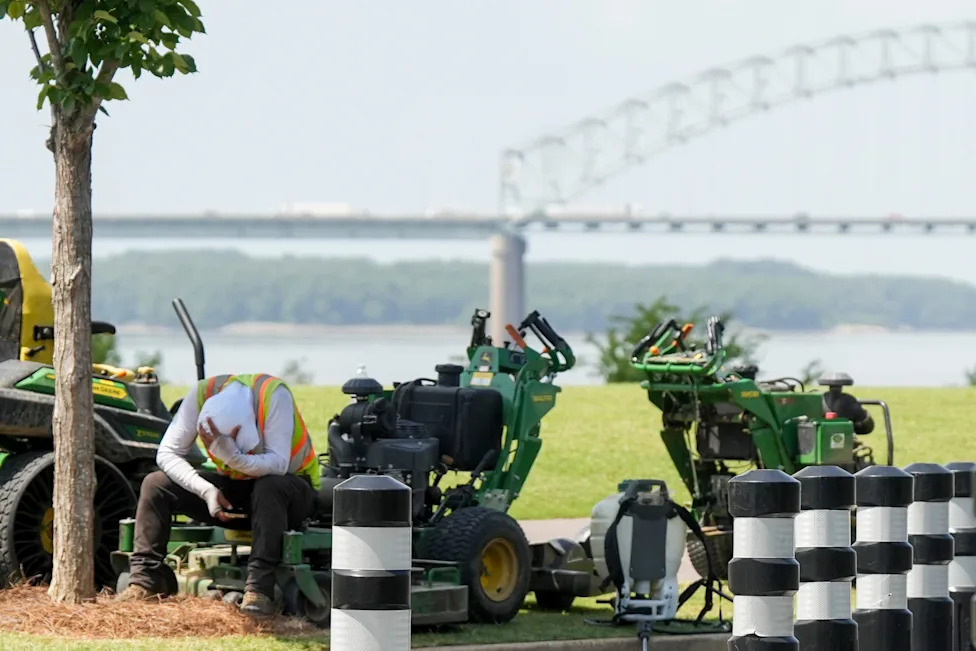
A landscape worker takes a break in the shade after mowing the lawn at Tom Lee Park in Downtown Memphis, on July 21, 2026. Memphis is under an extreme heat warning throughout Tuesday with a head index up to 117 degrees.(Chris Day/The Commercial Appeal)
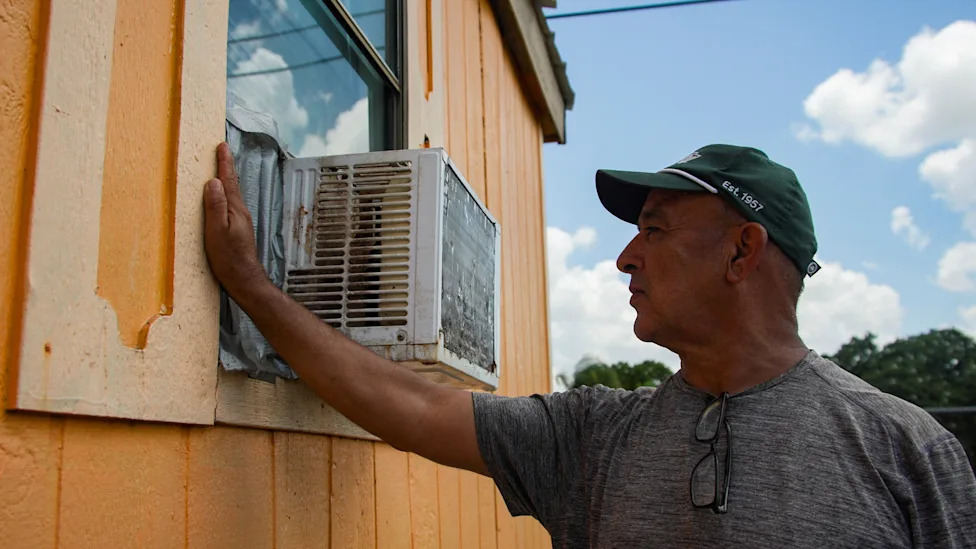
Brownsville resident Carlos Lopez looks on, outside his home in Cameron Park, during extreme summer heat in Brownsville, Texas, July 1, 2026.(Maria Alejandra Cardona, REUTERS)

Children cool off in water from a fire engine hose as extreme heat sweeps the Washington, D.C. area, in Arlington, Va., July 4, 2026.(Kylie Cooper, REUTERS)
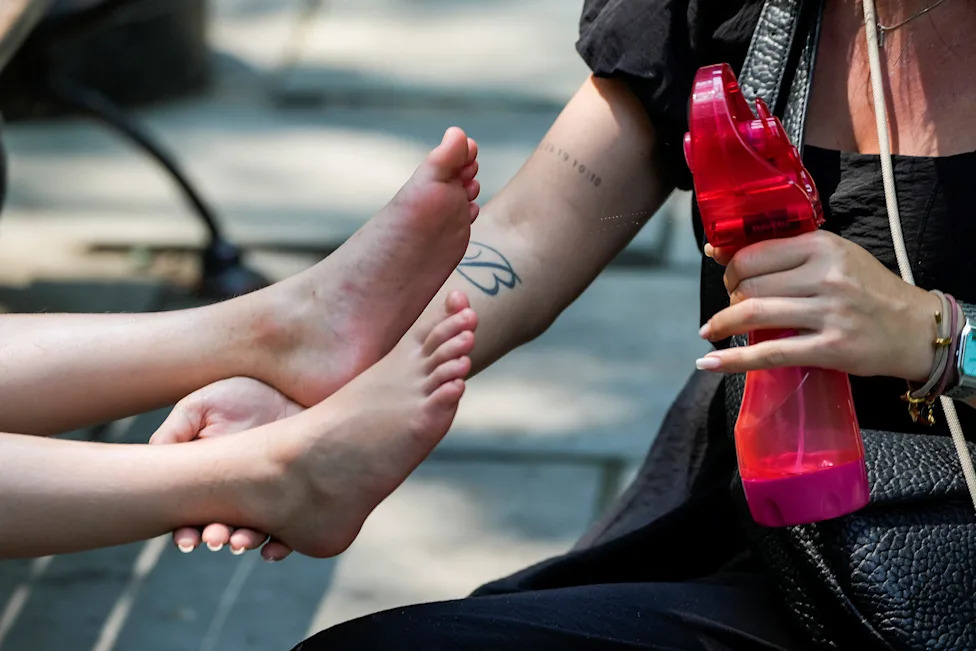
A woman cools her daughter's feet with water amid high temperatures in Lower Manhattan in New York City, July 15, 2026.(Eduardo Munoz, REUTERS)
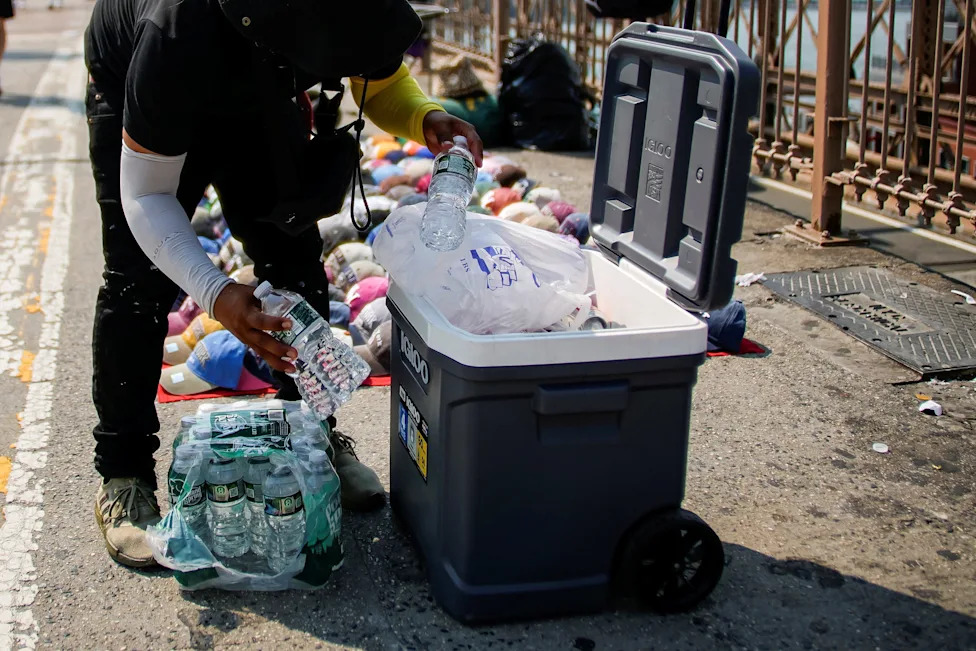
A man fills a cooler with ice and beverages for sale on the Brooklyn Bridge amid high temperatures in New York City, July 15, 2026.(Eduardo Munoz, REUTERS)
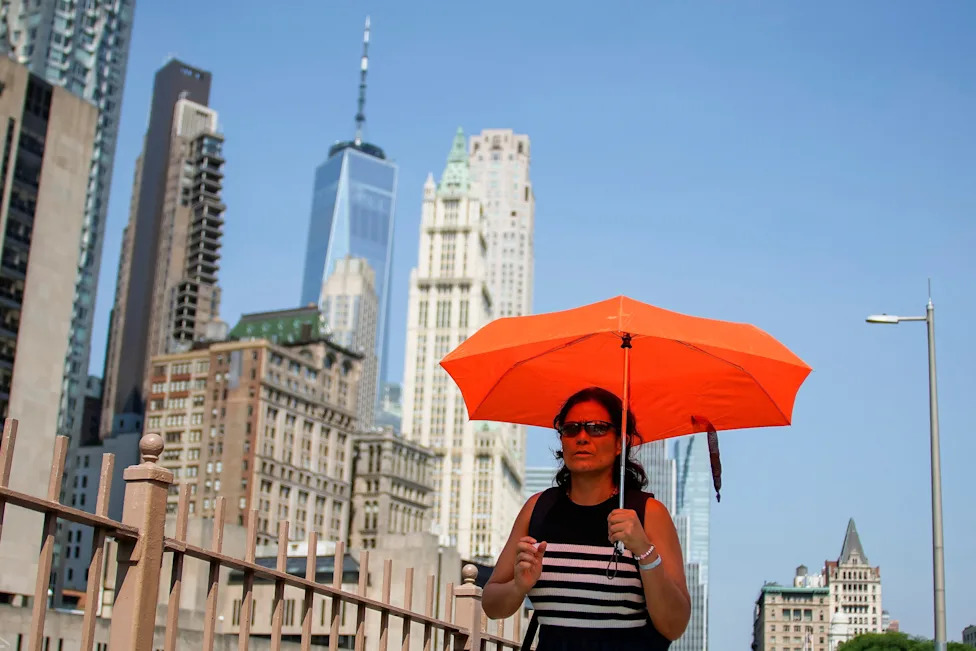
A woman uses an umbrella to shield herself from the sun during high temperatures on the Brooklyn Bridge in New York City, July 15, 2026.(Eduardo Munoz, REUTERS)

A man wipes his face on Wall Street amid high temperatures in New York City, July 15, 2026.(Brendan McDermid, REUTERS)
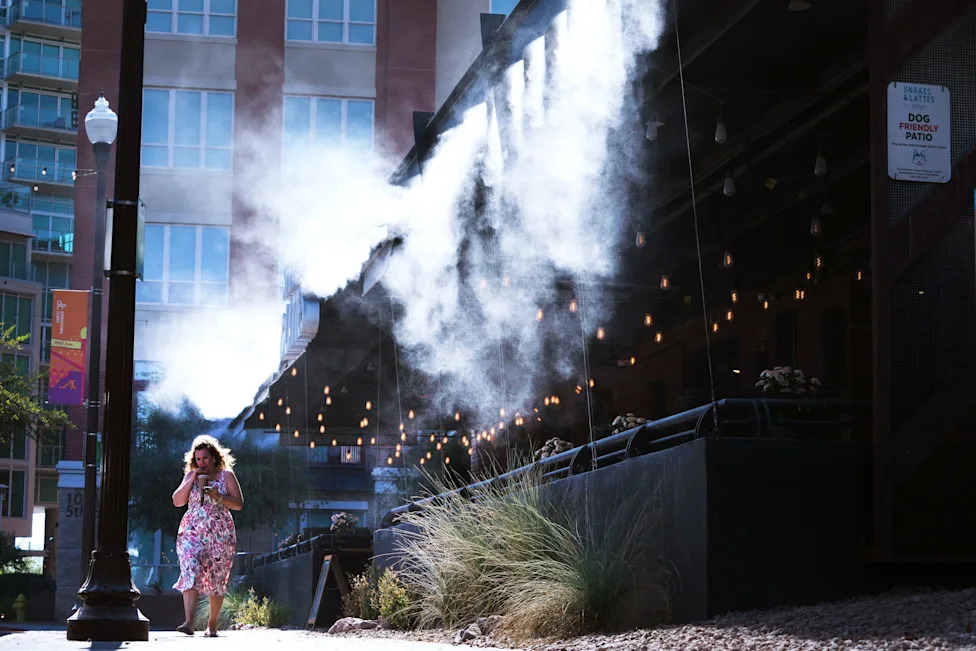
A pedestrian walks under the misters along 6th Street in Tempe as temperatures reached above 110 degrees in the Valley on July 8, 2026.(Joe Rondone/The Republic)
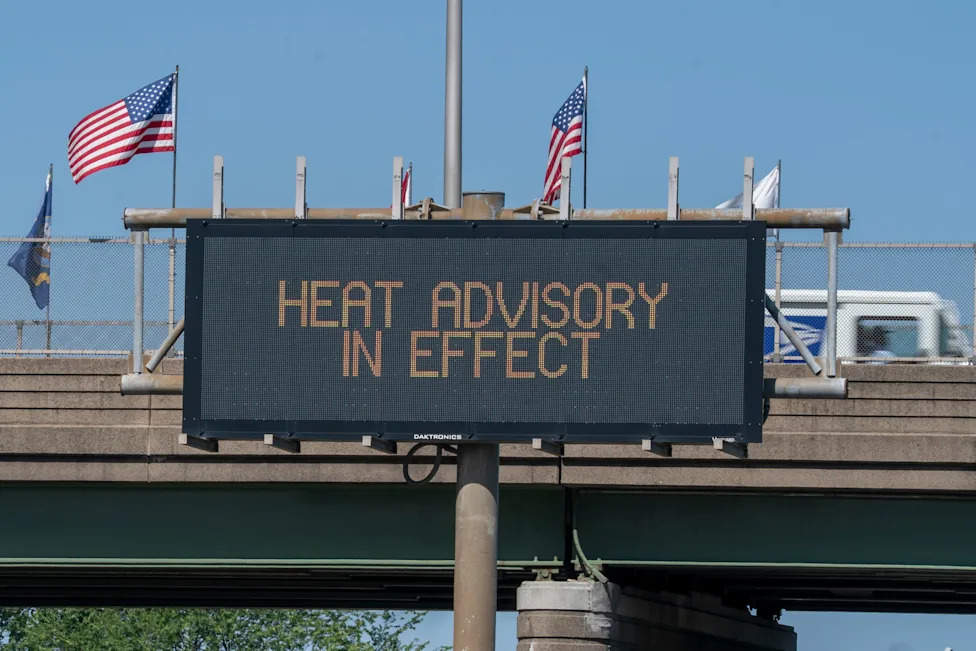
A traffic sign displays a heat advisory in over 90 degree heat in Ridgefield Park on Thursday, July 2, 2026.(Julian Leshay Guadalupe/NorthJer, USA TODAY Network via Reuters Co)

A cyclist rides down the green belt in Scottsdale as temperatures reached above 110 degrees in the Valley on July 8, 2026.(Joe Rondone/The Republic)
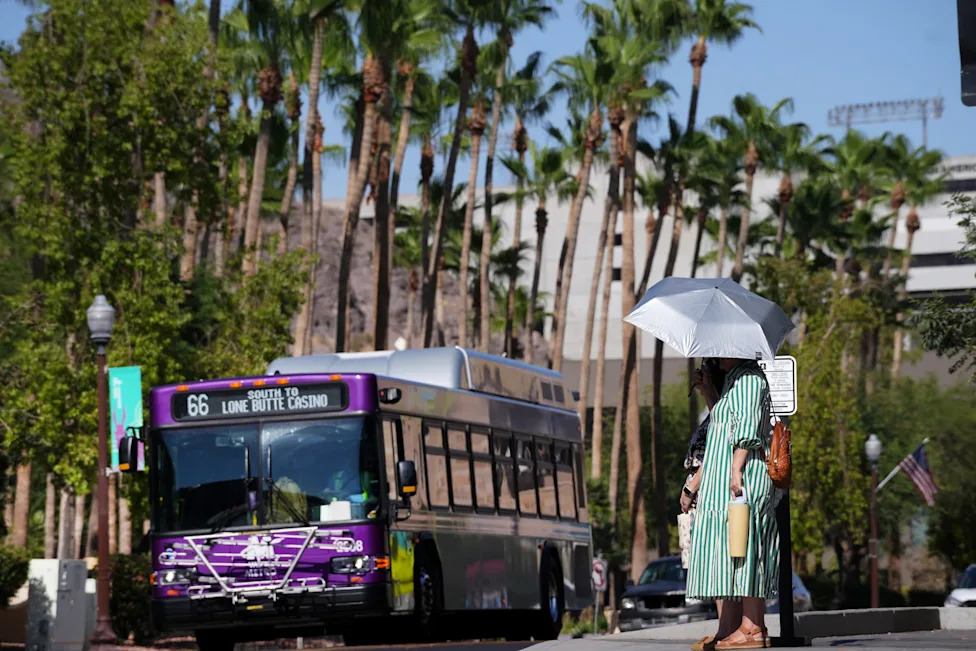
Pedestrian walk under an umbrella along Mill Avenue in Tempe as temperatures reached above 110 degrees in the Valley on July 8, 2026.(Joe Rondone/The Republic)

Dogs need plenty of cool water during the summer heat, be sure to have shade and ample water available to pets who can also suffer heat strokes.(Nell Williams/Amarilo-Globe-News)
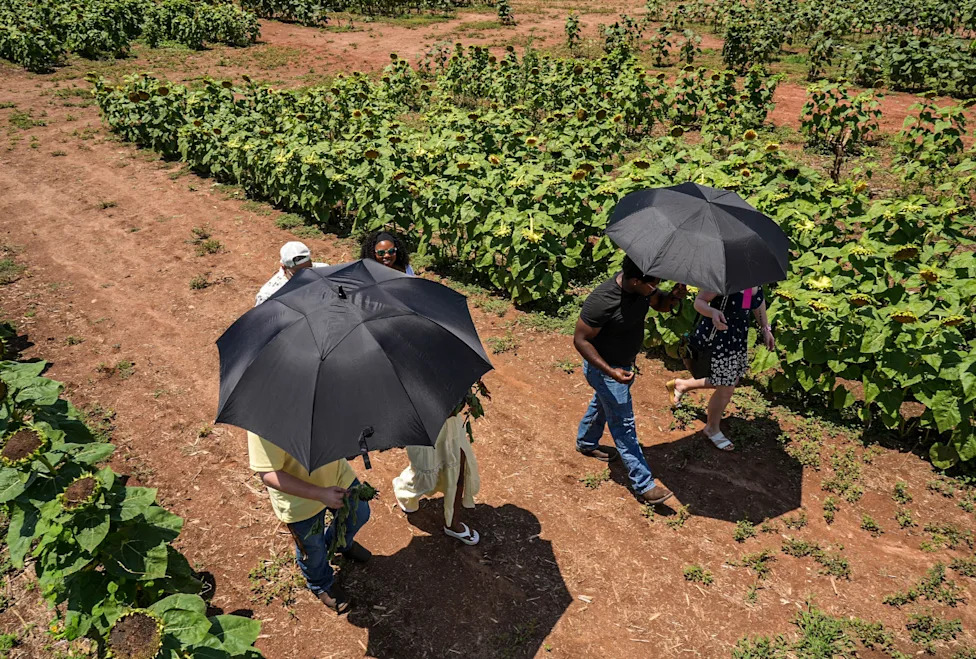
A group of friends from South Georgia walk with umbrellas under high-heat temperatures, during the 2026 South Carolina Sunflower Festival at Denver Downs Farm in Anderson, S.C. Saturday, July 18, 2026.(Ken Ruinard / USA Today Network South Carolina)

Blue Angels fans try to beat the heat as they watch pilots soar overhead during the Pensacola Beach Air show on Friday, July 17, 2026.(Tony Giberson/Pensacola News Journal)
Help us improve.