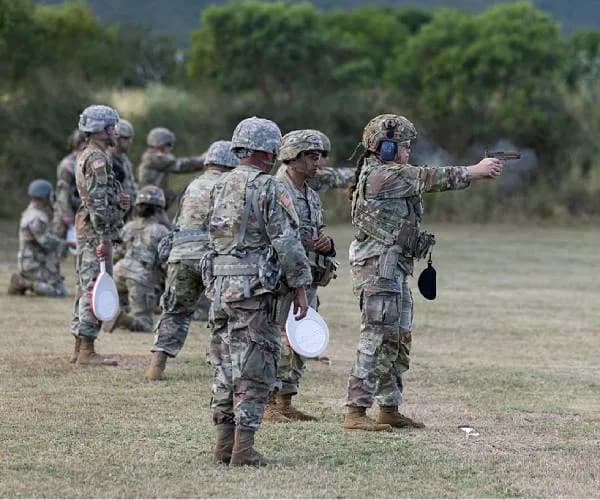
The Army warns that dental emergencies—like severe toothaches—can sideline troops and strain scarce evacuation resources in large-scale combat. Military Review notes many exercises omit dental casualties, potentially skewing medical-planning assumptions. Historical data show dental cases have been a significant portion of treatment and evacuations, and the Army recommends preserving forward dental capabilities and including dental casualties in exercises.
Toothaches on the Battlefield: Army Warns Dental Emergencies Could Sideline Troops and Strain Evacuation Capacity
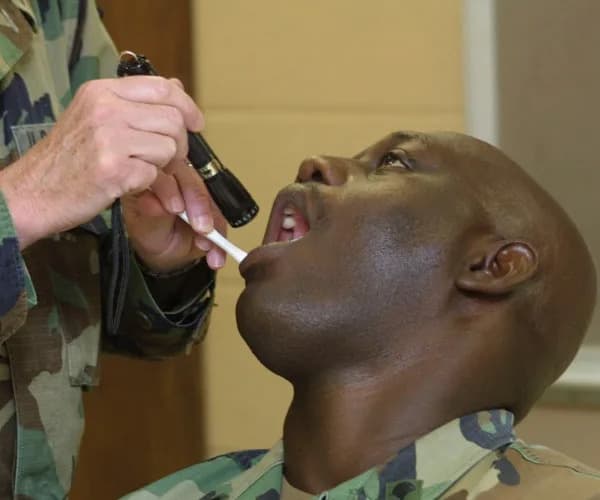
Arkansas Army National Guard Specialist Ernest Foster (R) is given a dental examination by Dr. Herman Hurd on Oct. 4, 2003. (Mario Villafuerte/Getty Images)
U.S. Army dental leaders are warning that toothaches and other acute dental problems could put service members out of action and consume scarce evacuation resources during a future large-scale conflict. The concern appears in the September–October issue of Military Review, an Army University Press professional journal, which notes that major Warfighter exercises often omit dental casualties from their scenarios.
Why Dental Care Matters in Combat
Dental emergencies can render troops unable to eat, operate weapons, or perform routine duties. Unlike many combat wounds, many dental problems are rapidly treatable when dental teams operate close to units. The Army article reports that 96% of dental casualties who receive appropriate care return to duty after one or two visits.
Historical Scale and Logistical Impact
Historical data cited in the report underline the potential scale of the problem. During Operation Iraqi Freedom, dental emergencies comprised 19% of treatment at a U.S. Role 2 medical treatment facility. During Operation Inherent Resolve, dental disease and other nonbattle injuries accounted for as much as 16% of medical evacuations.
Between 2009 and 2023, 34,318 service members, civilians, and contractors required evacuation to dental treatment facilities in the U.S. Central Command (CENTCOM) area of responsibility. Of those evacuations, 58% were conducted by ground transport, highlighting the heavy burden on transportation assets when air evacuation may be limited or contested.
Recommendations and Operational Challenges
Army Lt. Col. Jesse Thietten, a U.S. Special Forces dentist, has urged fielding smaller, mobile dental teams that can operate close to frontline units. In an August briefing, Thietten described dental care as a "low-hanging-fruit solution for medical as a whole," arguing that forward dental capability can quickly return personnel to duty and reduce strain on evacuation systems.
The Army's current dental-planning guidance recommends that exercises include dental casualties at historically based rates and that forward dental capabilities be preserved. The Military Review authors estimate dental cases could represent roughly 15% to 20% of disease and nonbattle injury (DNBI) casualties in large-scale combat operations.
Barriers to Implementation
The article also highlights a decline in operational dental billets and reports from military dentists of equipment problems and insufficient supplies that limit field training and readiness. In a conflict with contested evacuation routes, the authors argue, keeping dental care close to forces is essential to sustain readiness and reduce pressure on the wider medical system.
Source: Military Review, Army University Press; reporting compiled from Army data and briefings. © 2026 Newsmax.
Help us improve.