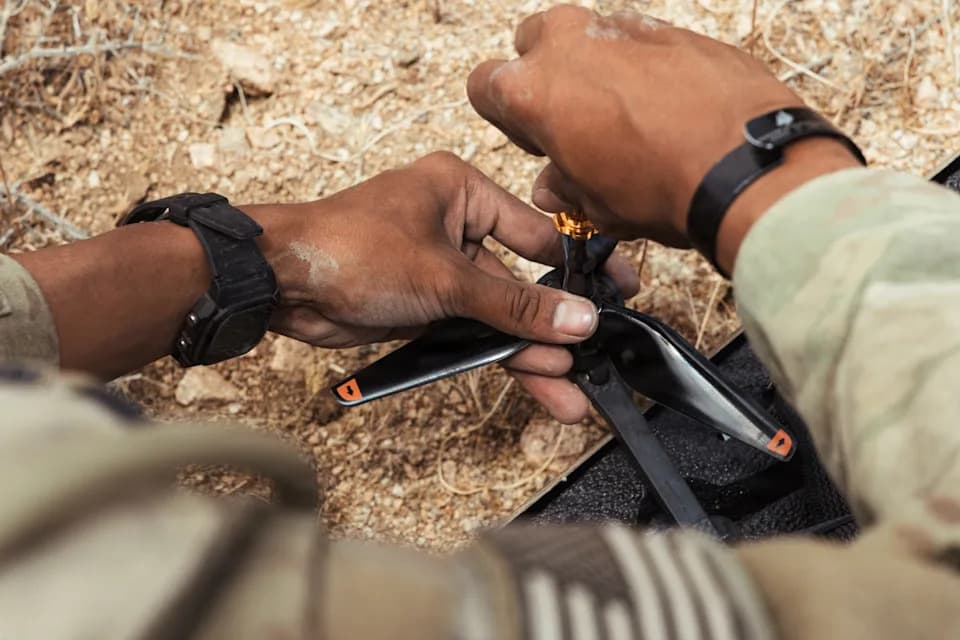
The U.S. Army hosted joint exercises in Germany that embedded a small team of Ukrainian specialists to share drone tactics and electronic-warfare lessons. Brig. Gen. Terry Tillis said the force now fields about 1,900 drones, and the 173rd Airborne Brigade reported that roughly half of its engagements began with drone contact. The exercises aim to distribute drone capabilities across Army formations rather than centralize them, though leadership changes and the reversion of one experimental battalion have complicated the path forward.
Ukrainian Drone Experts Embed With U.S. Forces In Germany, Shaping Army’s Drone Strategy
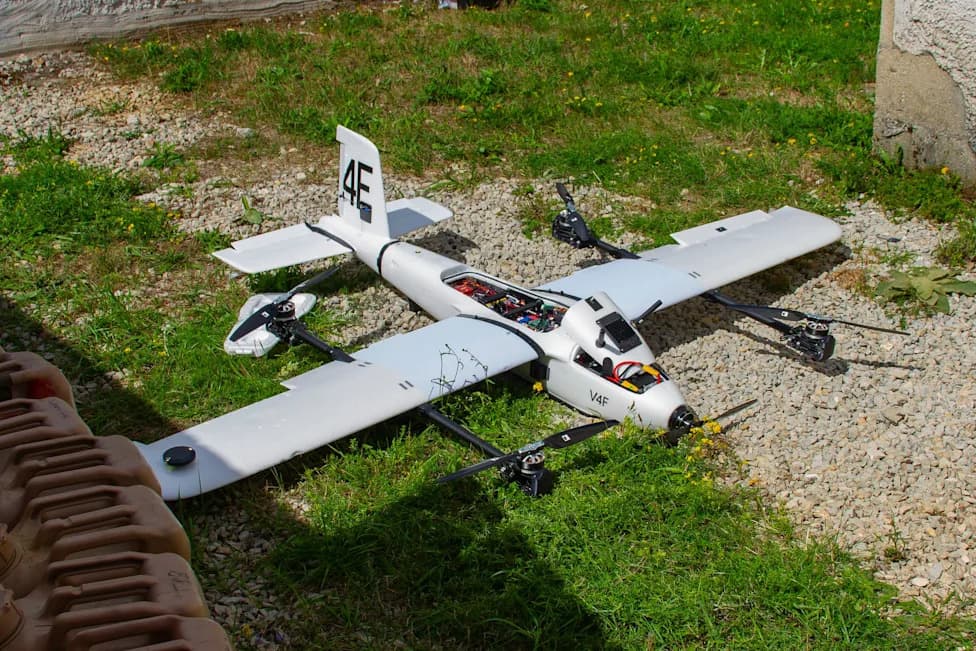
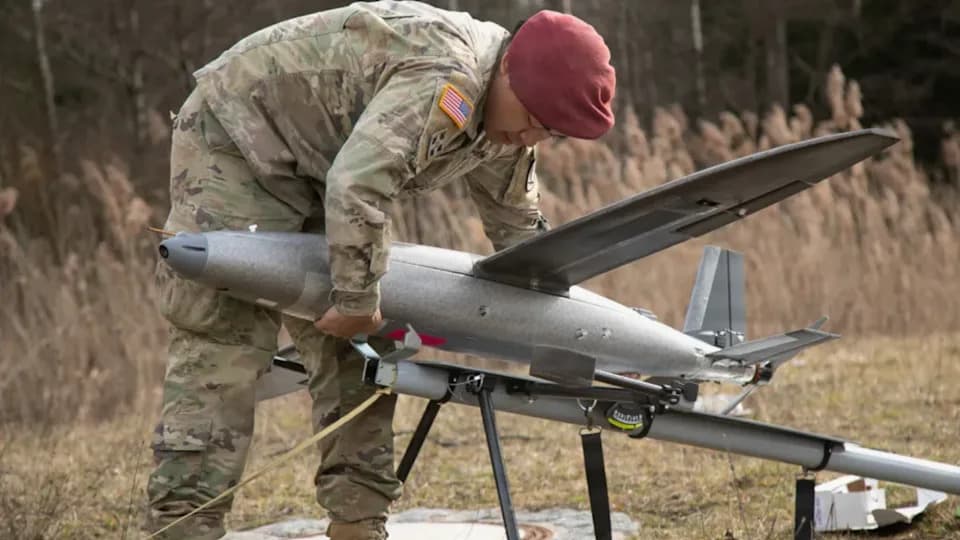
A custom made reconnaissance drone is seen at the Hohenfels training center in Germany during an annual training exercise taking place at the facility in Hohenfels, Germany, Aug. 29, 2026. (AP Photo/Konstantin Toropid)(AP Photo/Konstantin Toropid)
A lone U.S. soldier stood on a dusty road in southern Germany, adjusting a controller. Moments later a fixed-wing drone — its wingspan almost as long as the soldier’s outstretched arms — hummed to life and climbed into the sky. The scene was part of U.S. Army training designed to demonstrate and experiment with tactics and systems learned from Ukrainian forces, whose innovative use of drones has been a defining feature of their fight against Russia.
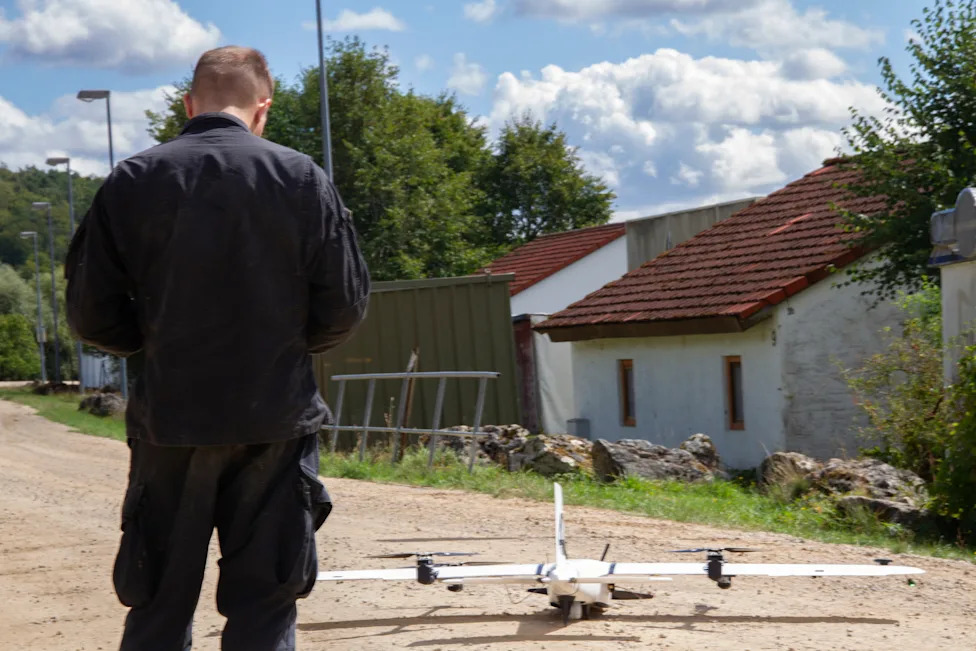
A U.S. Army solider gets ready to launch a drone at the Hohenfels training center in Germany as part of the annual training exercise taking place at the facility in Hohenfels, Germany, Aug. 29, 2026. (AP Photo/Konstantin Toropid)(AP Photo/Konstantin Toropid)
Training, Partnership and the Technology
The annual Saber Junction exercises, staged in the Bavarian foothills over recent weeks, highlighted how closely U.S. and Ukrainian personnel are now working together. Brig. Gen. Terry Tillis, who leads the Germany-based Army training unit, told reporters the force now fields about 1,900 drones, which he called "the latest things that we've learned from Ukrainian efforts in this war." About a dozen Ukrainian service members traveled to Germany to advise on electronic warfare, drone employment and battlefield lessons.
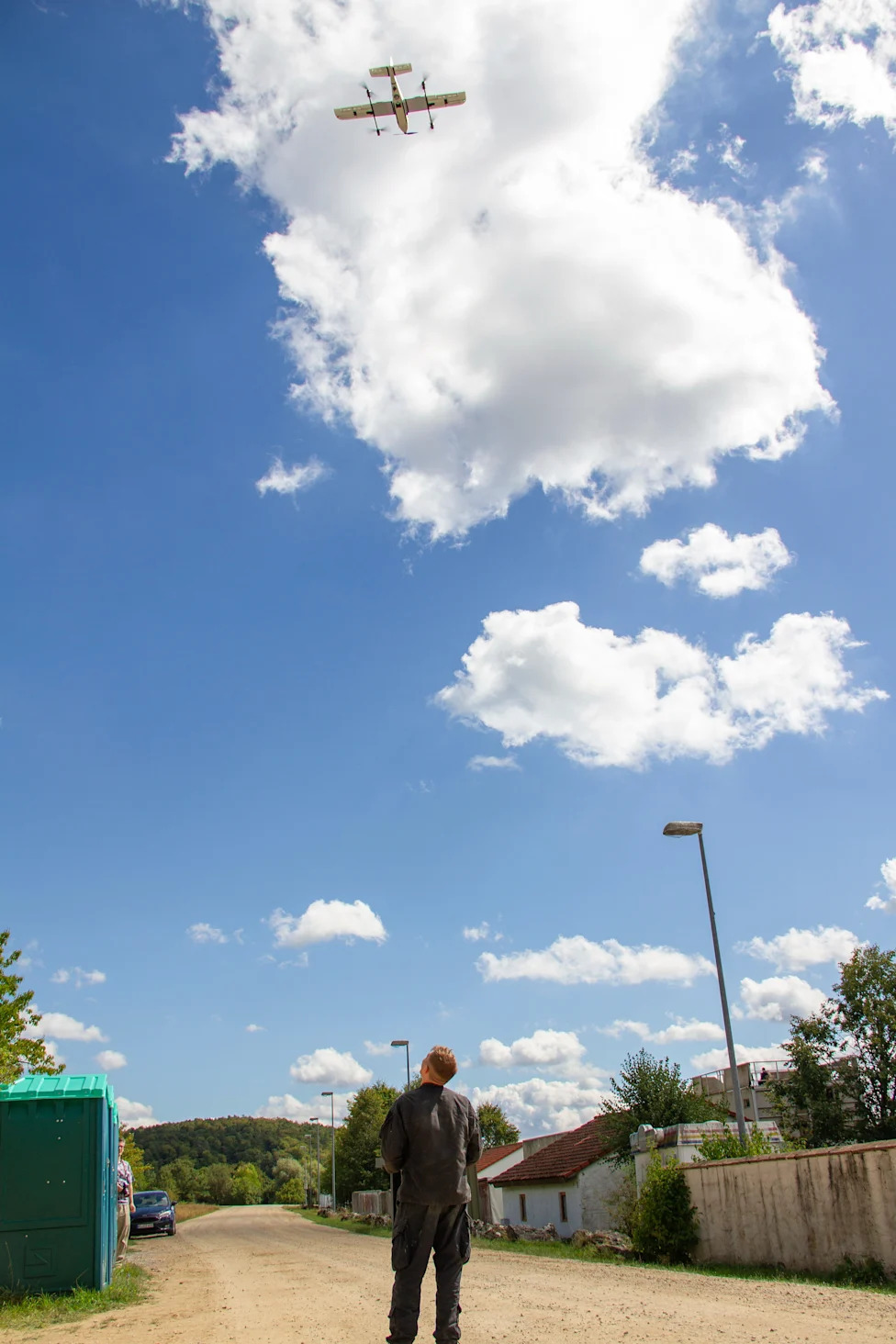
A U.S. Army solider pilots a drone at the Hohenfels training center in Germany as part of the annual training exercise taking place at the facility in Hohenfels, Germany, Aug. 29, 2026. (AP Photo/Konstantin Toropid)(AP Photo/Konstantin Toropid)
How Drones Are Changing Engagements
Anthony Miller, the Army's chief technology officer, said roughly half of the 173rd Airborne Brigade’s engagements during the exercise began with drone contact — underscoring how drones are emerging as a first line of battlefield sensing and strike. One Army official, speaking on background, said one-way attack drones are being pushed down to company level, but cautioned that simply "adding drones to an infantry battalion" is not sufficient: leaders must decide how to structure ground forces for a battlespace in which drones are pervasive.
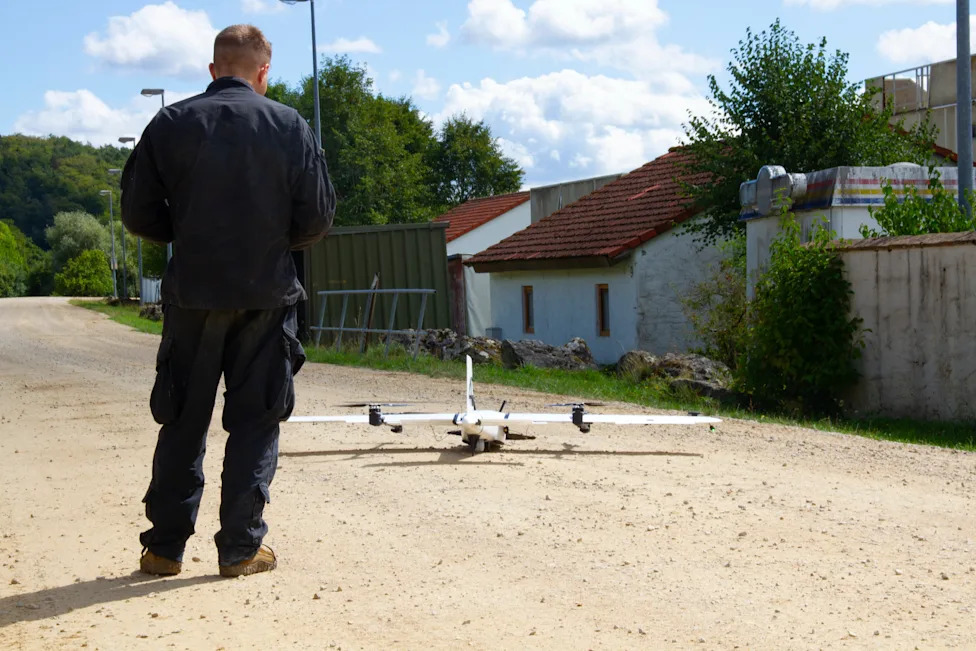
A U.S. Army solider gets ready to launch a drone at the Hohenfels training center in Germany as part of the annual training exercise taking place at the facility in Hohenfels, Germany, Aug. 29, 2026. (AP Photo/Konstantin Toropid)(AP Photo/Konstantin Toropid)
"We've pushed back on having something like a drone corps," Miller told reporters, arguing that concentrating expertise in a single unit would limit the Army's ability to scale drone capabilities across the force.
Organizational Debate And Leadership Changes
The exercises and Ukrainian engagement come amid personnel shifts at the top of the Army. Defense Secretary Pete Hegseth removed the Army's top uniformed officer, Gen. Randy George, in April and replaced him with Gen. Christopher LaNeve; Army Secretary Dan Driscoll, a vocal supporter of rapid drone integration, departed earlier this month. A smaller experimental unit within the 173rd that had spent nearly a year testing drone-centric tactics was recently ordered to return to a traditional infantry role — a move Army leaders describe as consistent with prior plans but that has nonetheless raised questions about long-term experimental units.
What Ukraine Brings To The Table
Ukraine created an Unmanned Systems Forces branch two years ago to consolidate drone operations, but drones are also deeply embedded across most Ukrainian units for reconnaissance, targeting and strikes — often operating in tandem with artillery and other systems. U.S. officials say that regular exchanges with Ukrainian troops help the Army envision how to adopt similar capabilities within an American force structure rather than merely replicate Ukraine’s organization.
Implications
The exercises in Germany illustrate two clear trends: drones are shifting from a niche capability to a front-line element of combat, and the U.S. Army is wrestling with how to adapt force structure, training and doctrine accordingly. While leaders generally favor embedding drone capabilities across units rather than centralizing them, decisions about long-term organization and specialized formations remain unsettled.
Key facts: the U.S. training saw roughly a dozen Ukrainian advisers present, the 173rd Airborne Brigade led U.S. participation, and roughly 50% of engagements in the exercise began with drone contact — demonstrating how central unmanned systems have become to modern ground combat.
Help us improve.