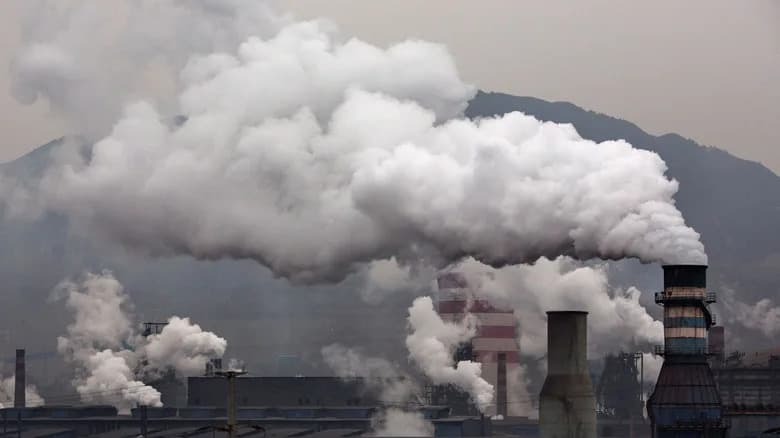
Researchers in Shanxi Province propose repurposing suitable abandoned coal mines in China as subterranean agricultural laboratories. A feasibility paper (Yuan et al., China Min. Mag., 2026) finds some underground spaces could support tightly controlled experiments by regulating light, temperature, water, air and carbon while tapping geothermal heat and treating contaminated water for reuse. The proposal targets research in extreme or enclosed environments rather than large-scale food production, but significant engineering, safety and environmental challenges remain.
Underground Farms: Chinese Researchers Propose Turning 12,000+ Abandoned Coal Mines into Controlled Farming Laboratories
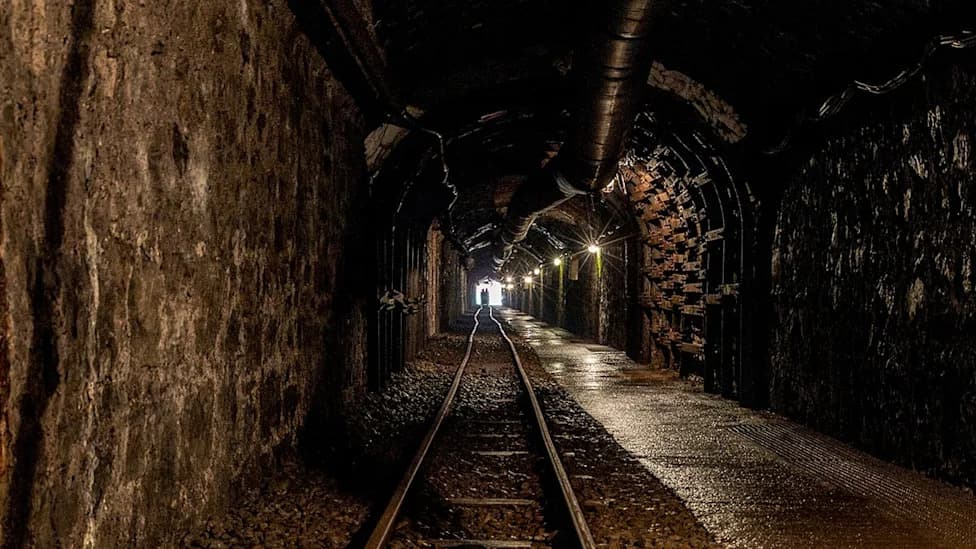
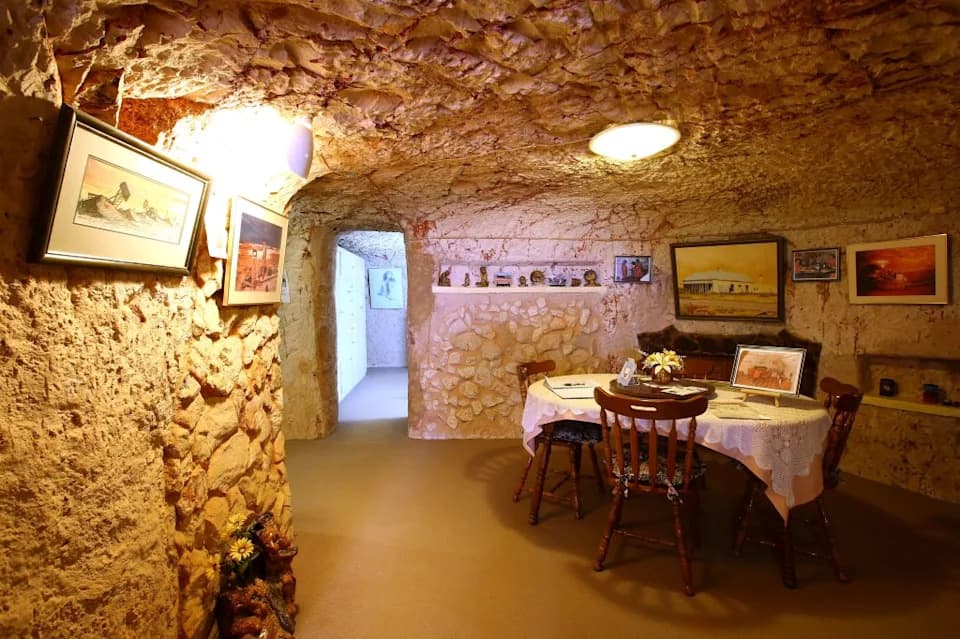
(Mario Marco/Moment/Getty Images)
China has more than 12,000 abandoned coal mines that together offer extensive underground space and ready-made infrastructure. A research team from the Shanxi Province Coal-based Resources Green and High-efficiency Development Engineering Center proposes converting suitable tunnels and caverns into controlled agricultural experiment sites — essentially subterranean farming laboratories.
What the Proposal Says
The authors, in a paper published in China Mining Magazine, argue that underground mine spaces could provide highly regulated environments for agricultural research. These spaces are insulated from weather variability, long-term climate change, and many natural hazards, making them attractive locations for experiments that require precise control of growing conditions.
"Against the backdrop of intensifying global climate change and growing agricultural demand in extreme and enclosed environments, exploring experimental agricultural models in coal mine underground spaces carries important scientific significance and engineering value," write the researchers (Yuan et al., China Min. Mag., 2026).
Potential Advantages
Controlled environment: Underground sites allow precise regulation of light, temperature, humidity, air composition and CO2 levels through artificial systems, enabling reproducible experiments.
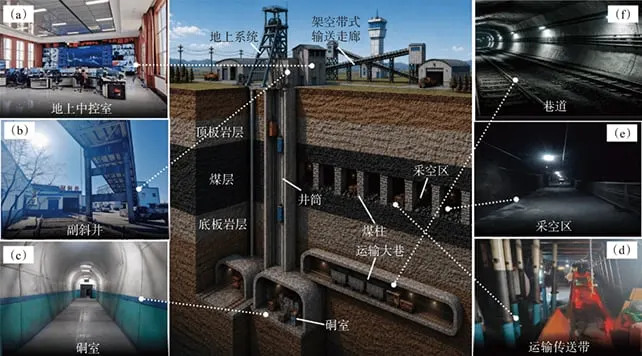
The researchers used several different criteria to assess coal mine suitability. (Yuan et al.,China Min. Mag., 2026)
Energy opportunity: Geothermal heat within the subsurface could be tapped as a relatively low-emissions heat source for year-round growth.
Water reuse: Contaminated groundwater that enters abandoned workings—often containing sulfates, metals and other pollutants—could be treated on-site and reused for irrigation, reducing freshwater demand.
Technical and Safety Challenges
The research is a feasibility assessment, not a field trial. The team evaluated structural stability, ventilation, drainage, safety monitoring, and the engineering practicality of supplying artificial light, heat, water and air. They conclude that only a subset of mines will meet the engineering and safety standards required for conversion.
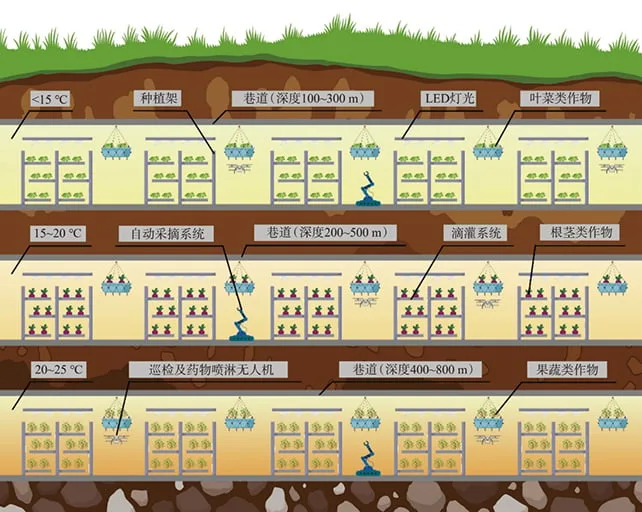
Some mines could be suitable for controlled farming experiments, the researchers concluded. (Yuan et al.,China Min. Mag., 2026)
Key technical hurdles include ensuring surrounding rock stability, installing robust ventilation and drainage systems, providing safe and reliable power for lighting and control systems, and preventing contamination or health hazards from mine residues.
Scope and Examples
The researchers caution that the aim is not to replace conventional agriculture but to establish experimental platforms tailored to extreme or enclosed environments. According to reporting in the South China Morning Post, the number of closed mines in China could reach about 15,000 by the end of the decade, representing roughly 7.2 billion cubic metres of unused underground volume.
The study cites international reuse examples such as the Callio project in Finland to show what is technically possible when mines are repurposed.

Subscribe to ScienceAlert's free fact-checked newsletter
Potential Applications
Insights gained from subterranean agricultural experiments could inform: development of controlled-environment agriculture, approaches for farming in remote or harsh terrestrial locations, and strategies for producing food in off-world or habitat-constrained settings.
Conclusion and Caveats
The Shanxi team's feasibility study shows promise for converting certain abandoned coal mines into experimental agricultural laboratories, provided engineering and safety standards are met. Significant investments, careful site selection, and pilot field trials will be required before any large-scale repurposing. Environmental risks, energy use for artificial lighting, and long-term monitoring must also be addressed in future work.
Reference: Yuan et al., China Min. Mag., 2026. ScienceAlert editorial note: articles are written and edited by humans and verified for factual accuracy.
Help us improve.