The DoE's Office of Critical Minerals and Energy Innovation has allocated $73m to four US projects that will create real-world testbeds for mining automation, electrification and sensing. Recipients include Innovative Wireless Technologies (a multi-state national testbed), the University of Arizona (a scalable underground proving ground), the University of Missouri (a combined testing and comminution facility) and Southern Methodist University (a synthetic mine for controlled trials). The grants aim to accelerate commercialisation, enable large-scale validation and train the mining workforce.
DoE Grants $73M to Four US Mining Testbeds to Accelerate Critical-Mineral Technologies
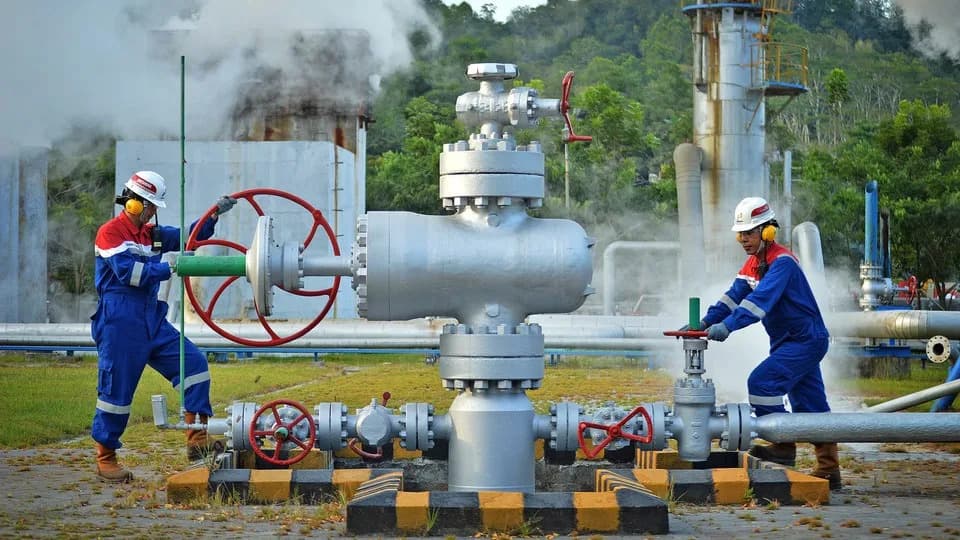
The DoE indicated that the projects would help train workers to use advanced mining systems. Credit: JHVEPhoto/Shutterstock.com.
The US Department of Energy's Office of Critical Minerals and Energy Innovation (CMEI) has awarded $73m to four projects across Virginia, Arizona, Missouri and Texas to create real-world testbeds for advanced mining technologies. The grants form part of the DoE's Mine of the Future initiative and are intended to speed development, validation and commercial deployment of tools that strengthen critical mineral supply chains.
Project Summaries
Innovative Wireless Technologies — National Multi-State Testbed
Innovative Wireless Technologies, headquartered in Lynchburg, Virginia, will build a national testbed spanning West Virginia, Colorado and Virginia. The effort will integrate underground and surface mining environments to validate digital systems, connectivity solutions and automation technologies under operational conditions.
University of Arizona (Sahuarita) — Scalable Underground Proving Ground
The University of Arizona will develop a scalable underground proving ground in Sahuarita focused on mining electrification and energy-management systems. The testbed aims to boost productivity and energy efficiency while reducing the technical and commercial risks associated with new mining technologies.
University of Missouri (Rolla) — Combined Testing and Comminution Research Facility
The Curators of the University of Missouri will establish a dual-purpose site in Rolla that pairs underground technology testing with advanced comminution research. The facility is designed to support field validation of emerging systems and to provide practical workforce training.
Southern Methodist University (Navasota) — Synthetic Mine for Controlled Trials
Southern Methodist University plans to create what it describes as the world’s first synthetic mine at a drilling and sensing test facility in Navasota, Texas. Configured for controlled, safe and repeatable trials, the site will enable testing of new drilling tools, sensing systems, automation and operational workflows before deployment in active mines.
“Investing in moving cutting-edge mining technologies out of the lab and into the field will help unleash America's vast mineral resources,” said US Secretary of Energy Chris Wright. “President Trump is committed to rebuilding America's mining industry, reducing our dependence on foreign adversaries, and securing the critical minerals that are foundational to our energy, manufacturing and national security.”
The DoE noted that beyond enabling field validation, the awards will support workforce training in advanced mining systems. The department emphasised that the ability to test technologies at scale is critical to their commercial adoption and to strengthening domestic critical-mineral supply chains.
Source: "DoE awards $73m to four US mining technology testbed projects," originally published by Mining Technology, a GlobalData-owned brand.
Help us improve.