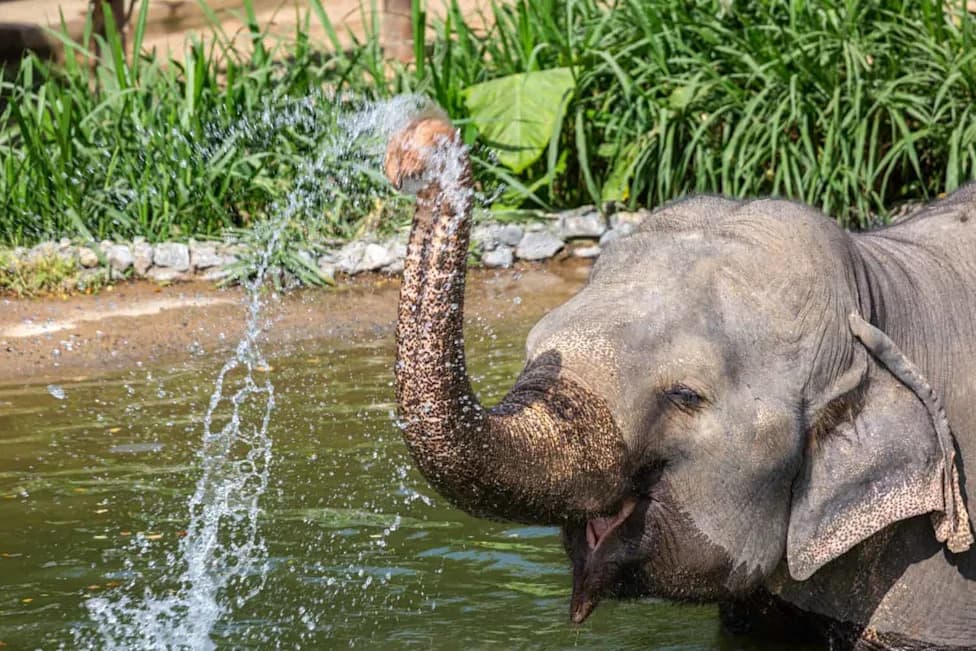
Researchers at Thailand's National Elephant Institute found that 16 Asian elephants can exercise inhibitory control — resisting immediate impulses to pursue more effective actions. In experiments with transparent boxes, elephants avoided reaching directly for visible food and instead used a learned side opening; when the box was rotated they initially erred but rapidly adapted. Older elephants adjusted more slowly. Scientists say the finding may shed light on elephant cognition and inform strategies to reduce human–elephant conflict.
Study Finds Asian Elephants Can Suppress Impulses to Solve Problems
Scientists surprised to find Asian elephants can resist impulses, plan and act
Researchers at Thailand's National Elephant Institute report that Asian elephants can deliberately suppress impulsive actions to solve problems more effectively, joining a small group of species shown to possess this cognitive skill.
Inhibitory control — the ability to resist an immediate urge in favor of a more effective response — is central to human decision-making and has previously been documented in some birds and mammals. A new experiment suggests Asian elephants also exhibit this capacity.
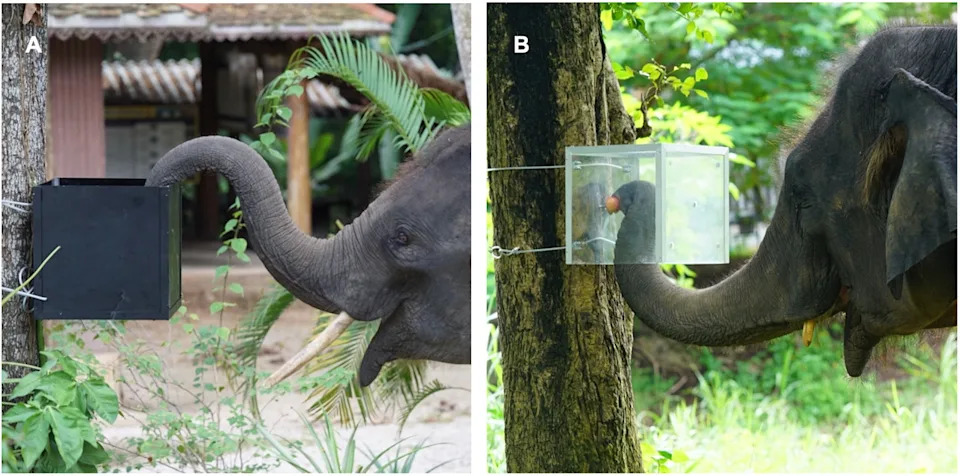
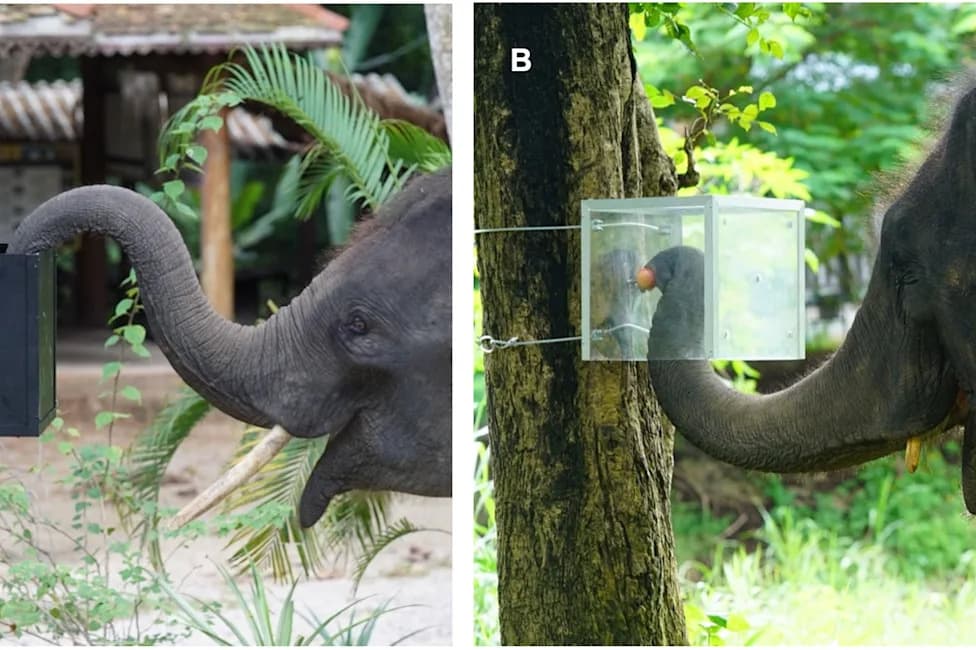
Elephants resist impulses to find effective ways to obtain food (Sangpa Dittakul)
In the study, 16 elephants were first trained to retrieve food by reaching their trunks around a box to access a single opening. After training, the animals were presented with a transparent box that displayed food through several small, front-facing holes. Although the food was visible and could be smelled, the elephants consistently avoided plunging their trunks directly toward the visible rewards and instead used the learned side opening to obtain the food.
When researchers rotated the box so the side opening moved to a different position, many elephants initially reached toward the previous location out of habit, but they quickly adjusted and discovered a new effective route. The researchers noted that older elephants took longer to adapt, a difference they attributed to possible age-related cognitive decline.

Female elephant Somboon at the Samui Elephant Haven on Koh Samui (AFP via Getty)
“When elephants were faced with a situation where they needed to suppress an impulsive behaviour, they were generally able to suppress the impulse,” the authors write in the paper published in PLOS ONE. They add that more work is needed to confirm and extend these findings.
The authors suggest that inhibitory control may play a role in elephants' problem-solving and social interactions. Understanding how elephants learn to detour around barriers in controlled experiments could also inform real-world strategies to reduce human–elephant conflict, for example by predicting how elephants might circumvent fences or other obstacles.
Female elephant Somboon at the Samui Elephant Haven on Koh Samui (AFP via Getty)
This study provides early evidence that Asian elephants can suppress impulsive but ineffective actions in favor of indirect, successful strategies — a trait that could contribute to their complex cognition and adaptability.
Help us improve.