Retrofitting data-center cooling systems to capture and reuse waste heat can cut energy costs and carbon emissions for universities, hospitals, banks and other large facilities. Pilot projects in the U.S. and dozens of deployments in Europe show the concept works; Virginia has authorized a study (Chapter 591) and New York’s NYSERDA offers grants up to $2 million. Experts urge facilities managers to start feasibility studies now, measure Energy Reuse Factor (ERF) rather than relying on PUE alone, and prepare for technical challenges linked to legacy systems.
Should Large Facilities Start Reusing Data Center Heat? How Campuses and Enterprises Can Cut Costs and Emissions
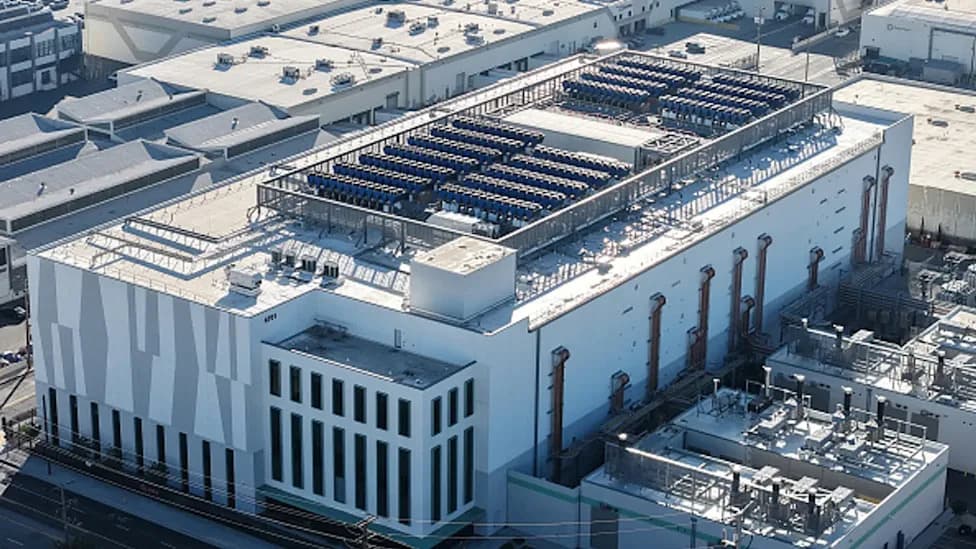
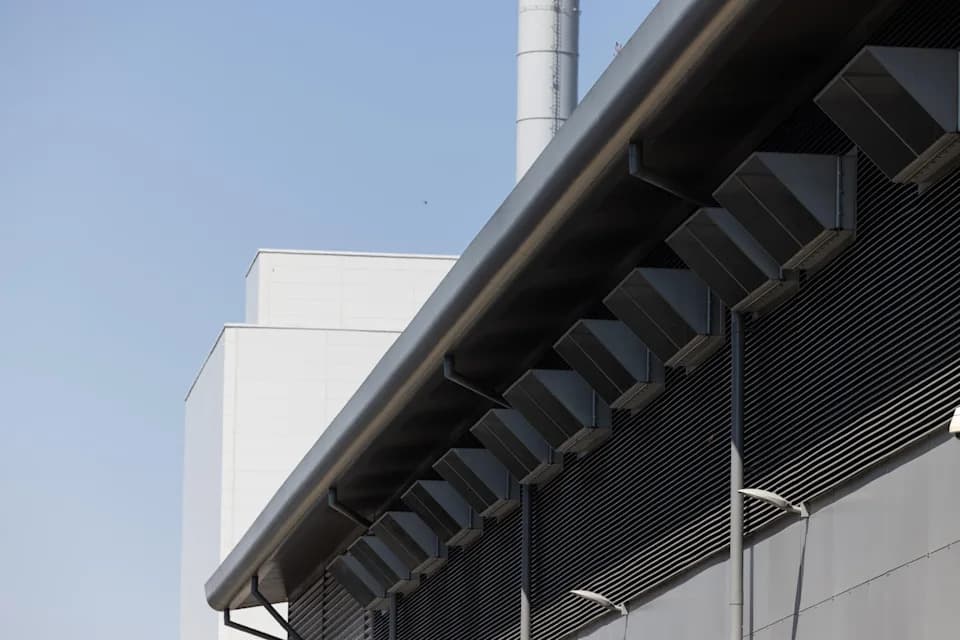
Aerial view of a 33 megawatt data center with closed-loop cooling system on October 20, 2025, in Vernon, Calif. Big facilities can use energy more efficiently and save money by implementing heat reuse systems, advocates say.
Many large organizations that operate enterprise data centers — including banks, hospitals and universities — rely on cooling systems that consume substantial energy. Retrofitting those systems to capture and reuse waste heat can deliver meaningful cost savings while advancing institutional sustainability and efficiency goals.
Why Heat Reuse Matters
On a global scale, repurposing data-center waste heat for building heating, hot water or other thermal needs could save billions of dollars each year by replacing conventional heating fuels and cutting both energy costs and carbon emissions. For facilities managers, these projects fall squarely within their remit and operational expertise.
Where It Fits Best
Campus environments are a particularly strong fit: many universities and colleges simultaneously expel significant heat from data centers and consume large amounts of natural gas to produce hot water for dorms, cafeterias and labs. Redirecting waste heat into campus distribution systems can lower operating costs and reduce institutional fuel consumption.
"When it comes to heating and cooling, it's the facility manager's sweet spot," says Paul Quigley, chief strategic relations officer at AIRSYS, a manufacturer of cooling systems for data centers and other high-density digital infrastructure. "Facilities managers have a huge opportunity to make a substantial impact on their budgets by repurposing wasted heat from their data centers into daily operations."
Real-World Pilots and Policy
Although widespread adoption in the United States remains limited, several pilot projects are underway. Universities in New York are stepping up efforts; the University of Virginia is implementing a program; Rice University is converting some data-center waste into electricity; and MIT is capturing heat from research compute clusters to ease steam-plant demand, according to David Gardiner, president of Washington-based decarbonization adviser David Gardiner Associates.
Europe already hosts dozens of heat-reuse projects after years of policy encouragement. U.S. public incentives are emerging: Virginia passed the Virginia Acts of Assembly, Chapter 591, requiring the state's energy department to study data-center heat reuse, and New York, through NYSERDA, offers grants of up to $2 million to help data centers recover and reuse waste heat.
Where Heat Reuse Makes Sense Beyond Campuses
Other strong candidates include food-and-beverage plants, pharmaceutical manufacturers and hotels, which have regular low- to medium-temperature heat demands for processes, hot water and laundry.
Barriers and Technical Challenges
Awareness and education remain major obstacles. "The biggest barrier of all to heat reuse in enterprise data centers is simply an educational barrier," Gardiner says. Many operators have little familiarity with system-level opportunities, system integration requirements or the economics of heat recovery.
Technical hurdles also exist. An ASHRAE technical committee acknowledges the potential for heat reuse but notes that many legacy computer room air conditioners (CRACs), computer room air handlers (CRAHs) and raised-floor systems were not designed to capture heat, referencing ASHRAE Technical Guidance 9.9 and related publications. Retrofitting rear-door heat exchangers or liquid-cooling loops can be costly and disruptive, and may require plumbing, distribution piping and heat-exchange interfaces that were not part of the original facility design.
Measure the Right Things
Quigley warns that calculating return on investment will be difficult unless operators measure the right metrics. "You cannot manage what you refuse to measure," he says. The industry has long used Power Usage Effectiveness (PUE) to measure how efficiently power is delivered to IT equipment, but PUE does not account for what happens to the energy after it leaves the rack. Energy Reuse Factor (ERF) is the metric that captures how much waste heat is recovered and put to productive use — and many U.S. operators have never calculated it, while European operators increasingly report ERF.
Next Steps for Facilities Managers
Experts advise facilities managers to begin assessments now. Quigley recommends implementing an inquiry panel and starting feasibility studies before heat-reuse requirements become mandatory. Early-stage work — including heat-mapping, load-matching studies and simple pilot integrations — can identify high-impact, fast-payback opportunities that support both ROI and ESG goals.
"Once people are aware of all those benefits, then they can get serious about planning and try to figure out how to make these projects happen," Gardiner says.
With growing policy interest and financial incentives, now is a practical moment for facilities teams to evaluate heat-reuse strategies, measure Energy Reuse Factor, and engage stakeholders across campus or enterprise operations to realize cost and carbon savings.
Help us improve.