Democrats have pivoted to backing Randy Villegas, an outspoken progressive, to try to flip California's competitive 22nd District. Villegas beat the DCCC-backed Jasmeet Bains in the primary and supports policies such as Medicare for All and universal childcare. Democrats argue Rep. David Valadao is vulnerable after his 2025 vote on the One Big Beautiful Bill Act, which cut roughly $1 trillion from Medicaid and scaled back food assistance in a district where 64% are on Medicaid and 26% receive food aid. Both parties plan roughly $8M+ in ad spending.
Progressive Upset: Democrats Back Randy Villegas to Challenge Rep. David Valadao in Tight CA-22 Race
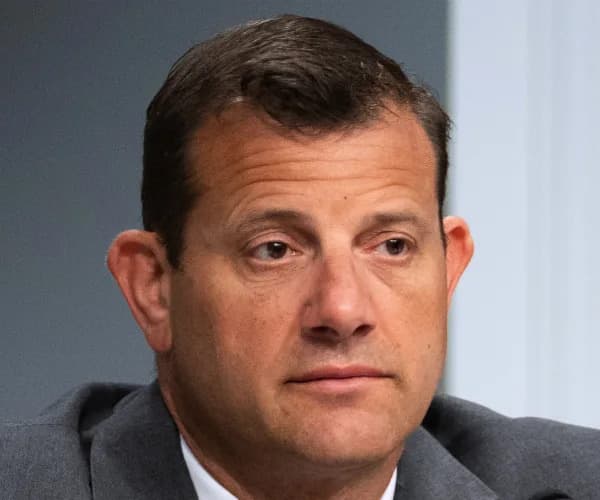
Rep. David Valadao, R-Calif. (AP)
Democrats have shifted strategy in California's closely watched 22nd Congressional District, backing an outspoken progressive, Randy Villegas, in a new bid to unseat Republican Rep. David Valadao.
Villegas, a political science professor at the College of the Sequoias who also helps run his family’s auto repair shop, upset the Democratic Congressional Campaign Committee's preferred candidate, state Assembly Member Jasmeet Bains, in the primary. The Washington Post reported that Villegas was one of only three candidates this cycle to defeat the DCCC's endorsed choice.
Why This Race Matters
California’s 22nd District is an agricultural region with a majority-Latino population where registered Democrats outnumber Republicans by more than 10 percentage points. Despite that advantage, Valadao has held the seat through steady Republican turnout and patterns of ticket-splitting by Democratic voters. He won reelection in 2024 by seven points—the same year President Donald Trump carried the district.
Democrats say Valadao’s 2025 vote for the One Big Beautiful Bill Act presents a vulnerability. That legislation is reported to have reduced federal health and nutrition spending by roughly $1 trillion. About 64% of residents in the district are enrolled in Medicaid—the highest share among Republican-held House districts—and roughly 26% receive federal food assistance, figures that Democrats are using to frame their argument to voters.
Campaign Dynamics
Republicans have sought to cast Villegas as a radical, pointing to his support for Medicare for All and universal childcare, and to a controversial remark in which he described Israel as a 'genocidal regime' over its conduct in Gaza. Christian Martinez, a spokesperson for the National Republican Congressional Committee, said Valadao 'is protecting the vulnerable, while Villegas is defending the radical.' Villegas has pushed back, arguing voters care more about local issues than ideological labels.
During the primary the GOP-aligned Congressional Leadership Fund reportedly promoted Villegas—apparently preferring him as a general-election opponent—and now plans to spend nearly $8 million on advertising for Valadao. House Majority PAC, the leading Democratic super PAC focused on winning the House, plans to spend more than $8 million in the district, according to ad-tracking firm AdImpact. Television ads from both sides are expected to run in the coming weeks.
"This isn't a fight about left versus right. It's really us versus them," Villegas told The Washington Post.
Valadao first won the district in 2012, lost it to Democrat TJ Cox in 2018, and reclaimed it in 2020. The seat was nudged modestly toward Democrats under a congressional map approved by California voters in 2025, which Democrats say improves their chances this cycle.
Reporting cited: The Washington Post; original distribution by Newsmax.
Help us improve.