The Siberian salamander, Salamandrella keyserlingii, can tolerate near-complete freezing by producing glycerol, which acts as a cryoprotectant and lowers the freezing point of its body fluids. Research cited by MDPI indicates its body temperature can fall to about -67°F (-55°C). A New Scientist report from 1993 describes a specimen recovered from the Kolyma River basin that was revived after years frozen. Scientists study this species for insights that could improve preservation of human tissues and organs.
How a Siberian Salamander Survived Years Frozen in Permafrost — And What It Could Mean for Medicine
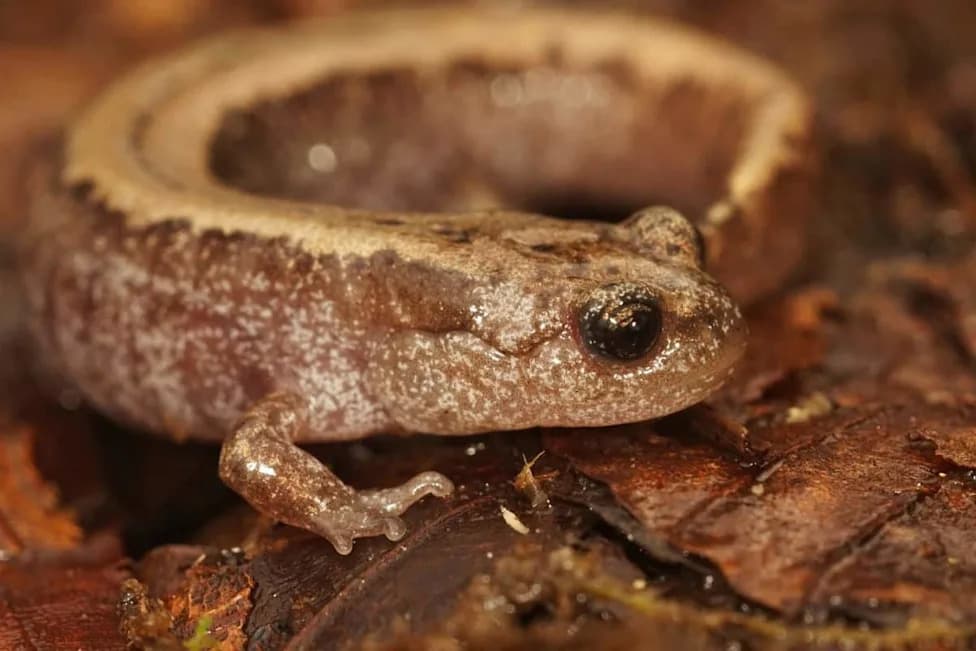
Researchers revived this animal after several years trapped inside ice© Wirestock/ via Canva.com
In the remote boreal forests of Siberia, a small amphibian has evolved the extraordinary ability to survive extreme cold that would kill most vertebrates. The Siberian salamander, Salamandrella keyserlingii, can enter an almost complete state of suspended animation and tolerate body temperatures far below what other complex animals endure.
How It Survives the Cold
Research cited by MDPI reports that the salamander's body temperature can drop to about -67°F (-55°C). Ordinarily, freezing temperatures are fatal because ice crystals that form inside cells rupture membranes and destroy tissue. The Siberian salamander avoids this fate by producing cryoprotective compounds—most notably glycerol—when temperatures fall. Glycerol acts like an internal antifreeze, lowering the freezing point of bodily fluids and helping preserve cell and tissue structure even as much of the animal becomes frozen and immobile.
Behavior and Seasonal Cycle
Each autumn, typically beginning around September, these salamanders prepare for hibernation. They seek out insulated refuges such as rotting logs or sheltered burrows in the soil and remain immobilized throughout the long winter. The frozen state lasts until spring thaws—usually sometime between April and May—when warming temperatures restore metabolic activity and the animals resume normal behavior.
A Remarkable Field Report
An especially striking case comes from the Kolyma River basin: a New Scientist account from 1993 describes researchers recovering an individual that had been trapped in ice for several years and successfully reviving it after thawing. While attention-grabbing, that single report is exceptional rather than typical; many amphibians, including some salamanders, will die if freezing is too severe or prolonged.
Why Scientists Care
Biologists and cryobiologists study S. keyserlingii to understand the biochemical and physiological strategies that permit survival near-complete freezing. Insights into natural cryoprotectants and freeze-tolerance mechanisms could inform better methods for preserving human tissues, cells, and organs, as well as improving low-temperature storage techniques.
Not all individuals survive extreme or extended freezes—the difference between life and death in permafrost can be razor-thin.
For now, Salamandrella keyserlingii remains a compelling example of nature's ingenuity in the world's coldest places, and a potential model for advances in medical preservation technologies.
Help us improve.