The Guldhøj folding chair — found in a chieftain’s grave in southern Jutland in 1891 — is a wooden folding seat made around 1400 B.C. and is the only completely preserved wooden chair from Bronze Age Europe. Built from ash with an otter-skin seat fragment and incised geometric inlay, a 1999 study concluded it consisted of two 33 cm frames joined at 45°, giving a seat about 24 cm above ground. Accompanied by weapons, clothing and wooden vessels, the chair likely marked elite status and points to cultural exchange between Nordic and Mediterranean Bronze Age societies.
Guldhøj Folding Chair: The Only Fully Preserved Wooden Chair From Bronze Age Europe
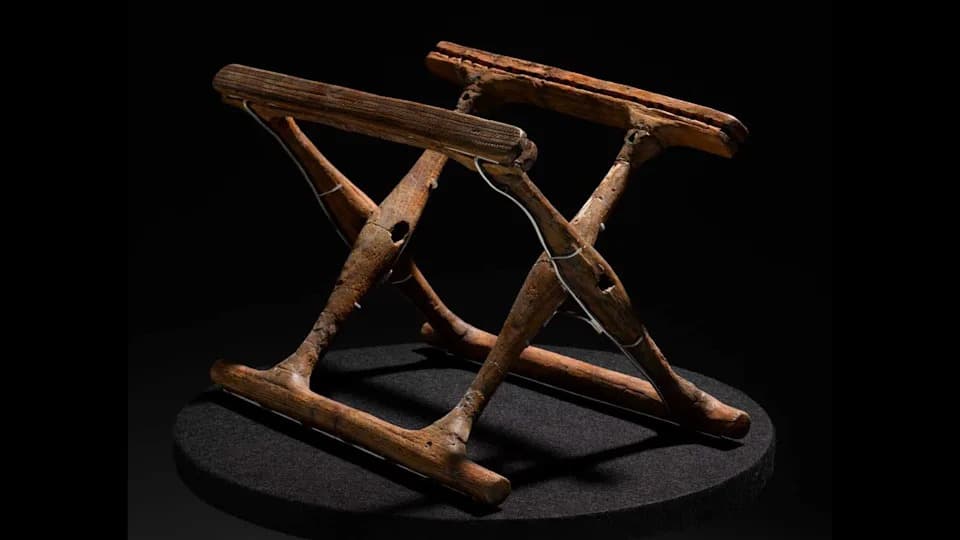
Remains of a Bronze Age folding chair were found in a chieftain's grave in Denmark. | Credit: National Museum of Denmark (CC-BY-SA)
When archaeologists from the National Museum of Denmark opened the burial mound known as Guldhøj ("Gold Hill") in southern Jutland in 1891, they uncovered an unexpected and remarkable find: a nearly intact wooden folding chair dated to around 1400 B.C. Crafted in Denmark roughly 3,400 years ago, the Guldhøj chair is — according to the National Museum of Denmark — the only completely preserved wooden chair from the European Bronze Age.
A High-Status Burial
The chair lay in the grave of a chieftain who had been buried inside a hollowed oak trunk and wrapped in cowhide. The man’s clothing and grave goods emphasized his elite position: a wool cloak fastened with a bronze brooch, two wool hats, woolen mittens, leather shoes, a bronze axe and a bronze dagger. Also included were two ornate wooden bowls and a wooden box. The presence of a folding chair among these objects is especially striking and likely signaled the man’s elevated social and possibly ritual status.
a carved portrait of a Maya queen with an orange background
Materials and Craftsmanship
The chair’s frame was made from ash wood and the seat from otter skin, of which only a fragment survived. Geometric patterns were incised into the top of the wooden frame and inlaid with a dark, tar-like substance that formed a decorative band. These surviving details allow modern researchers to reconstruct both the form and aesthetic of the object.
What the Study Found
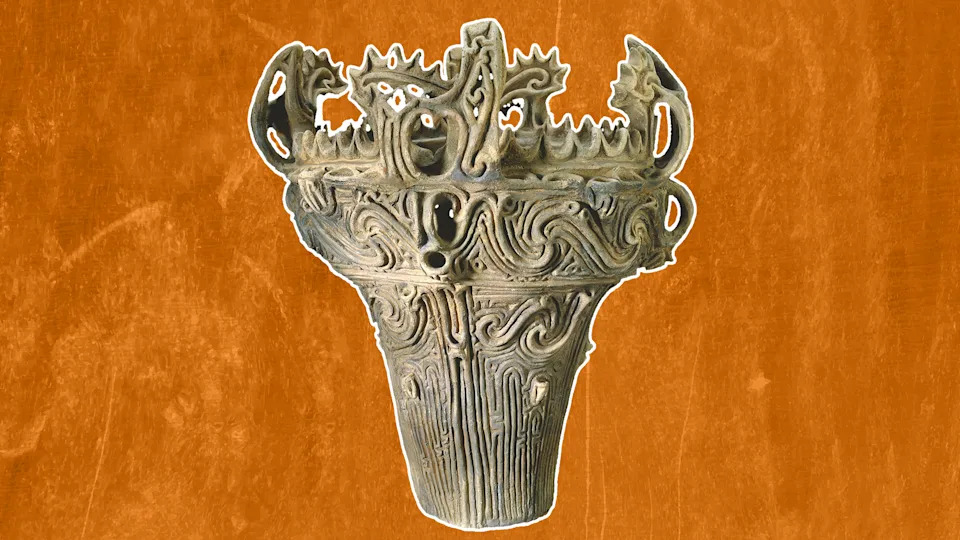
a coil-built pot that tapers from the top and has stylized flames around the rim, against an orange background
A 1999 study led by archaeologist Kirsten Prangsgaard examined the chair closely and concluded that it was built from two separate ash frames, each about 33 centimeters (13 inches) tall. When assembled at a 45° angle, the frames created a low folding seat approximately 24 centimeters (9.5 inches) above the ground. The researchers also noted that bronze nails likely once secured the frame, though they may have been removed before the chair was placed in the grave.
Symbolism and Wider Connections
Folding chairs were not merely practical objects: across Bronze Age societies they signaled rank and were often used in ceremonies or rituals. Archaeologists have found folding seats of similar design in Bronze Age Egypt and Greece — regions where preservation of organic materials is more favorable — and fragments of comparable chairs have turned up in other Nordic chieftain graves in Denmark and northern Germany. A rare metal folding chair was even discovered in an early medieval woman’s grave in Germany.
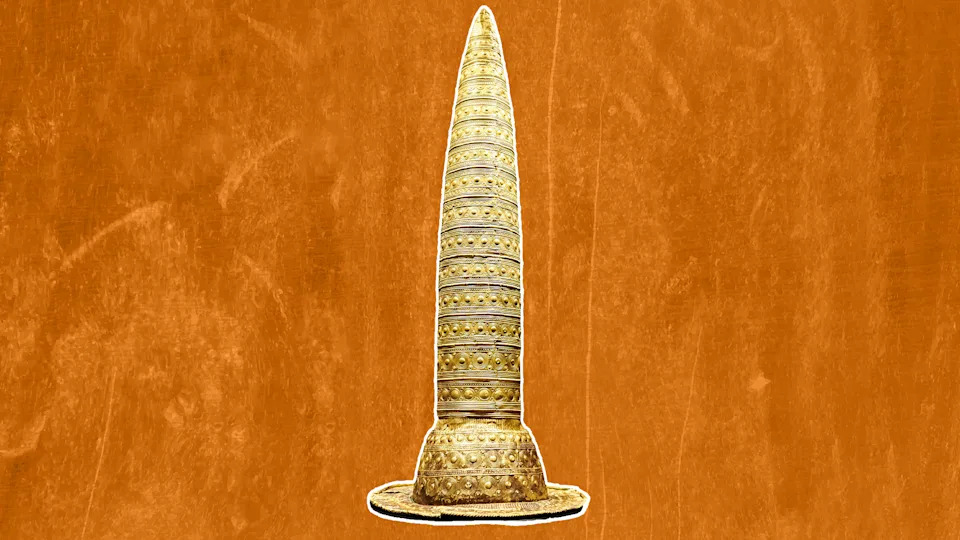
a pointy gold hat against an orange background
"The folding chairs thus seem to belong to the warrior graves of the Early Bronze Age," Prangsgaard and colleagues observed, linking this furniture type to high-status burials.
The resemblance between the Guldhøj chair and folding seats from distant Mediterranean cultures suggests networks of exchange — through trade, diplomacy or gift-giving — that connected Nordic and Mediterranean groups in the Bronze Age. Other artifacts, such as the four-spoked wheel on the famous Trundholm Sun Chariot, also echo Aegean designs and point to broader artistic and technological contacts across regions.
Legacy
Both the folding chair and the wooden bowls found in the Guldhøj burial are described by the National Museum of Denmark as "rare objects of high prestige." As the only fully preserved wooden folding chair from Bronze Age Europe, the Guldhøj chair offers a rare, tangible link to the craft, social hierarchy and cross-cultural connections of Bronze Age northern Europe.
Help us improve.