The March 25, 1911 Triangle Shirtwaist Factory fire in Greenwich Village killed 146 workers, most of them young immigrant women, after locked exits and inadequate firefighting resources trapped employees on the upper floors. Public outrage drew an estimated 350,000 people to funeral processions and protests and led to about 30 new safety laws and stronger labor inspections. The tragedy set long-term reform in motion and is commemorated by a permanent memorial unveiled at the Brown Building on October 11, 2023.
The Triangle Shirtwaist Fire of 1911: How 146 Deaths Transformed U.S. Workplace Safety
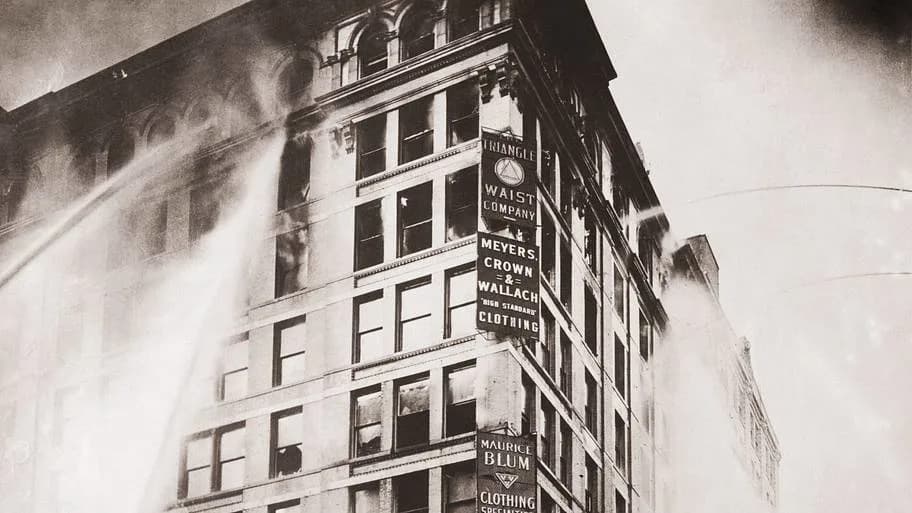
Triangle Shirtwaist Company Fire - Asch Building | Keystone/GettyImages
On March 25, 1911, a devastating fire ripped through the Triangle Shirtwaist Factory in Greenwich Village, killing 146 workers and exposing dangerous workplace practices that would spark widespread reform.
Factory Life Before the Fire
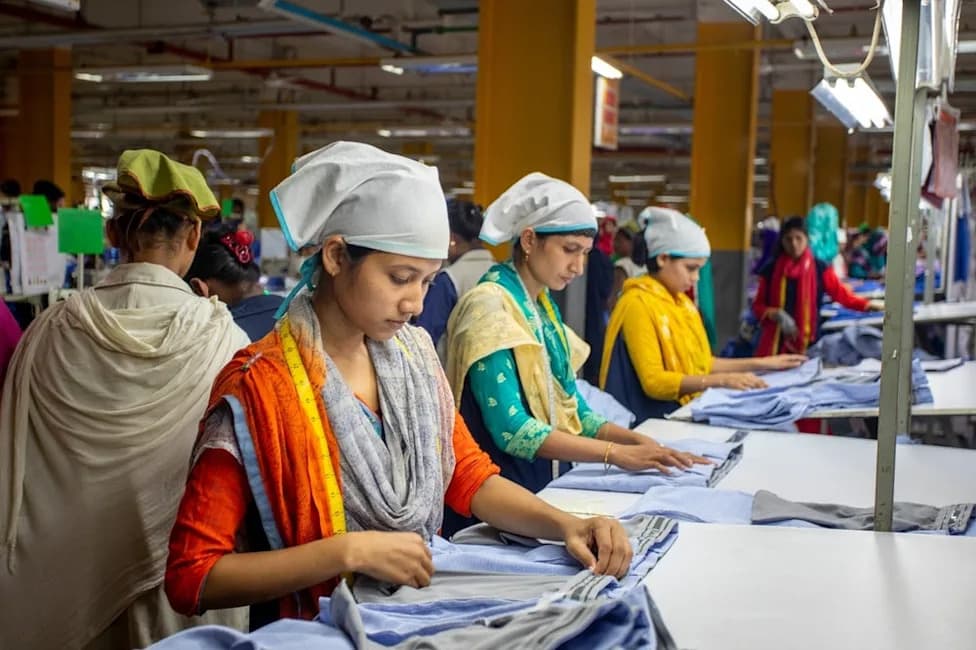
The Triangle Waist Company occupied three floors of the Asch Building (now the Brown Building). The factory produced "shirtwaists," a popular women’s blouse, and employed roughly 500 people. Working conditions were harsh: long hours (often 7 a.m. to 8 p.m.), low pay (about $6 a week), crowded workspaces, and little protection for workers. Two years earlier employees had staged a strike to demand safer, fairer conditions.
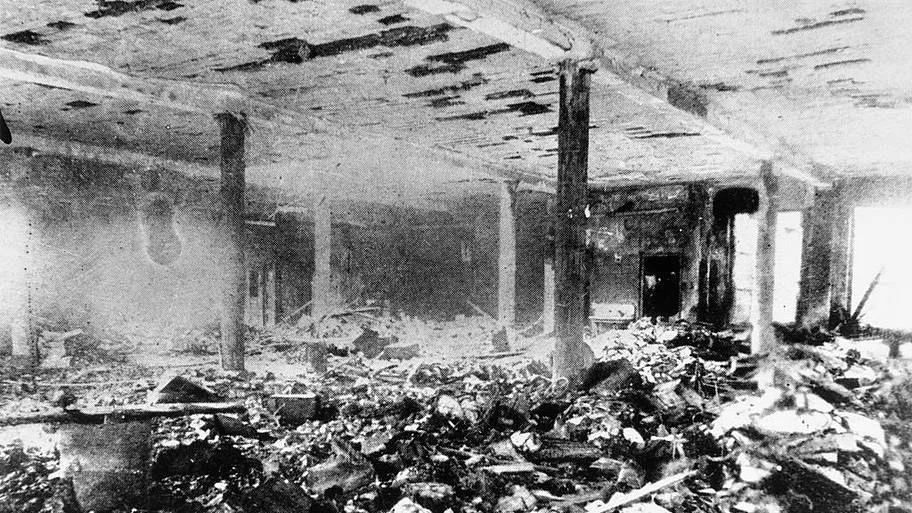
Inside aftermath of Triangle Shirtwaist Company Fire | Bettmann/GettyImages
The Fire and Why It Was So Deadly
The blaze likely began on the eighth floor when a discarded cigarette or cigar ignited a pile of fabric scraps. Because the workrooms were high in the building and many exits were locked or blocked, workers struggled to escape. Stairwells and a single fire escape became overcrowded. New York City fire equipment at the time could reach only as high as the sixth floor of the Asch Building, so many victims could not be rescued from the upper floors.
Human Cost
Of the roughly 500 people employed there, 146 died—123 women and 23 men. The majority of victims were young immigrant women. The scale of the loss shocked the city and the nation.
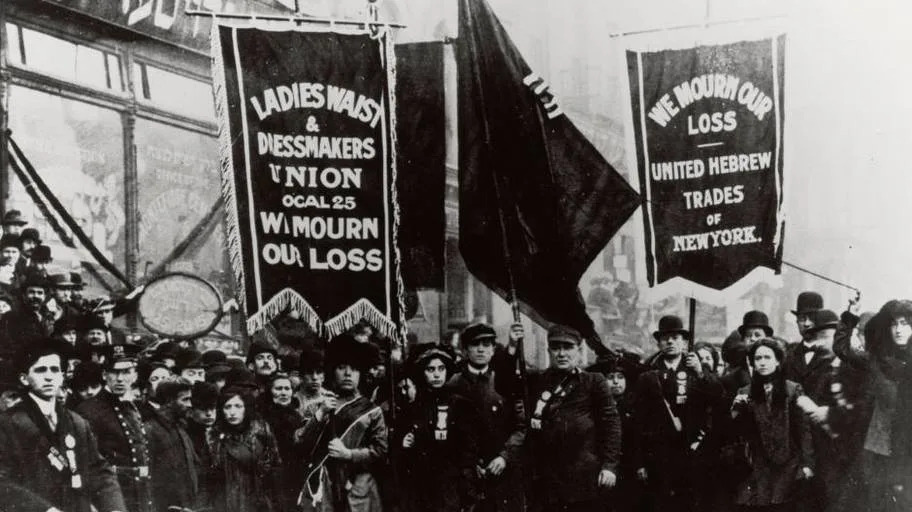
People mourning and carrying signs honoring the Triangle Shirtwaist Factory fire victims | PhotoQuest/GettyImages
Aftermath and Reform
The public response was immediate and immense. An estimated 350,000 people joined the funeral procession and protest marches honoring the victims and demanding change. Investigations and public outrage exposed outdated and inadequate building and factory regulations. In the months and years that followed, New York State enacted roughly 30 new laws and regulations governing factory safety, fire prevention, building codes, and labor inspections. That momentum helped shape decades of labor reform and contributed to the climate that eventually produced the federal Occupational Safety and Health Act of 1970.
Remembering the Victims
Victims’ families and labor advocates worked for generations to preserve the memory of those lost. In 1912 a stone memorial honored six initially unidentified victims; their names were confirmed in 2011. A permanent memorial listing all who died was unveiled on October 11, 2023, at the Brown Building (the former Asch Building) on Greene Street and Washington Place in Greenwich Village.
Legacy: The Triangle Shirtwaist Fire remains a defining turning point in American labor history—a tragic catalyst for lasting improvements in workplace safety, inspections, and labor rights.
Help us improve.