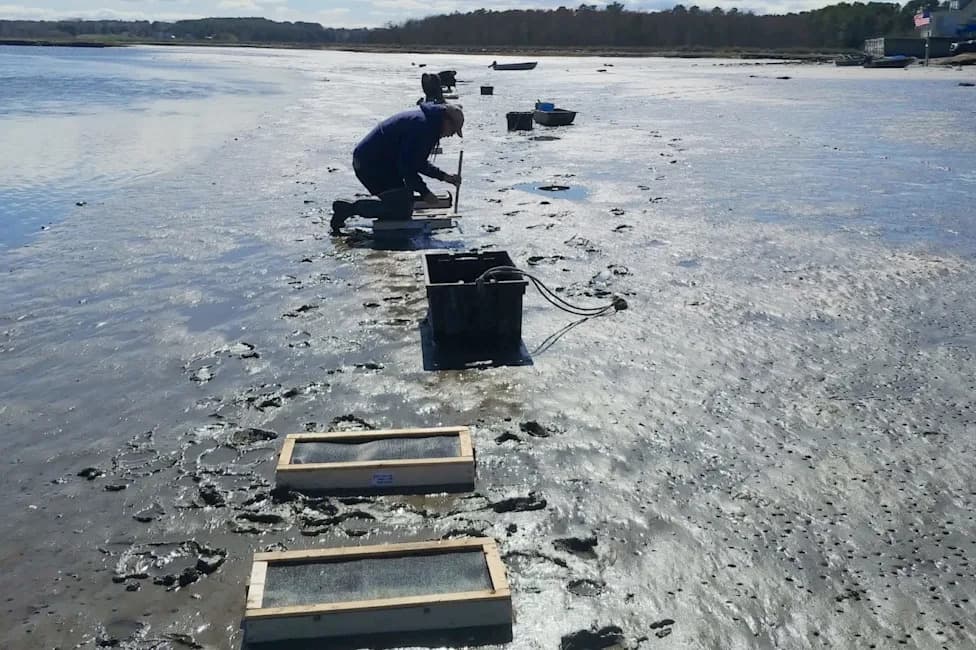
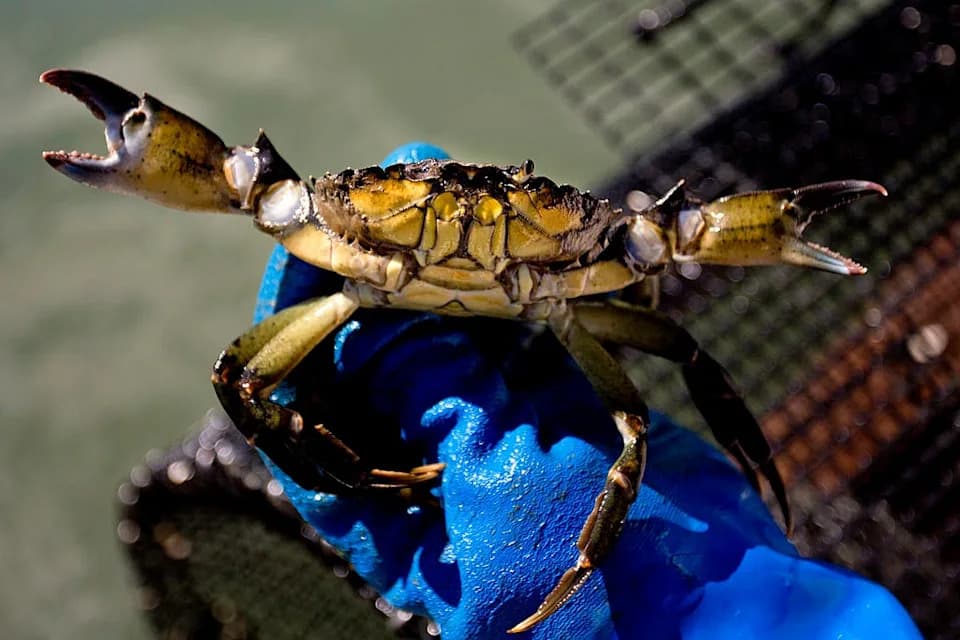
Maine’s seagrass meadows are declining as part of a global trend driven by coastal development, nutrient pollution and warming oceans. Globally, about 29% of seagrass was lost between the late 1800s and early 2000s, with roughly another 4% lost from 2019–2024; many parts of Maine have lost over half their acreage in the last 20 years. Virginia’s nearly 30-year seed-based program has restored more than 12,000 acres of eelgrass, and Maine is testing seeding alongside water-quality improvements. Experts stress that careful site selection, improved water clarity and long-term commitment are essential for successful restoration.
Virginia Restored 12,000 Acres of Seagrass — Can Maine Reverse Its Losses?
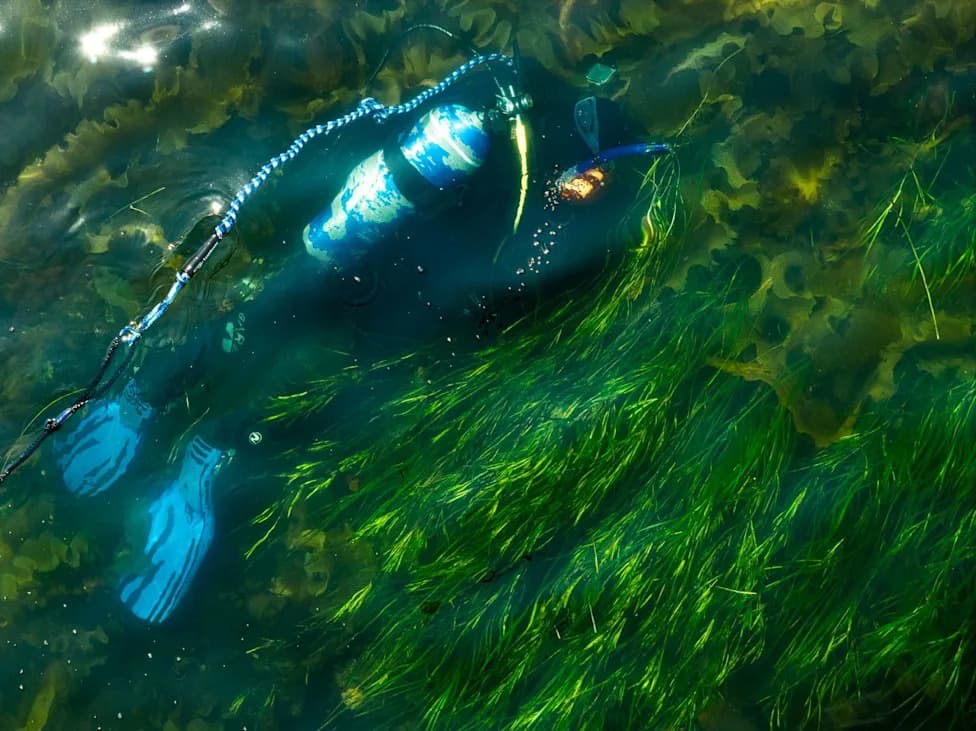
Glenn Page, who leads a seagrass research and restoration project called Team Zostera, collects reproductive shoots from a healthy eelgrass meadow in Casco Bay on Aug. 7, 2026. Photo by Jamie Walter forThe Maine Monitor.
Maine’s underwater seagrass meadows are shrinking and thinning, mirroring a global decline driven by coastal development, nutrient pollution and warming oceans. These submerged grasslands act as nurseries for juvenile fish and invertebrates and deliver critical services to coastal communities — improving water quality, sequestering carbon, reducing erosion and buffering storm surge energy.
Why Seagrass Matters
Seagrass supports biodiversity and coastal resilience. Healthy meadows provide food and shelter for young marine life, stabilize sediments, filter nutrients, and store carbon — benefits that make their loss both an ecological and economic concern.
Scope of the Decline
Scientists estimate that roughly 29% of known global seagrass area disappeared between the late 1800s and the early 2000s. More recent satellite analyses put additional losses at about 4% from 2019 to 2024. In Maine, mapping by the Maine Department of Environmental Protection indicates many stretches of coastline have lost well over half their seagrass acreage in the past two decades.
Lessons From Virginia
There is cause for optimism. In Chesapeake Bay and the coastal lagoons of Virginia and Maryland, long-term efforts to reduce nutrient pollution and improve water clarity have allowed seagrass to rebound and expand into deeper waters. Researchers at the Virginia Institute of Marine Science (VIMS) pioneered a seed-based restoration method that has helped restore more than 12,000 acres of eelgrass over nearly 30 years.
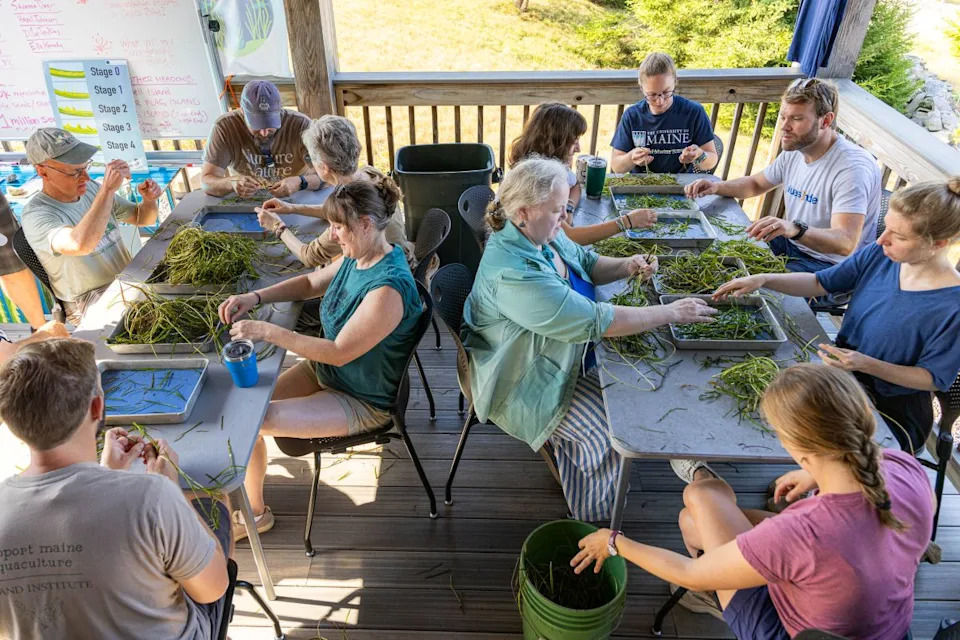
Volunteers and researchers plucked the reproductive parts of eelgrass, called spathes, at the Schiller Coastal Studies Center in Harpswell on Aug. 7, 2026. They were then placed in tanks where their seeds will fall out and be used for research and potential transplanting. Photos by Jamie Walter forThe Maine Monitor.
"These are plants," said Chris Patrick, assistant professor at William & Mary’s Virginia Institute of Marine Science, who oversees the Chesapeake Bay aquatic plant mapping program. "They need light to reach the bottom."
Maine’s Early Restoration Work
Maine conservation groups, universities and government agencies have launched restoration trials in places such as Casco Bay and Great Salt Bay on the Damariscotta River. Activities include monitoring remaining meadows, measuring environmental conditions, and experimenting with seed collection and reseeding from healthy donor beds. On Aug. 7, 2026, volunteers and researchers harvested eelgrass reproductive structures (spathes) at the Schiller Coastal Studies Center in Harpswell and placed them in tanks to collect seeds for study and potential transplanting.
What Works — And What Doesn’t
Experts caution that seeding is not a panacea. Careful site selection is critical because established meadows can persist in conditions poorer than those needed for successful establishment. The most effective single actions to support restoration are measures that improve water clarity: upgrading wastewater treatment plants, repairing or replacing failing septic systems, and reducing agricultural runoff of fertilizers and manure.
Restoration takes time and persistence. Early years often include setbacks. Long-term monitoring, adaptive management and community investment are essential to ensure seeded meadows become self-sustaining.
Bottom Line
Virginia’s seed-based success shows that large-scale recovery is possible when pollution is reduced and restoration is sustained. Maine’s emerging projects are following that blueprint: combining careful site choice, water-quality improvements and patient, multi-year effort offers the best chance to stem seagrass loss and restore productive coastal meadows.
Help us improve.