Politicians marked the ceremonial breakthrough of the SuedLink tunnel beneath the Elbe, a critical segment of a 700 km underground north–south electricity corridor. When complete, the line will transport wind power from Schleswig-Holstein through Lower Saxony and Thuringia to Bavaria and Baden-Württemberg, and can also carry southern solar power north or channel Norwegian hydropower into Germany. TransnetBW expects full completion by end-2028 after about a six-year delay; roughly 8.5 million cubic metres of earth will be moved. The link will have a capacity of about 4 GW, enough for roughly 10 million households.
SuedLink Tunnel Breakthrough: Major Milestone for Germany’s 700 km Underground Power Corridor
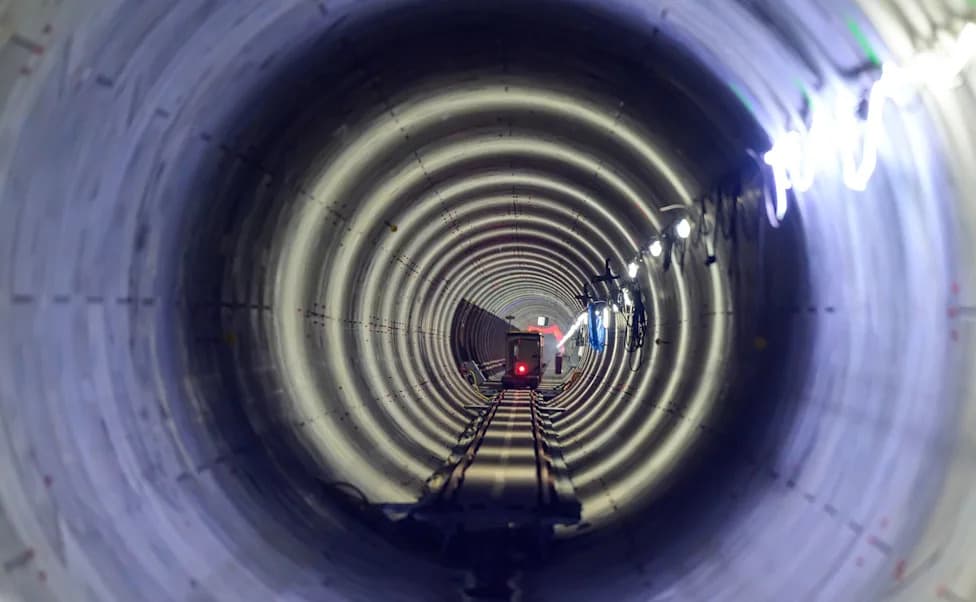
A view inside the tunnel of the SuedLink Elbe crossing. The 5.2 kilometers ELSA tunnel boring machine has reached the receiving shaft in Wischhafen, marking the completion of tunnel boring between Wewelsfleth in Schleswig-Holstein and Wischhafen in Lower Saxony. (is associated with: «Key link under the Elbe in Germany's north-south power line completed») Philipp Schulze/dpa
Politicians from Schleswig-Holstein and Lower Saxony on Monday celebrated the ceremonial breakthrough of the SuedLink tunnel beneath the Elbe — a key milestone for a 700-kilometre underground north–south transmission corridor that will strengthen Germany's renewable-energy grid.
Schleswig-Holstein Premier Daniel Günther and Lower Saxony's Environment Minister Christian Meyer attended the opening of the tunnel linking Wewelsfleth (Schleswig-Holstein) and Wischhafen (Lower Saxony). The tunnel is one of the most important segments of the SuedLink project, overseen by grid operator TransnetBW.
Route, Capacity and Purpose
When finished, SuedLink will carry wind-generated electricity from Schleswig-Holstein through Lower Saxony and Thuringia to the high-demand southern states of Bavaria and Baden-Württemberg. The fully underground project consists of two largely parallel high-voltage lines that branch at their starting and ending points.
TransnetBW says the connection will have a maximum transfer capacity of about four gigawatts — roughly equivalent to the output of four nuclear reactors — and could supply electricity for roughly 10 million households. In addition to moving northern wind power southward, SuedLink can carry southern solar power northward and, in combination with other interconnectors, help route Norwegian hydropower into the German grid.
Timeline, Scale and Impact
All sections are expected to be completed by the end of 2028, approximately six years later than originally planned. By project completion an estimated 8.5 million cubic metres of earth will have been excavated. The underground design and high capacity are intended to improve grid reliability, meet rising electricity demand, and accelerate Germany’s transition to renewable energy.
Why It Matters: SuedLink is a strategic backbone for transporting large volumes of intermittent renewable generation from resource-rich regions to consumption centres, improving energy security and enabling greater integration of wind, solar and imported hydropower.
Help us improve.