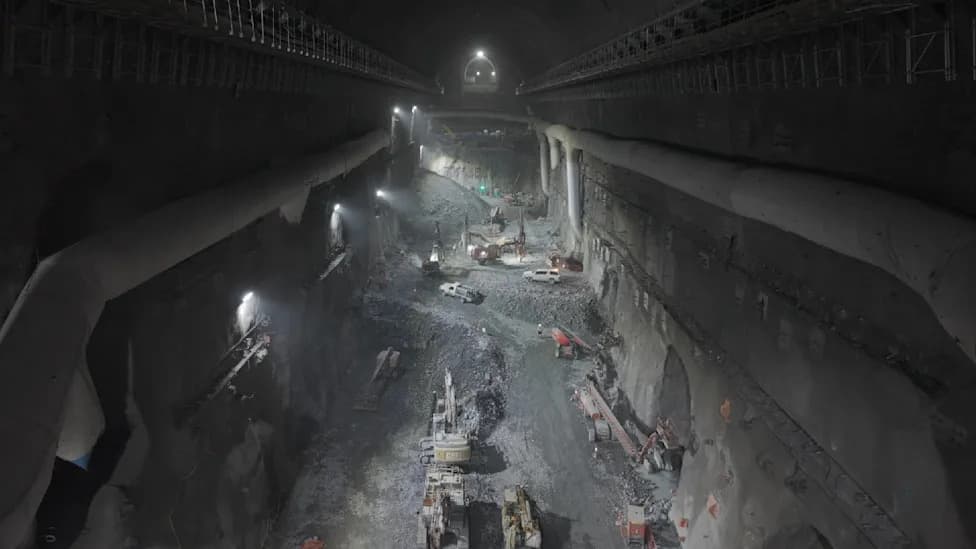
The Hudson Tunnel project reached a major milestone on Sept. 28 as officials from New Jersey and New York marked the start of tunnel boring. The first of two hard-rock TBMs will excavate about 1 mile from North Bergen to an access shaft on the Weehawken–Hoboken border, with a second machine to follow. The $16 billion, two-stage plan will later swap in a different pair of machines to tunnel through softer riverbed soils, advancing regional rail resilience and reliability.
Hudson Tunnel Boring Begins: Major Milestone for $16B Gateway Project
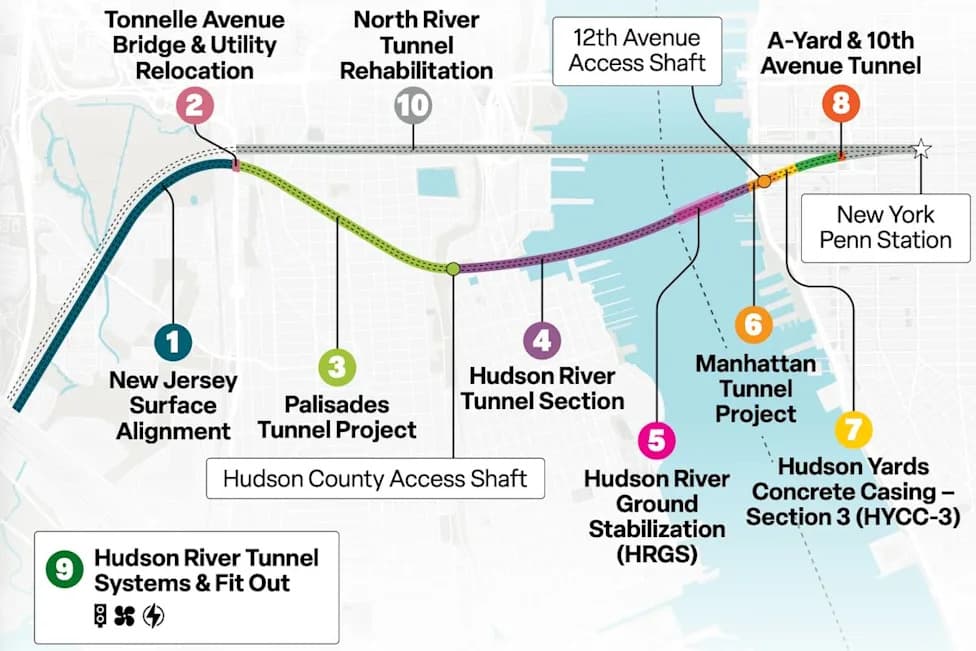
The start of tunnel boring for the Palisades Tunnel Project is just one of 10 stages of tunnel construction. Gateway Development Commission
NORTH BERGEN, N.J. — Officials from New Jersey and New York gathered on Sept. 28 to mark the start of tunnel boring for the Hudson Tunnel project, a central component of the Gateway Program aimed at modernizing rail connections under the Hudson River.
The first of two hard-rock tunnel-boring machines (TBMs) will begin excavation after final testing is completed. That machine will tunnel roughly 1 mile of solid rock from North Bergen to an access shaft on the Weehawken–Hoboken border; a second hard-rock TBM will follow shortly. After the hard-rock portion is complete, the initial machines will be removed and replaced by a second pair of machines designed to bore through the softer soils beneath the riverbed.
Project Scope and Timeline
The $16 billion, two-stage project addresses a critical vulnerability in the region's rail network and is intended to deliver more resilient, reliable service for commuters traveling into and out of New York City. The hard-rock machines are expected to advance about 30 feet per day, and — including scheduled maintenance — to take roughly a year to travel ~5,100 feet.
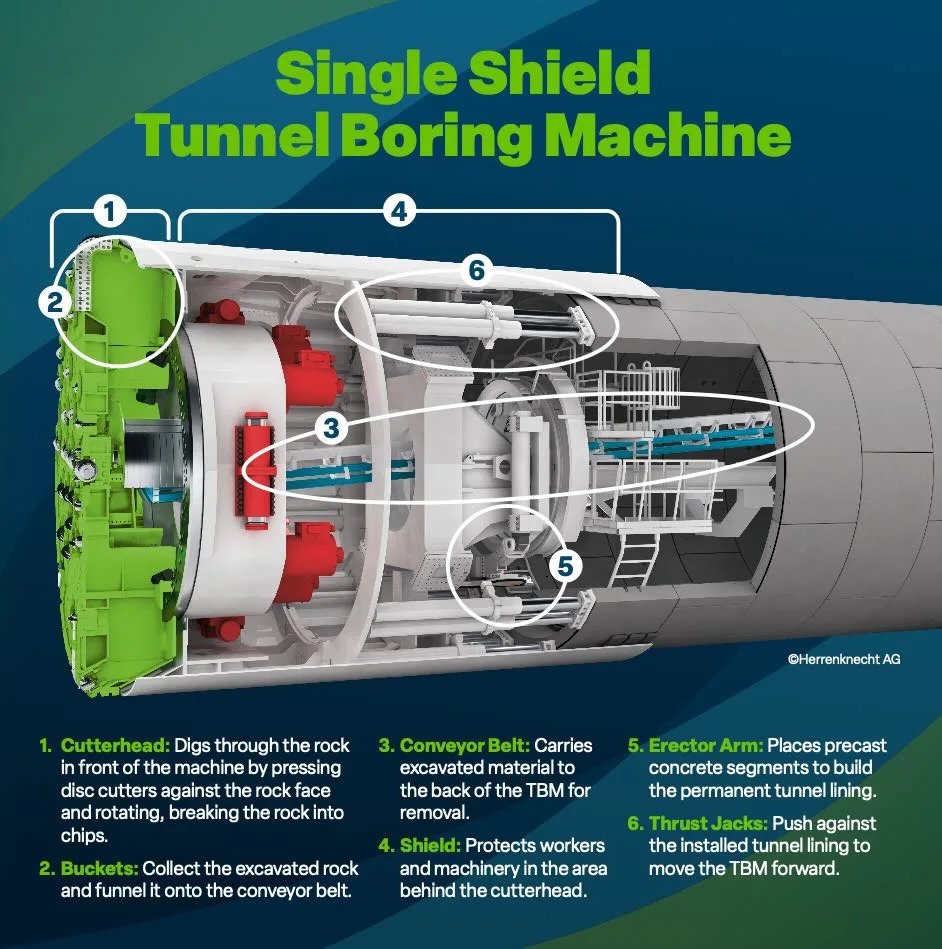
An illustration of one of the tunnel-boring machines that will excavate the first portion of the Hudson Tunnel project. Herrenknecht AG/Gateway Development Commission
Machine Specifications
The single-shield TBMs feature a cutterhead diameter of 28 feet, 8 inches. Each trailing gantry extends approximately 500 feet, and each machine weighs more than 1,680 tons. An illustration and an explanatory video released by Herrenknecht AG and the Gateway Development Commission (GDC) show how the machines operate and how the tunneling sequence will proceed.
"The start of tunnel boring is more than just a construction milestone," said Balpreet Grewal-Virk, New Jersey co-chair of the Gateway Development Commission. "It is one step closer to the modern, reliable train service that New Jerseyans, and everyone else who travels into and out of New York City, deserve."
GDC co-chair Alicia Glen of New York added, "The Hudson Tunnel Project will finally fix one of the key weaknesses in our region's rail network, and we will feel the benefits for generations. Starting tunnel boring sends a clear signal: we are getting this tunnel done."
What Comes Next
Testing, monitoring and preparatory work will continue as partner agencies advance the program. The first stage — the hard-rock drive to the access shaft — must be completed and equipment removed before the second-stage machines begin the riverbed excavation. Officials say the tunneling start is a significant construction milestone toward improved, more resilient rail service for the Northeast Corridor.
Illustration and Video: Image and video materials were provided by Herrenknecht AG and the Gateway Development Commission.
Contact: To report news or corrections, contact [email protected].
Help us improve.