New York teachers built and tested small, snail-inspired robots at Cornell workshops to skim surface water and collect microplastics. The Mollusca design uses a snailʼs ripple-driven flows to pull particles from up to ten times the animalʼs body length. NOAA-supported 12-by-12-inch prototypes have logged about 80 hours in lab tests, and lesson kits are being rolled out for Great Lakes classrooms to connect engineering and environmental science to local pollution problems.
Snail-Inspired Classroom Robots Help Teachers Trap Microplastics
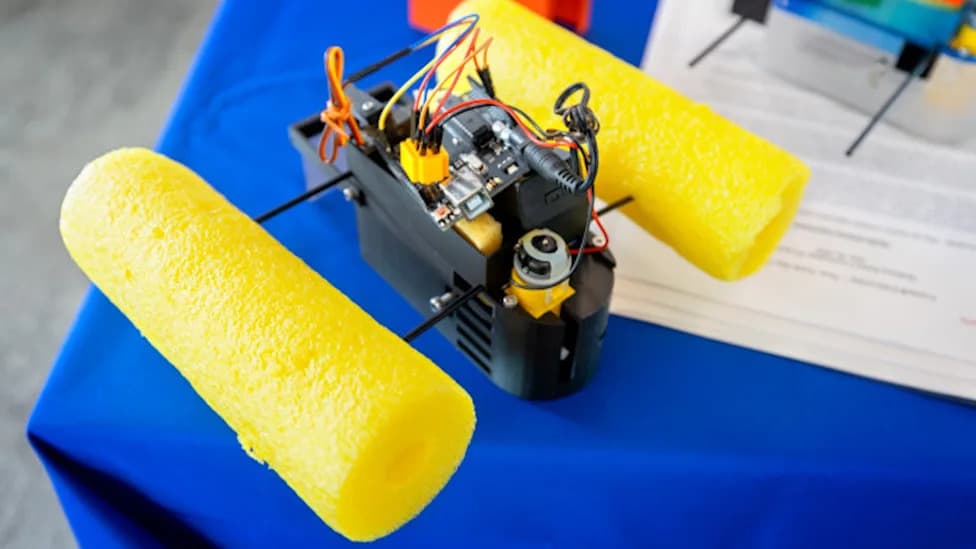
Photo Credit: Cornell University
A group of New York teachers has turned to an unlikely role model — the aquatic snail — to tackle microplastic pollution while bringing hands-on science into classrooms.
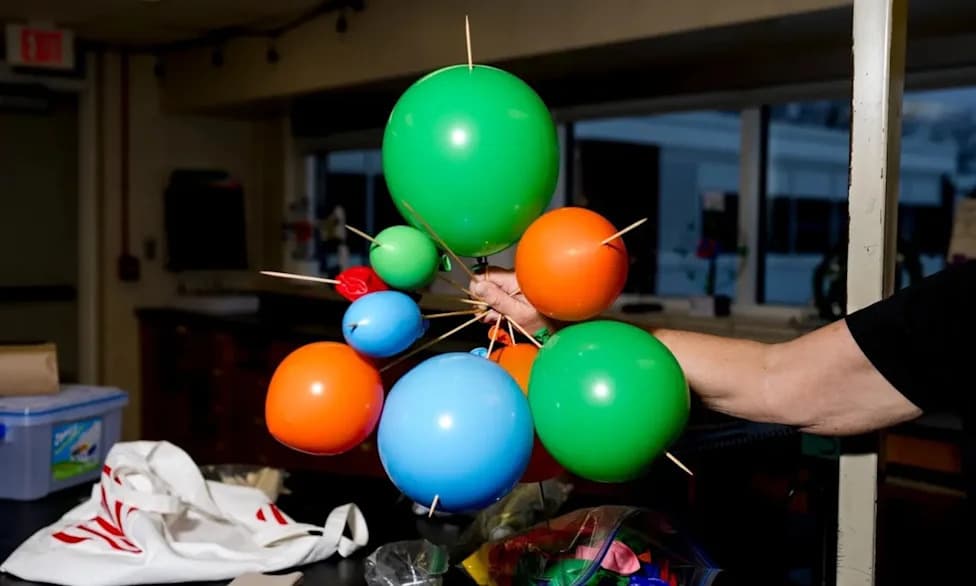
At workshops hosted by Cornell University, educators assembled and trialled compact, classroom-ready robots designed to skim the water’s surface and collect microplastics. The design is based on research into the snail’s rippling locomotion, which generates flows that can draw floating particles toward the animal from distances of up to ten times its body length.
From Biology To Engineering: The Mollusca Concept
Sunny Jung, a professor of biological and environmental engineering at Cornell’s College of Agriculture and Life Sciences, adapted that ripple-driven hydrodynamic principle into a robot called Mollusca. The device intakes surface water and filters out microplastics, applying the same basic flow dynamics observed in snails.
Workshops, Partners, And Classroom Kits
Researchers and staff from Cornell, New York Sea Grant, Princeton University and the University of Michigan led training sessions, supplied lesson plans and distributed hands-on kits so teachers can replicate the project in their own classrooms. The program began with a two-day workshop in July 2025 that trained 25 teachers and expanded this year to include 43 more educators through sessions at Cornell and in New York City.
Teachers built the 12-by-12-inch prototypes themselves and tested them in kiddie pools filled with nurdles — small plastic pellets used in manufacturing — to simulate microplastic contamination. According to researchers, the prototypes have logged roughly 80 hours of swimming in lab tests while teams at Princeton and the University of Michigan evaluate wave performance and larger-scale versions for the Great Lakes.
"The Sea Grant trainings are the best I've ever done. They're super interactive, and it's always local, which makes it easier to integrate and for the kids to benefit," said Emily Colletta, who leads the gifted and talented program at North Tonawanda Intermediate School.
Education Meets Environmental Research
New York Sea Grant is converting the research into grade-appropriate lesson plans. One teacher designed a three-month Great Lakes unit around the project, and another reported strong engagement from Advanced Placement Biology students. Beyond classroom skills in engineering and environmental science, these activities can provide useful observational data for researchers studying where microplastics accumulate and how best to collect them.
Microplastics are now widespread: they have been detected in waterways, wildlife and people. The Cornell Chronicle notes that environmental concentrations of microplastics are projected to double by 2040, and particles have been found in at least 1,300 species as well as in humans.
While small classroom robots are not a silver bullet for ocean pollution, they offer a practical way to educate students, engage local communities, and help researchers refine strategies for tracking and removing microplastics.
Help us improve.