New engineered antibodies can detect mutant-derived peptides that cancer cells naturally present on their surface, enabling immune targeting of mutations that lie inside the cell. Researchers applied this concept to a common KRAS mutation, creating antibodies that distinguish the mutant peptide from the wild-type sequence and using them in bispecific drugs and engineered T cells to selectively kill mutant-bearing tumor cells. The strategy leverages MHC/HLA peptide presentation and could expand antibody-based approaches to many intracellular oncogenes, though its applicability depends on peptide presentation in each patient.
New Antibodies Turn 'Undruggable' KRAS Mutations into Visible Targets
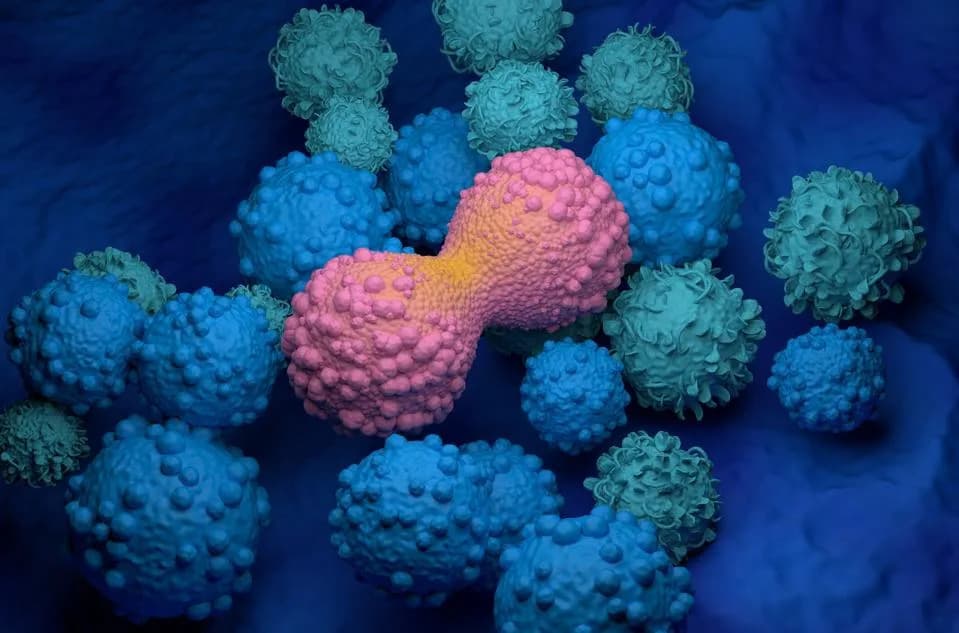
Illustration of cancer cells dividing. Cancer cells are able to divide uncontrollably and often display irregular shapes and sizes when compared to healthy cellsgetty
Researchers have engineered a new class of antibodies that can detect tiny fragments of mutant proteins displayed on the surface of cancer cells, opening a route to target mutations previously considered unreachable.
Many tumors depend on a single change in a key protein to drive unchecked growth. KRAS, a central regulator of cell proliferation frequently mutated in pancreatic, colorectal and lung cancers, is a classic example: a single amino-acid substitution can convert KRAS into a permanently active form that continually signals cells to divide. Because mutant KRAS normally functions inside the cell, it has long been considered "undruggable" by conventional antibody therapies.
How the Approach Works
Rather than attempting to deliver antibodies into cells, the new strategy exploits the cell's natural surveillance system. As proteins are broken down inside cells, short peptides are carried to the cell surface by peptide-display molecules — the major histocompatibility complex (MHC) proteins, also known as HLA in humans. These surface-presented peptides allow immune cells, especially T cells, to inspect intracellular contents.
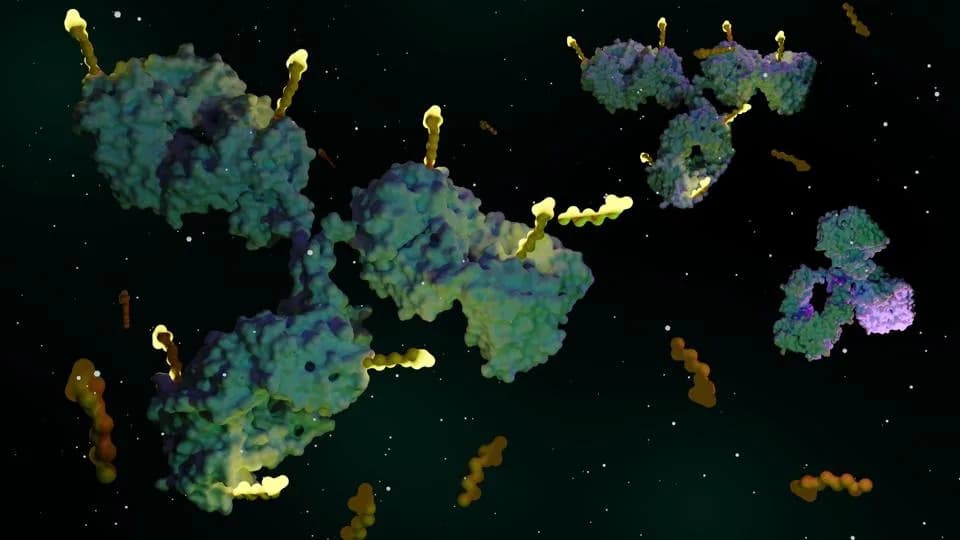
The investigators designed antibodies that specifically recognize a short peptide derived from a common KRAS mutation when that peptide is presented on the cell surface by MHC molecules. By targeting the mutant-derived peptide (not the whole protein), the antibodies can distinguish cancer cells carrying the KRAS mutation from normal cells.
Turning Recognition Into Killing
The study tested two therapeutic strategies. One used a bispecific antibody that links the tumor cell (via the mutant peptide–MHC complex) to a T cell, forcing direct contact and triggering T-cell–mediated killing. The other used the antibody to guide engineering of T cells so they themselves could recognize the mutant peptide and attack the tumor. Both approaches selectively eliminated cells displaying the mutant KRAS peptide while largely sparing cells with wild-type KRAS.
Why This Matters
This work shows that intracellular oncogenic drivers need not be unreachable by antibody-based therapies: the cell's peptide-presentation machinery can reveal small, mutation-specific markers on the cell surface. That could broaden the range of cancer proteins accessible to targeted immune therapies beyond extracellular or surface proteins.
Limitations and Considerations
There are important constraints. A mutation must generate a peptide that can be processed and stably presented by the patient's specific MHC (HLA) alleles; MHC types vary across individuals and populations. Different mutations will therefore require different antibodies or T-cell receptors tailored to compatible HLA types. As with any targeted immunotherapy, off-target reactivity and safety must be rigorously evaluated in clinical testing.
Bottom line: By harnessing the immune system's own peptide-display pathway, researchers can potentially convert hidden, intracellular cancer mutations — including certain KRAS variants — into visible, targetable markers for antibody- and T-cell–based therapies.
Originally published on Forbes.com.
Help us improve.