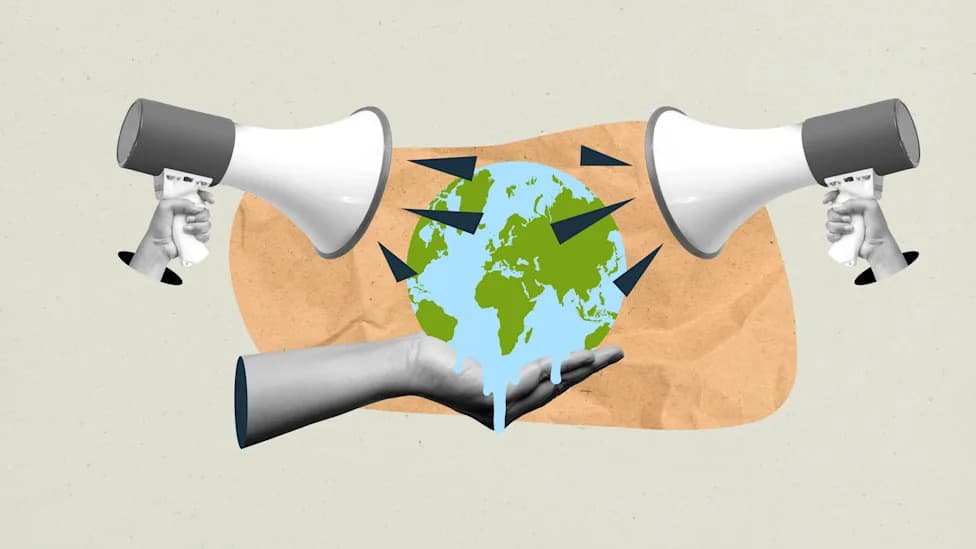
Visible climate disasters create an opportunity to change minds, but facts alone often fail to persuade. Research shows targeted, value-based messaging — appealing to national security, family welfare, and religious stewardship — is more effective, especially with conservative and evangelical audiences. Biblical narratives like Joseph’s foresight and Noah’s ark can be reframed to advocate protection of life, while bioethics frameworks help weigh competing moral claims. Educators, faith leaders, and policymakers should adopt evidence-based communication and support more applied research.
Faith-Driven Messaging: How Religious Values Can Shift Climate Skepticism

As record heatwaves and vast wildfires send smoke across continents, it is increasingly clear that climate change threatens countless species — including humans. These visible crises create a teachable moment: a chance to refine how we communicate about climate risks and solutions so messages resonate across political and religious divides.
Why This Moment Matters
Many hoped that catastrophic weather would change public opinion and accelerate policy action to reduce fossil fuel use. While progress has been uneven and meaningful resistance persists among some policymakers and parts of the public, these extreme events offer a new opening for persuasion if we use evidence-based approaches to communication.
What Research Shows About Persuasion
Studies consistently find that simply correcting misinformation with facts often fails to change people’s views. By contrast, tailored messages that reframe issues to align with an audience’s core values can be more effective. For conservatives, persuasive frames often emphasize national security, energy independence, family welfare, moral purity, and religious stewardship of creation.
Emotions and Moral Framing
Effective communication can combine emotion and hope: acknowledge sorrow or guilt about harms already done, while offering practical, hopeful solutions. Moral arguments that stress the rights of current and future generations, the disproportionate harms to poorer communities, and the long-term risks to other species strengthen the case for action.
Engaging Evangelical Audiences
Evangelical Christians — the largest Christian group in the U.S. and an influential political bloc — are a key audience for tailored outreach. Surveys indicate evangelicals are less likely than other religious groups to say climate change is happening or is largely human-caused. At the same time, many hold beliefs that can support stewardship: about 80% endorse the idea that humans have dominion over the Earth (compared with 67% of other religious groups), and roughly 86% also say God gave people duties to protect and care for creation.
Religious narratives can be invoked in persuasive ways. The stories of Joseph, who counseled grain storage ahead of a seven-year drought, and Noah, who preserved species by building an ark in response to catastrophic flood, are illustrative examples that link faith, foresight, and responsibility. Rather than treating these narratives as mere folklore, communicators can highlight their practical lessons about planning, protection, and care for all life.
Practical Messaging Strategies
- Frame Policies as Security and Stewardship: Emphasize how clean energy enhances energy security and national resilience while honoring duties to protect creation.
- Connect to Family and Future Generations: Link conservation to the wellbeing of children and grandchildren to tap into powerful family-centered values.
- Use Moral and Religious Language Thoughtfully: Appeal to stewardship, the sanctity of nature, and scriptural precedents for protecting life during crises.
- Combine Emotion With Agency: Acknowledge losses and guilt where appropriate, but pair them with clear, actionable steps and hopeful examples.
Bioethics as a Rubric for Fair Reasoning
Bioethics offers a helpful framework for evaluating moral questions about climate policy. It encourages consideration of multiple principles — maximizing benefits, minimizing harms, protecting rights, and promoting justice by reducing inequities. Using such a rubric helps people weigh competing claims, consider all relevant facts (not only those that support a preferred view), and account for the most vulnerable stakeholders.
Research, Education, and Action
Although promising research exists on how to change attitudes, more applied studies are needed to translate insights into curricula, community programs, and faith-based outreach. Educators (K–12 and higher education), religious leaders, and policymakers should adopt evidence-based messaging and encourage social scientists and students to pursue this work.
Visible climate crises should inspire not only grief but also creative, strategic efforts to persuade and mobilize broader public support. Without such investment in communication and education, political polarization and environmental harm are likely to worsen together.
Robert Klitzman, M.D. is a professor of psychiatry at the Vagelos College of Physicians & Surgeons and the Joseph L. Mailman School of Public Health, director of the Online and In‑person Masters of Bioethics Programs at Columbia University, and author of "Doctor, Will You Pray for Me?: Medicine, Chaplains and Healing the Whole Person."
Help us improve.