Annie Jacobsen’s Biological War: A Scenario imagines how a pneumonic plague released from a BSL‑4 lab near Koltsovo (close to Novosibirsk) could spread globally within days. Drawing on Soviet-era bioweapons revelations, Pentagon war games and modern lab proliferation, she warns that biological threats are uniquely dangerous and that AI is lowering technical barriers. Jacobsen calls for urgent global action on lab safety, transparency and governance of dual‑use technologies to avoid what she terms "biological twilight."
The Doomsday Threat We’re Ignoring: Could A Lab Leak Trigger A ‘Biological Twilight’?
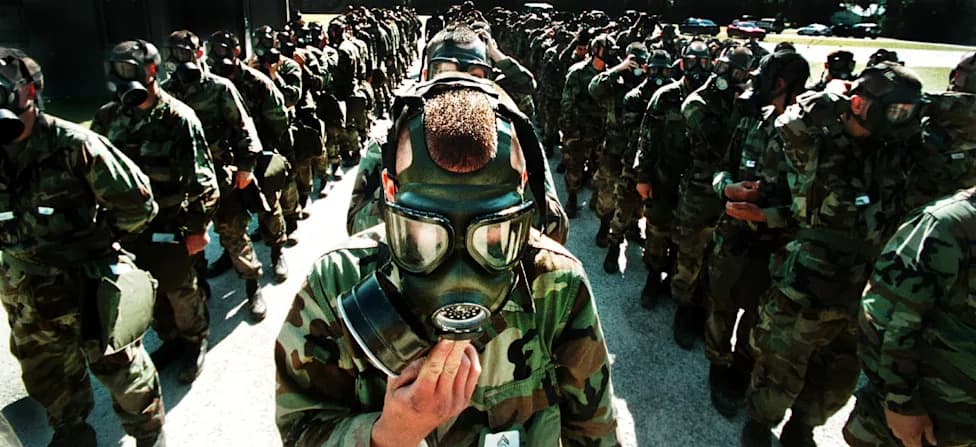
Troops in gas mask
Of the existential risks that occupy public attention—artificial intelligence, climate collapse and nuclear war—Annie Jacobsen argues that biological warfare deserves far more scrutiny. Her new book, Biological War: A Scenario, builds on her earlier work documenting nuclear risk to explore how a human-made biological catastrophe might unfold and why existing safeguards may be inadequate.
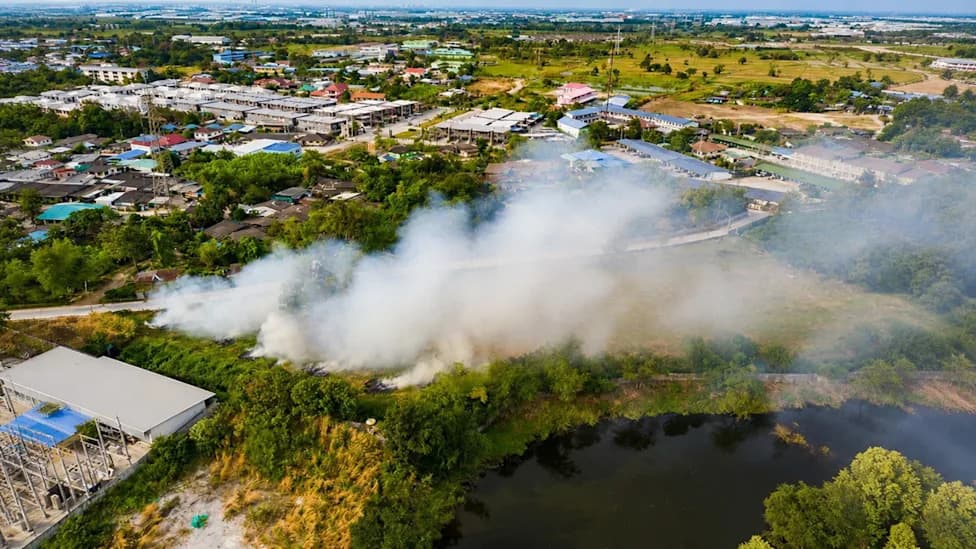
Jacobsen, an investigative reporter known for tackling civilizational threats, frames her scenario around a plausible lab accident at Vector, a real Biosafety Level 4 (BSL-4) facility in Siberia near the science town of Koltsovo. Her narrative combines reporting, declassified Cold War-era programs and contemporary biodefense assessments to show how a pneumonic-plague release could cascade into an international crisis.
From Lab Accident to Global Outbreak
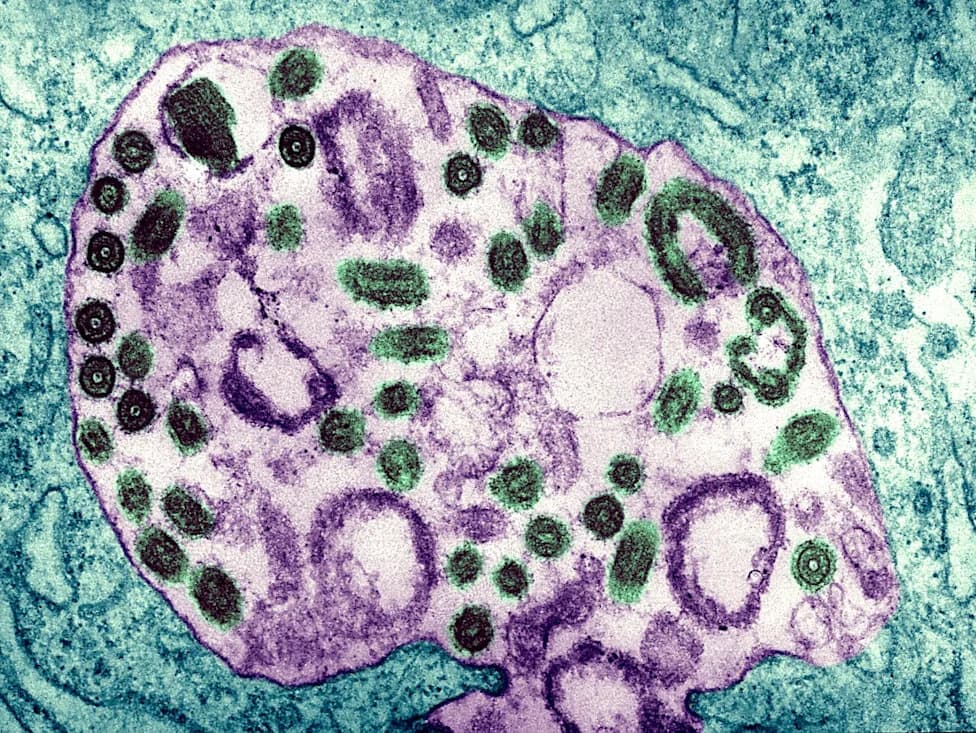
In the book’s opening act, a release of Yersinia pestis—the bacterium that causes plague—occurs at Vector. Unlike historic bubonic plague outbreaks, pneumonic plague spreads through the air via infected lungs, enabling rapid person-to-person transmission. Jacobsen describes how an infected lab worker or cleaner can seed wider transmission, and how seemingly small acts—such as hunters administering CPR to a dying scientist—can send the disease across borders when those people travel.
Disturbing Historical Research
Jacobsen draws on revelations from Soviet-era bioweapons programs, disclosed by defectors, to highlight two alarming lines of research. First, Soviet scientists reportedly explored inserting a gene that induced euphoria into a plague strain—an idea meant to encourage infected people to socialize and thereby accelerate spread. Second, they worked on mechanisms that would defeat medical countermeasures: an antibiotic-triggered component designed to cause encephalitis so victims would believe conventional medicine had failed.
Why Biological Threats Are Especially Dangerous Today
Biological weapons differ from nuclear arms because the barriers to entry are lower and the tools are proliferating. There are now roughly 110 BSL-4 labs and more than 3,500 BSL-3 labs worldwide, increasing opportunities for accidental release. An unclassified Pentagon threat assessment cited by Jacobsen ranked biological weapons among the most dangerous WMD due to this accessibility. Jacobsen also warns that computational tools and advanced AI are lowering technical thresholds for manipulating pathogens.
Fast Collapse: From Outbreak To Anarchy
Relying on Pentagon war games and pandemic planning, Jacobsen takes readers from initial outbreak to widespread social breakdown in as little as six days. She emphasizes that fear and panic act like a secondary weapon; when people behave as if death is imminent, institutions can fray quickly. In her dramatized scenario, critical decisions—such as invoking the Insurrection Act or moving the president to a remote, sealed location—come fast and grim.
"Imagine the president — with a few Secret Service outside the door, the military aide with the nuclear football — sitting alone in a room wearing a gas mask."
Jacobsen notes the Pentagon has issued approximately 1.7 million gas masks to service members; in her scenario, respiratory protection makes the difference between survival and death. With little scientific literature on the long-term social effects of a global biological catastrophe, she imagines a bleak aftermath she calls "biological twilight."
History And Contemporary Examples
Key historical touchpoints in Jacobsen’s reporting include President Richard Nixon’s 1969 unilateral decision to destroy the U.S. offensive biological arsenal and the subsequent Biological Weapons Convention, which the Soviet Union signed even as it allegedly pursued clandestine programs. The Soviet program was exposed largely after Soviet scientist Vladimir Pasechnik defected in 1989. Jacobsen also recalls the 2001 anthrax mailings in the United States, which caused five deaths and sickened 22 people across four states and spurred a large biodefense buildup.
What Needs To Change
Jacobsen’s central plea is for urgent policy action: stronger lab safety and security standards, better global oversight and transparency, investment in rapid detection and response, and thoughtful governance of dual-use technologies—especially AI tools that can aid biological design. She stresses the need for public pressure on policymakers to close dangerous gaps before an accident or deliberate misuse triggers a catastrophe.
Jacobsen describes herself as an optimist who finds solace in information—knowledge, she says, reduces fear. Though she does not own a full biohazard suit, she admits to keeping a few gas masks on hand.
Biological War: A Scenario combines investigative reporting, declassified history and a cautionary fictionalized timeline to argue that an overlooked pathway to global catastrophe—man-made biological release—is both plausible and urgent to address.
Help us improve.