The Grappler is a bumper-mounted net launcher that disables a fleeing vehicle by stopping a rear wheel's rotation, allowing the car to coast to a halt without a collision. Invented by Phoenix machinist Leonard Stock and first fielded in 2019, it fits select body-on-frame trucks and reloads in under five minutes. Departments face costs of roughly $10,000 per unit plus $2,000–$12,000 per replacement net, along with the need for agency-specific policy, legal review, and training.
Grappler Bumper Nets a Wheel — Ending High-Speed Chases Without Collisions
The Grappler Bumper Doesn't PIT a Fleeing Car — It Nets the Wheel Instead
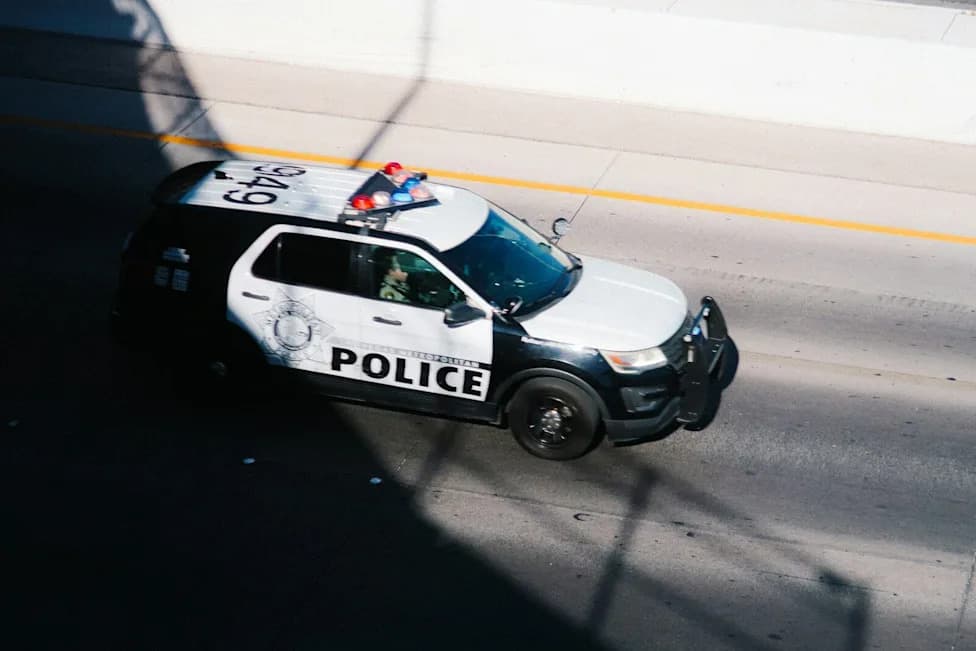
The Grappler is a bumper-mounted device designed to stop fleeing vehicles by firing a heavy nylon net at a rear wheel, halting rotation so the car coasts to a stop — avoiding high-speed impacts, PIT-induced spinouts, and rear-end damage.
How It Was Invented
The Grappler began as a practical idea from Leonard Stock, a Phoenix-area machinist. After seeing a TV segment about a pursuit that hurt an uninvolved motorist, Stock says he sketched a solution overnight and welded a prototype onto his truck within a week. He tested it on an empty desert road with his wife, Frances, behind the wheel of the family Suburban. The experiment worked and became the first Grappler unit.
How It Works
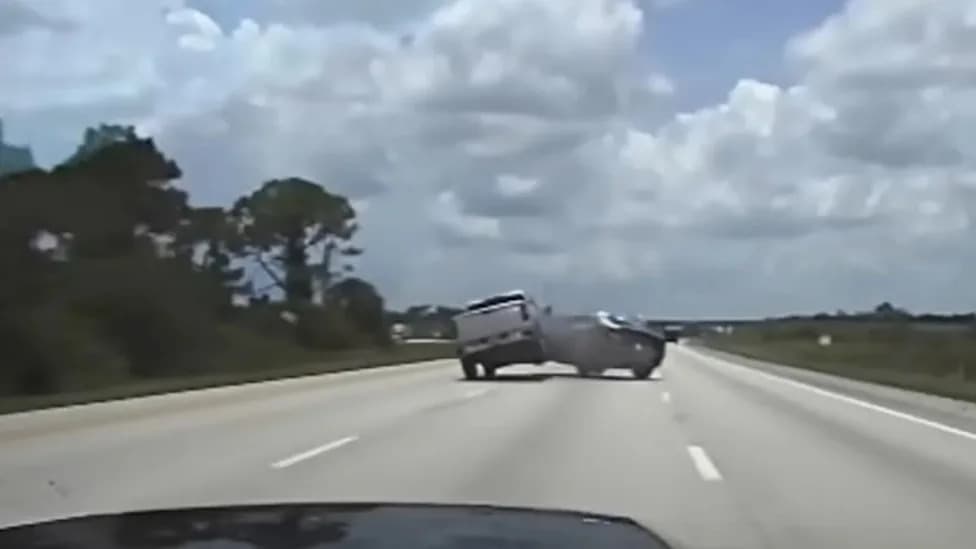
Inside a housing mounted behind a truck's front bumper, a folded heavy-nylon net is connected to a tether and controlled by three cab switches: arm, fire, and release. An officer closes on a fleeing vehicle and fires the net toward a rear wheel. As the webbing wraps the spinning tire and axle, the wheel’s rotation is arrested. The vehicle does not spin out the way it might after a PIT maneuver; instead it loses usable traction on that axle and gradually coasts to a halt.
Practical Details
- The launcher reloads in under five minutes, allowing patrol trucks to return to service quickly.
- The packaging resembles a standard off-road bull bar so units can be mounted to unmarked trucks and SUVs without obvious external signs.
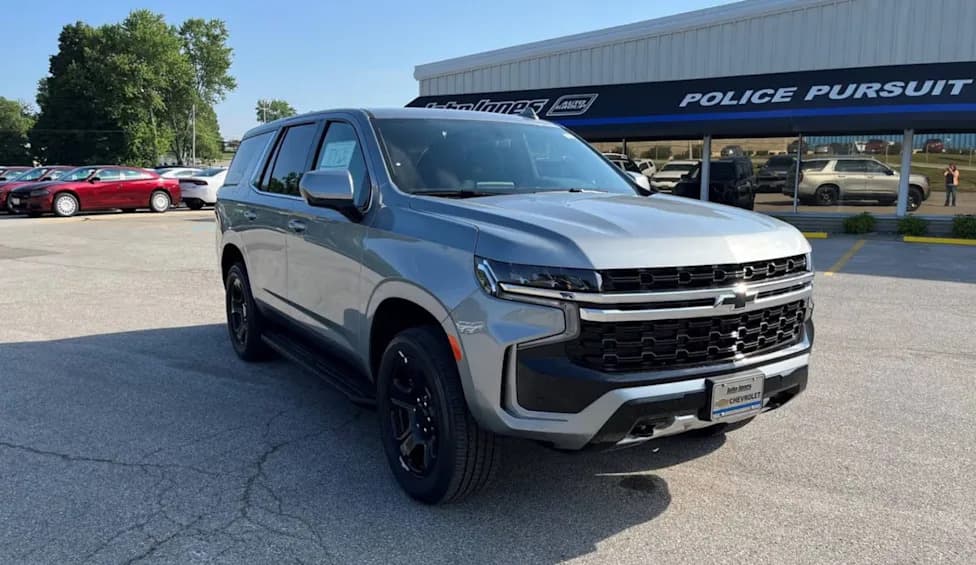
- Because stopping a rotating wheel sends violent shock loads back into the mounting point, the Grappler is currently compatible only with body-on-frame platforms such as the Ford Expedition, Ford F-150, Chevrolet Tahoe, and Chevrolet Silverado 1500. Sedans and most crossovers lack the frame-rail strength required.
Deployment, Adoption, And Costs
Documented field use dates to at least 2019, when Border Patrol agents at Calexico Station and the Cass County Sheriff's Office deployed the device. Phoenix Police used the Grappler in a possible kidnapping case in early 2020. Northland and Companies, the installer network, reports departments such as Mesa, Parma, and Garfield Heights adopted the system after concerns about PIT maneuvers; the company claims more than a thousand recorded field deployments industry-wide.
Military adoption has included the 9th Security Forces Squadron at Beale AFB and the 142nd Security Forces Squadron at Portland Air National Guard Base; one Air Force unit fast-tracked a purchase at squadron level rather than through the multi-year acquisition process.
Public procurement records and department disclosures put the device’s purchase price near $10,000 per vehicle. A recurring consumable cost — replacing the net cartridge after a deployment — ranges from roughly $2,000 to $12,000 depending on damage. Departments should treat that as an ongoing operational expense similar to spike-strip replacement or ammunition.
Policy, Training, And Safety Context
There is currently no NHTSA or federal testing standard specifically for net-based pursuit-intervention devices, so agencies must draft use-of-force and pursuit policies, obtain legal review, and train officers before putting a Grappler into service. That administrative work, along with platform compatibility and consumable costs, helps explain why adoption has been measured rather than universal.
The stakes are significant: a 2024 JAMA Network Open study using a compiled database of fatal law-enforcement pursuits found 4,415 pursuit-related deaths in the United States from 2017–2021, with an increasing annual rate during that period. Spike strips and PIT maneuvers each carry trade-offs; a tool that can end a chase without a collision offers an important middle option worth careful evaluation.
What To Know About Surplus Vehicles
When departments retire Expeditions, Tahoes, F-150s, and Silverados that once carried Grapplers, they sometimes leave behind mounting brackets, reinforced bumper structure, or extra wiring after removing the launcher. Enthusiasts and buyers of decommissioned fleet trucks should check for non-stock hardware when evaluating surplus vehicles.
Bottom Line: The Grappler is an inventive, mechanically simple option that can end pursuits without intentional collisions, but it requires compatible vehicles, recurring consumable expenditures, and agency-level policy and training before it can be adopted safely and legally.
Help us improve.