The International Association for Tibetan Studies (IATS) has moved its Kathmandu conference online after Kathmandu University withdrew from hosting the event, reportedly following a government request. Nepal's prime minister's office denies issuing any instructions to cancel. The meeting, due Aug. 23–29, was to gather international scholars on Tibetan history and culture. Observers say China’s sensitivity over Tibet and strong economic ties with Nepal may have influenced the outcome.
Tibet Conference Pulled From Kathmandu Campus, Shifted Online After Hosting Withdrawal
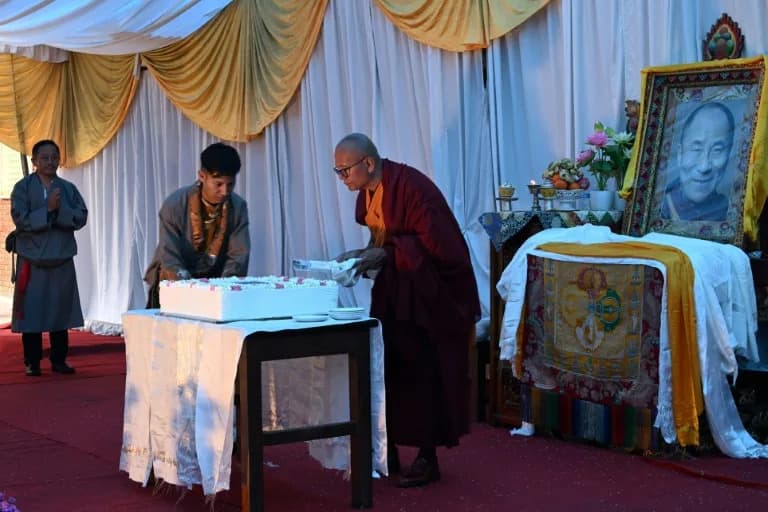
Exiled Tibetans marked the Dalai Lama's 91st birthday at a school in Kathmandu in July (PRAKASH MATHEMA)
An international academic conference on Tibet that had been scheduled to take place at Kathmandu University from August 23–29 has been moved online after the university withdrew from hosting the event, organisers said.
The conference, organised by the International Association for Tibetan Studies (IATS), was expected to draw leading scholars to discuss Tibetan history, culture, religion and society. IATS acting president Françoise Robin described the decision to go virtual as "very regrettable and worrying," saying the association will proceed with an online programme.
Organisers say Kathmandu University convener Sagar Raj Sharma told AFP the university received a government request not to host the conference. "We had been planning this conference for a long time, but we received a request from the government not to hold it, so we are not doing it," he said. The university cited concerns that "this is not an appropriate time to conduct this conference."
"We are proceeding with the conference, but it will take place online," — Françoise Robin, IATS acting president.
Officials at the prime minister's office in Kathmandu denied instructing the university to cancel or withdraw. Hem Raj Aryal, a spokesperson for the office, told AFP: "Nepal's government has not given any instructions to cancel it. Neither have we sent a letter nor given verbal instructions to stop it. They postponed it on their own."
The move highlights the diplomatic sensitivities surrounding Tibet. Beijing, which sent troops into the high-altitude Tibetan plateau in 1950 and regards Tibet as part of China, has historically opposed international activities it perceives as challenging its sovereignty. Nepal shares a long, mountainous border with the Tibet Autonomous Region, hosts thousands of Tibetan refugees, and many northern communities share cultural, religious and linguistic ties with Tibet.
IATS, founded at the University of Oxford in 1979, maintains that it has no political affiliation and exists to support scholarly study of Tibetan societies. Analysts say the incident underlines how geopolitical pressures — and Nepal's growing economic ties with China, now its second-largest trading partner after India — can affect academic events in the region.
What Happens Next
Organisers have confirmed they will continue with a fully online programme. The decision has prompted questions about academic freedom, the ability of scholars to meet in person in geopolitically sensitive contexts, and the ways regional diplomacy can influence university-hosted events.
Help us improve.