U.S.-China rivalry is increasingly decided by relationships formed through exchanges and public diplomacy. Cuts and flat funding since the 1990s allowed China to replicate America’s old playbook—scholarships, Confucius Institutes and large-scale exchanges—and win favor in Africa, Latin America and parts of Asia. Exchanges are highly cost-effective: the Bureau of Educational and Cultural Affairs runs them on roughly $700 million annually, and programs such as IVLP have produced more than 500 heads of state or government. Sustained investment now is essential because these programs yield strategic influence years or decades later.
Rebuilding U.S. Influence: Why Exchange Programs Are America’s Most Cost-Effective Diplomatic Tool
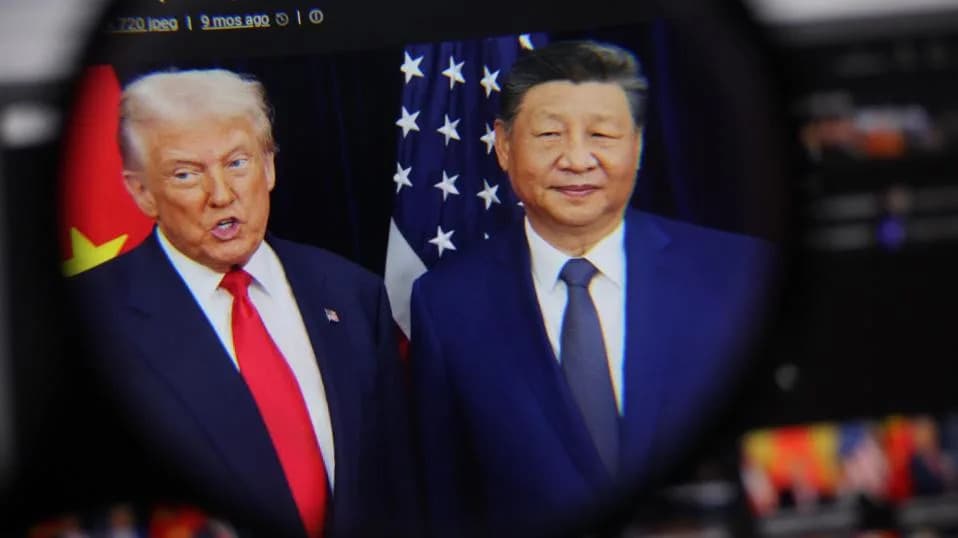
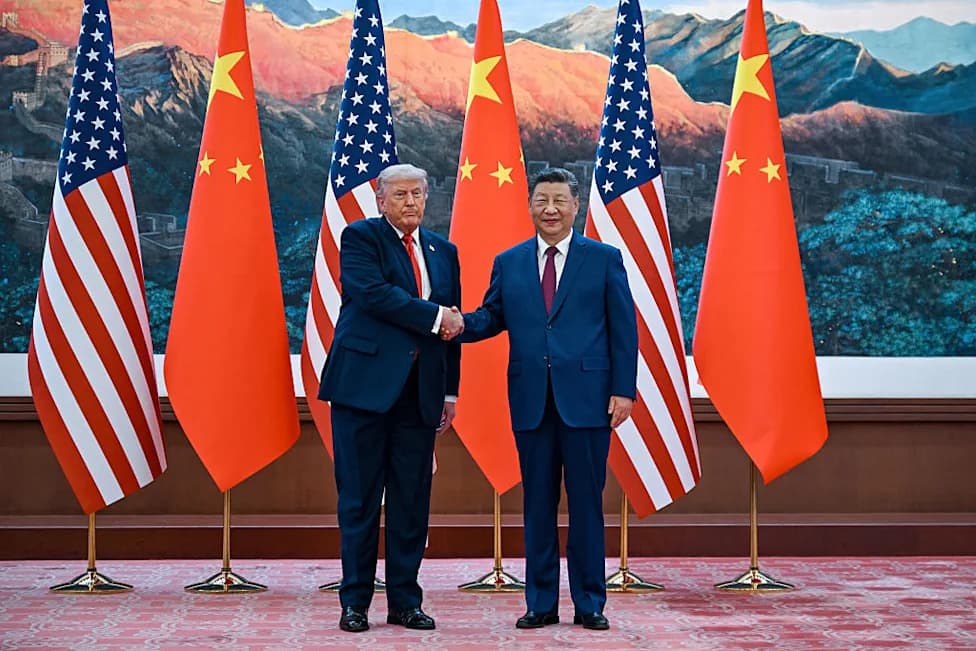
President Donald Trump and Chinese President Xi Jinping. The competition between the United States and China is increasingly a contest for global influence—and for the relationships that shape it.Shutterstock
The growing competition between the United States and China is increasingly fought not just with ships and chips, but with relationships—built over years through education, exchanges, and public diplomacy. After decades of intermittent investment and policy drift, U.S. exchange programs must be reinvigorated to preserve American influence in the world.
A Short History Of Missed Opportunities. In 2003 the congressionally mandated Djerejian Group described the 1990s decline in U.S. public diplomacy as "unilateral disarmament in the weapons of advocacy." As part of the post–Cold War peace dividend, Washington froze or cut funding for many exchange and engagement programs. The assumption was that America's argument no longer needed active advocacy.
After 9/11 diplomatic engagement reemerged as a priority, but resources and political attention were often directed toward ephemeral or poorly designed initiatives. One example was the State Department's Global Engagement Center, which at times focused on efforts that appeared to monitor or suppress domestic voices—an approach that ultimately undermined its purpose and funding.
Why Exchanges Matter
Quiet, unglamorous, and remarkably effective, exchange programs are one of the best returns on investment in U.S. foreign policy. Funding for these programs has been essentially flat in real terms for years, and they lack a powerful domestic constituency: there are no major industry lobbies or defense contractors fiercely advocating for them.
Still, seven decades of sustained investment have produced an alumni network unmatched by any other country. More than 500 alumni of the International Visitor Leadership Program (IVLP) have become heads of state or government. When American diplomats engage foreign officials today, there is a high probability someone across the table once spent time on a U.S. campus or in an American town learning how the country works in practice.
"Beijing saw a relatively inexpensive toolkit that had turned the United States into a global superpower and decided it wanted to do the same." — Aleksander Dardeli, CEO, IREX
Over the past two decades, China has methodically copied the old American public diplomacy playbook: tens of thousands of scholarships for students from developing countries, Confucius Institutes on multiple continents, and large-scale programs that bring foreign officials, engineers and journalists to Chinese institutions. The effect is measurable: a July 2026 Pew Research Center report found that, for the first time in nearly 20 years, China is viewed more favorably than the United States in most countries surveyed—especially in regions where Beijing invested heavily, including Africa, Latin America, and South and Southeast Asia.
Cost-Effectiveness And Local Benefits
Exchange programs are inexpensive relative to other instruments of national power. The Bureau of Educational and Cultural Affairs runs government exchanges on roughly $700 million a year. As General Jim Mattis observed to the Senate Armed Services Committee, "If you don't fund the State Department fully, then I need to buy more ammunition." Exchanges are a small line item in that budget, and more than 90% of the funds remain in the United States—flowing to universities, host families, and small businesses across every state.
Nonprofit organizations such as IREX have sustained this infrastructure across administrations. Founded in 1968 to manage exchanges with the Soviet bloc, IREX now implements programs like the Young Leaders of the Americas Initiative and administers the Mandela Washington Fellowship, which has brought nearly 7,800 young African leaders to U.S. universities.
Why Pulling Back Would Be Short-Sighted
There is growing pressure in Washington to reallocate public diplomacy resources toward regions seen as immediate priorities and to reduce funding for others—especially Africa. That instinct is understandable, but strategically flawed. Africa's population is projected to roughly double by 2050; the continent holds many of the critical minerals essential to advanced manufacturing and defense; and it is the largest theater of Chinese scholarship and exchange activity outside Asia.
Exchanges are a long-game investment: we invest in a 28‑year‑old today so that 15 years from now, when that person may be a deputy minister, central banker, or business founder, durable relationships and a deep understanding of the United States already exist. Cutting funding now would starve the pipeline that produces those future partners.
Conclusion. The U.S. has not yet lost the battle for hearts and minds, but the competition is intensifying. Rebuilding and sustaining exchange programs is a cost-effective, high-impact way to preserve American influence. Without renewed commitment, the United States risks repeating past mistakes of strategic underinvestment in the very tools that created its global advantages.
This article was originally published on Forbes.com.
Help us improve.