Colorado researchers discovered a python blood molecule, pTOS, that spikes after feeding and appears to suppress appetite. In lab tests, pTOS reduced food intake and produced weight loss in obese mice, and levels rose roughly "a thousand times" in Burmese and ball pythons after meals. The team published in Nature Metabolism and launched Arkana Therapeutics to pursue drugs based on pTOS, while also exploring implications for heart repair and muscle preservation.
Python Post-Meal Molecule pTOS Points to Potential New Obesity Treatment
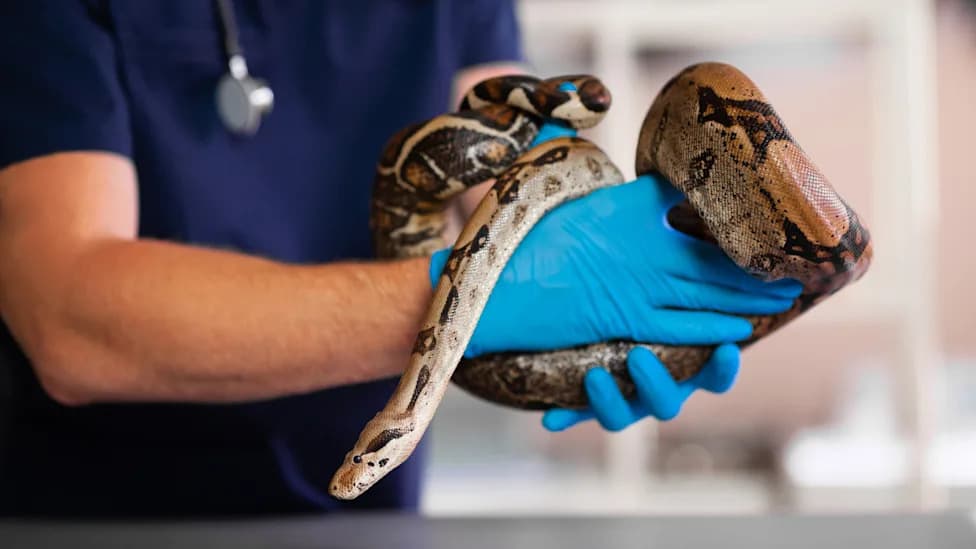
Photo Credit: iStock
Researchers at the University of Colorado Boulder have identified a blood-borne molecule from pythons, called pTOS, that surges after feeding and may help suppress appetite — a discovery that could inspire novel obesity therapies and reveal new insights into heart and muscle biology.
What the Scientists Found
In a study published in Nature Metabolism, Leslie Leinwand and colleagues report that pTOS levels rise dramatically — by roughly "a thousand times" — in both Burmese and ball pythons after they eat. Laboratory experiments suggest pTOS acts on the hypothalamus, the brain region that regulates hunger. In obese mice, administration of pTOS reduced food intake and produced weight loss.
Why Pythons?
Pythons use extreme physiological shifts to survive long fasts and then digest very large meals. As Tommy Martin, an assistant professor at the University of Nebraska Medical Center, explained, "Pythons ramp up their metabolism from 10 to 40 times following a feeding, depending on the size of the meal." Studying those changes can reveal molecules and mechanisms that mammals — including humans — might harness therapeutically.
Beyond Appetite: Heart And Muscle Clues
Beyond appetite control, python biology offers other surprises. Yuxiao Tan, a CU Boulder molecular biologist mentored by Leinwand, found that after feeding, python heart muscle cells can actually increase in number — a regenerative capacity that human hearts largely lack following injury. The snakes also preserve muscle mass during prolonged fasts, a trait relevant to age-related muscle loss and recovery from illness.
"When we give this molecule to obese mice, they eat less and they lose weight," said Jack Gugel, a CU Boulder molecular biologist and former student in Leinwand's lab.
From Lab Bench to Startup
Gugel, Leinwand, Martin and Stanford's Jonathan Long co-founded Arkana Therapeutics to explore drugs based on pTOS and other bioactive molecules discovered in pythons and other species with extreme physiologies. While a medicine derived from python biology remains far from clinical use, the discovery opens new directions for targeting appetite, metabolism, heart repair and muscle preservation.
Scientists continue to study how pythons expand and shrink their hearts and how they maintain strength over long fasts. Skip Maas, a molecular biologist at CU Boulder, told NPR that his pet ball python went 14 months without eating and remained "strong enough to then constrict [a mouse] completely," illustrating the animals' extreme resilience.
As evolutionary biologist Jasmin Camacho of the Stowers Institute noted, "Evolution's been running natural experiments for hundreds of millions of years." Those natural experiments can point researchers to potent, evolutionarily refined molecules that might become medicines.
What Comes Next: Further preclinical studies are needed to confirm safety, dosing and mechanism of action for pTOS-derived therapies. Translating an intriguing animal molecule into a human drug will require careful testing, but the python findings provide a promising lead for multiple fields of medicine.
Help us improve.