A Current Biology study finds that areas of the Olympic Peninsula frequented by mountain lions experience up to a 76% drop in vehicle-deer collisions. Using data from 503 camera traps and 59 GPS-collared pumas, researchers show deer avoid roads, shift toward daytime activity, and occupy more remote habitat. The reduction in crashes appears driven by fear-induced behavioral change rather than reduced deer numbers, and researchers hope to quantify the economic value of these avoided collisions.
Mountain Lions Cut Deer-Vehicle Crashes Up to 76% on Washington’s Olympic Peninsula
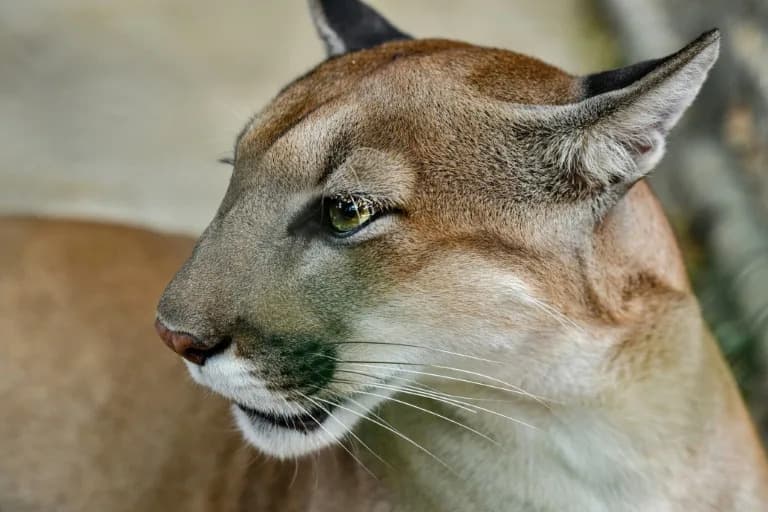
Gaia, a 3.5-year-old female mountain lion (Puma concolor), is pictured at the Las Pumas Rescue and Sanctuary Center in Guanacaste, Costa Rica; a new study finds the carnivores reduce vehicle-deer collisions (Ezequiel BECERRA)
A new study published in Current Biology reports that vehicle collisions with deer fall by as much as 76% in areas of Washington state's Olympic Peninsula where mountain lions (cougars, pumas or panthers) are common. Researchers say the effect is driven largely by fear-induced changes in deer behavior — not by predators simply eating enough deer to shrink populations.
The research team, led by Justin Suraci of Conservation Science Partners and senior author Mark Elbroch of Panthera, analyzed long-term data collected in partnership with several Native American tribes and nations. Their dataset included 503 camera traps and 59 GPS-collared mountain lions, allowing them to compare predator presence, prey behavior, and vehicle-crash records across the peninsula.
Cameras, Collars And Behavioral Shifts
Where mountain lions were present, deer showed notable behavioral changes: they were more active during the day than at night, 15% less likely to be found in areas with a high density of roads, and 86% more likely to occupy remote habitat away from development. By dividing the peninsula into 5-by-5-kilometer grid cells and overlaying crash data from 2020–2025, the researchers found up to a 76% reduction in vehicle-deer collisions in cells with strong mountain lion presence over a five-year span.
"You can put a dollar amount on how much a rancher loses when wolves kill their cows... But if we don't put a dollar amount on the services — or at least articulate those services — they get perceived as not existing," Suraci said, stressing the need to recognize the economic and safety benefits predators can provide.
Scale Of The Problem And Unquantified Benefits
Although traffic on the peninsula is relatively light, state records for the 2020–2025 study window show two human deaths, more than 80 injuries, and an estimated $14.7 million in health expenses and vehicle repairs from collisions with ungulates. The authors say it is not yet possible to precisely calculate how many fatalities, injuries or dollars mountain lions have prevented, but they expect the avoided harms would be substantially greater if pumas were absent. Future work aims to estimate the full economic costs and benefits under the counterfactual scenario of cougar absence.
Conservation And Policy Implications
Senior author Mark Elbroch noted the study is timely given that cougars face significant threats: more than 1,000 are killed each year across the western United States by state wildlife agencies responding to livestock complaints. The authors argue that documenting the safety and economic benefits provided by large carnivores strengthens the conservation case while also acknowledging that these species have intrinsic value beyond human-centered services.
Bottom line: Fear of mountain lions alters deer behavior in ways that reduce road use and nighttime activity, which in turn appears to lower the risk of vehicle collisions — a measurable ecosystem service that has public-safety and economic implications.
Help us improve.