XJ-4-85 is an experimental compound that intentionally hyperactivates glycolysis by binding and activating PFKL, then releases a fragment (XJ-4-119) that inhibits mitochondrial CPT2. In mouse melanoma models, two weeks of daily treatment significantly shrank tumors and genetic knockouts show the drug depends mainly on PFKL. The approach is highly selective in proteomic screens, but no human trials exist and potential toxicity in heart, liver, and muscle is unresolved.
Experimental Drug XJ-4-85 Forces Tumors to 'Overeat' Sugar, Then Cuts Off Fat Fuel — Early Mouse Results Are Promising but Preliminary
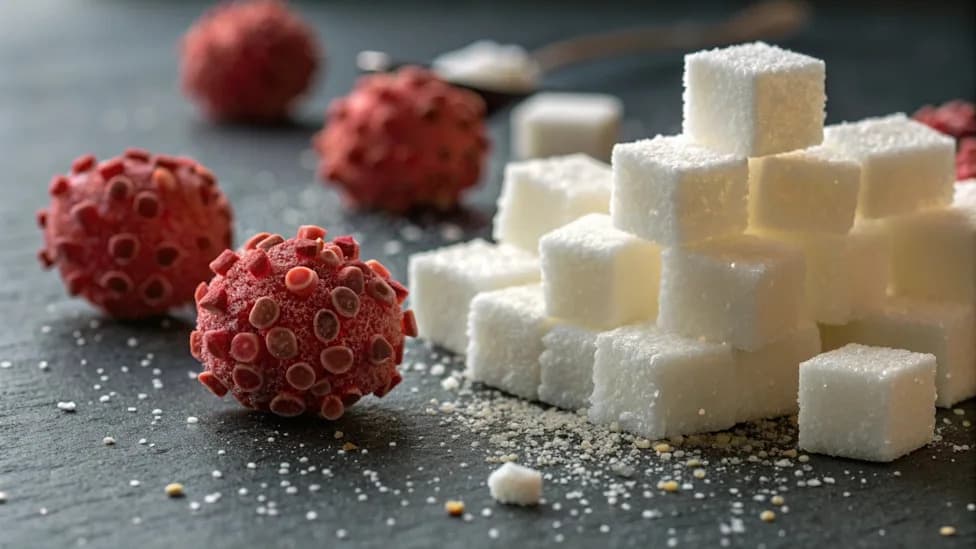
Image: Dr. Pooja Gupta Oncologist
XJ-4-85, an experimental small molecule developed by teams at the University of Washington and UT Austin, intentionally reverses the conventional cancer-metabolism strategy of starving tumors. The study has reportedly been accepted by Nature Chemical Biology, though a publication date has not yet been confirmed.
How the Compound Works
The molecule acts in two coordinated phases. First, one portion of XJ-4-85 binds tightly to PFKL (the liver isoform of phosphofructokinase-1), an enzyme often called “the gatekeeper of glycolysis.” Instead of inhibiting the enzyme, XJ-4-85 hyperactivates PFKL, driving excess production of fructose-1,6-bisphosphate and pushing glycolysis into overdrive — like flooring the accelerator while the engine is already at redline.
After engaging PFKL, XJ-4-85 releases a fragment named XJ-4-119. This fragment migrates to mitochondria and inhibits CPT2, a protein required for importing and burning long-chain fatty acids. The combined effect is simultaneous sugar overconsumption and a blockade of fat oxidation.
Targeting and Selectivity
Researchers describe XJ-4-85 as an "electrophile-drug conjugate" — a small-molecule analogue of antibody–drug conjugates that can enter cells where antibodies cannot. Selectivity data are striking: of roughly 9,000 protein sites screened, only a single lysine on PFKL showed strong engagement. For the payload, CPT2 emerged from profiling of more than 7,000 proteins by thermal-stability testing. This high degree of specificity was observed in both human and mouse cells, suggesting a precise mechanism rather than broad, off-target activity.
Preclinical Results
In a mouse melanoma model, daily injections of XJ-4-85 for two weeks produced significantly smaller tumors than all comparison groups. The payload fragment XJ-4-119 alone, given at equivalent doses, was less effective — evidence that PFKL activation provides more than delivery and contributes important metabolic stress to the tumor. Mice reportedly showed no obvious weight loss or distress during the two-week window, an encouraging early safety signal but far from a comprehensive toxicology profile.
Genetic experiments strengthened the causal picture. When researchers deleted PFKL from melanoma cells before implantation, XJ-4-85 lost most of its potency: tumors grew roughly five times larger under treatment after nine days, indicating the drug depends heavily on PFKL engagement. Knocking out CPT2 also reduced efficacy, but to a lesser degree, identifying PFKL activation as the dominant driver of the drug's anti-tumor activity.
Caveats and Open Questions
Two weeks of mouse data is a pilot study, not proof of clinical benefit. Important limitations include:
- No human trials have been conducted yet.
- Both PFKL and CPT2 are active in healthy heart, liver, and skeletal muscle, so long-term toxicity and on-target side effects are unresolved.
- Cancer cells can adapt metabolically and may switch fuel sources over time, which could blunt effectiveness or drive resistance.
Despite these caveats, the design flips the longstanding assumption that tumors must be starved of glucose to be weakened. Instead, it forces a metabolic overload while cutting alternative fuel pathways — a concept that could reshape how researchers think about targeting tumor energy use if the approach proves safe and effective in further studies.
Bottom line: XJ-4-85 is a novel, highly selective experimental compound that hyperactivates glycolysis via PFKL and deploys a mitochondrial CPT2 inhibitor. Early mouse results are promising, but safety, durability, and human efficacy remain unproven.
Help us improve.