This study reprograms the probiotic E. coli Nissle 1917 into an intratumoral drug factory that converts the prodrug 5-fluorocytosine (5-FC) into the chemotherapy 5-fluorouracil (5-FU) while also delivering an IL-15 superagonist and a PD-L1–blocking nanobody to stimulate local immunity. In mice, engineered bacteria accumulated inside colorectal tumors (>1 billion cells per gram within five days), and one intratumoral dose plus systemic 5-FC led to complete regression in 3 of 7 tumors (43%). Further testing in more clinically relevant models and delivery methods is needed before human trials.
Engineered Probiotic Produces Chemotherapy Inside Tumors and Eradicates 43% of Colorectal Tumors in Mice
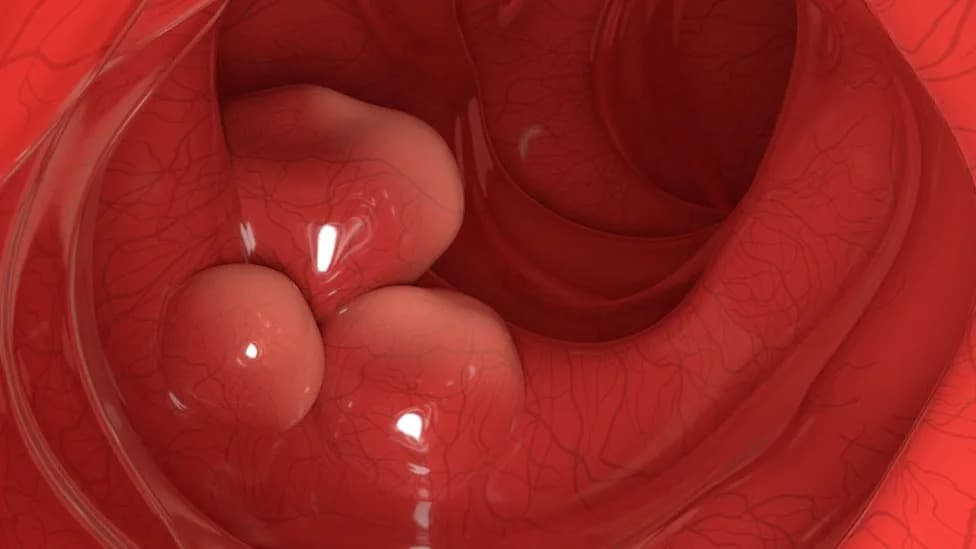
Colorectal cancers are on the rise globally. (Nemes Laszlo/Science Photo Library/Getty Images)
Cancer treatments such as chemotherapy and immunotherapy can be powerful but imprecise, often damaging healthy tissue while fighting tumors. A new study repurposes a well-known probiotic bacterium to deliver chemotherapy and immune-stimulating agents directly inside tumors, increasing local potency while reducing systemic side effects.
How the Engineered Probiotic Works
Researchers led by immunologist Nicholas Arpaia at Columbia University reprogrammed the probiotic strain Escherichia coli Nissle 1917 to act as an intratumoral drug factory. When introduced into mice with implanted colorectal tumors, the bacteria rapidly cleared from major organs and accumulated inside tumors, reaching more than 1 billion cells per gram of tumor tissue within five days.
YouTube Thumbnail
The microbes were given a synchronized lysis circuit so they burst open after reaching a threshold population, releasing therapeutic payloads directly into the tumor microenvironment. The engineered payloads included:
- Cytosine deaminase to convert the innocuous prodrug 5-fluorocytosine (5-FC) into the active chemotherapy 5-fluorouracil (5-FU) locally.
- An IL-15 superagonist to stimulate and expand anti-tumor T cells and natural killer cells.
- A PD-L1–blocking nanobody to relieve immune suppression within the tumor.
Key Engineering Fixes
Early experiments showed limited tumor shrinkage because wild-type E. coli possess preTA genes that metabolize and inactivate 5-FU. Deleting preTA from the therapeutic strain prevented this degradation and substantially improved efficacy. The final design therefore combined intratumoral chemotherapy production with two complementary immunotherapeutic agents to create a localized chemoimmunotherapy.
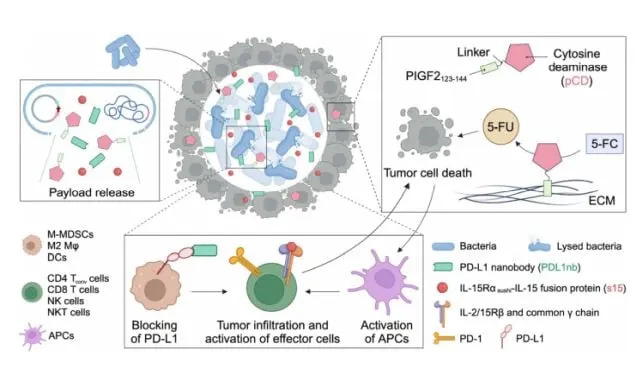
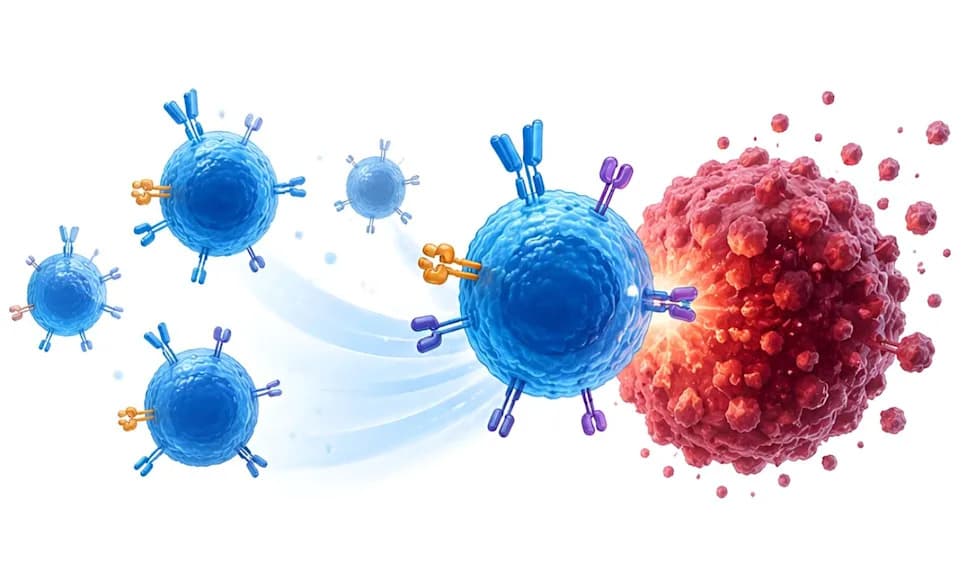
A schematic diagram of the probiotic cancer treatment system. (Yang et al.,Sci. Transl. Med., 2026)
Study Results
In mice with established colorectal tumors, a single intratumoral injection of the triple-engineered bacteria followed by systemic 5-FC produced significantly better tumor control than bacteria delivering only chemotherapy or only immunostimulatory agents. Notably, 3 of 7 tumors (43%) underwent complete regression.
The researchers also observed an abscopal-like effect: in mice bearing tumors on both flanks, treating only one tumor slowed growth of the untreated contralateral tumor, yet no engineered bacteria were detectable in the untreated site. This suggests the distant effect was mediated by a systemic anti-tumor immune response rather than bacterial spread.

Subscribe to ScienceAlert's free fact-checked newsletter
Compared with conventional systemic 5-FU (which caused ~7% body-weight loss in treated mice), the bacterial approach reduced systemic toxicity while concentrating therapeutic activity inside tumors.
Limitations and Next Steps
This is an early proof-of-concept in mice with implanted tumors and frequent use of direct intratumoral injections. Important limitations include small sample size, artificial tumor models, and delivery methods that may not translate directly to human patients. The authors emphasize the need for studies in more clinically relevant models and exploration of alternative delivery strategies before human trials.
“With a deeper understanding of tumor immunology and emerging biomarkers, this system should help advance cancer chemoimmunotherapy by offering a highly adaptable, targeted, and synergistic approach,” the authors write.
The study was published in Science Translational Medicine and was led by Nicholas Arpaia at Columbia University.
Help us improve.