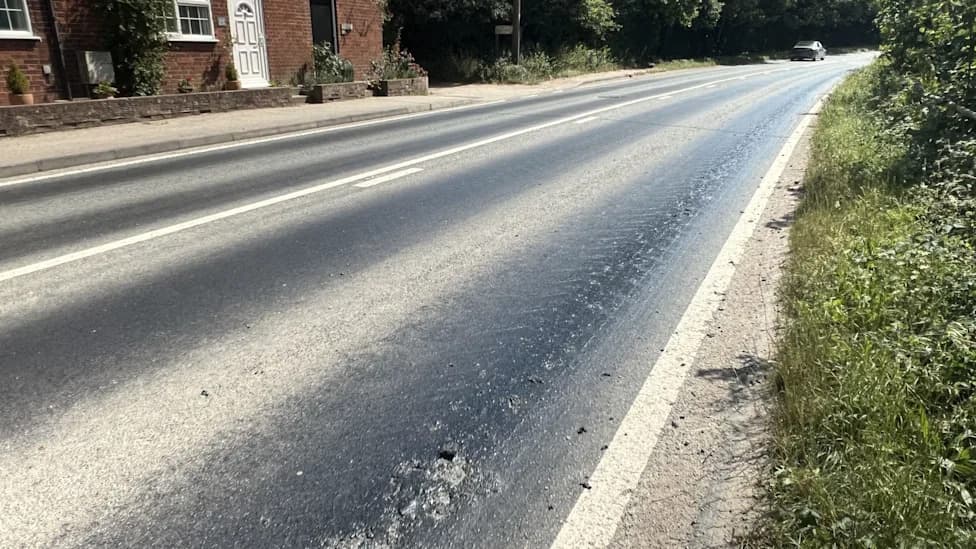
Los Angeles has expanded use of a solar-reflective “cool pavement” coating since a 2017 pilot, with wider installations beginning in 2021. A 2024 Pacoima study found air above treated pavement was 0.12–1.21°C (0.22–2.18°F) cooler on sunny, non-heatwave days, and nearby areas warmed more slowly and cooled faster. Cities classified as urban heat islands — typically 1–7°F hotter than nearby rural zones — may see local benefits from cool pavement, but broader adoption and long-term monitoring are needed to confirm citywide effects.
Repainting Roads To Beat The Heat: How Los Angeles’ ‘Cool Pavement’ Is Lowering Street Temperatures
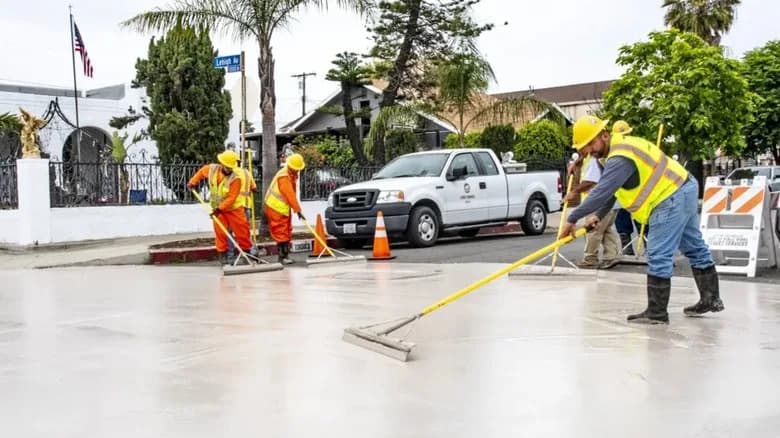
City of Los Angeles
Summer heatwaves are increasingly common, and cities are experimenting with new ways to cool urban neighborhoods. One low-tech but scientifically informed approach gaining traction in Los Angeles is “cool pavement” — a solar-reflective street coating designed to reduce heat absorption from asphalt and other hard surfaces.
Background: Los Angeles began piloting the reflective coating in 2017 and expanded installations citywide beginning in 2021. The program, managed by StreetsLA, has been applied not only to roadways but also to high-use areas such as parking lots and basketball courts.
What Cool Pavement Does
The coating reflects more solar and infrared radiation than typical asphalt, which limits heat uptake and reduces the amount of heat re-radiated into the surrounding air. Depending on conditions and specific product formulations, some reports suggest ambient reductions of roughly 1.5–3.5°F in treated areas, though measured results vary by location and weather.
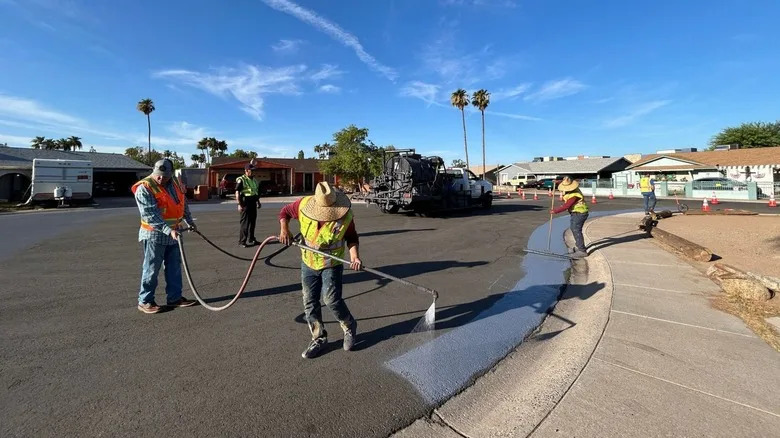
City of Phoenix
Evidence From Pacoima
A 2024 study in Pacoima, California, published in Environmental Research Communications directly measured air temperatures above treated pavement. On sunny, non-heatwave days the air above cool pavement was 0.12–1.21°C (0.22–2.18°F) cooler than above untreated surfaces. The study also found that adjacent areas warmed more slowly during the day and cooled faster at night, indicating the coating affects local temperature dynamics as well as peak values.
Why It Matters For Cities
Urban areas often act as “heat islands,” with temperatures typically 1–7°F higher than nearby suburban or rural surroundings because buildings, roads and other hard surfaces absorb and re-radiate heat. Strategies that reduce surface temperatures can help lower local air temperatures, reduce heat stress for residents, and potentially cut demand for cooling energy.
Limitations And Next Steps
While results from Los Angeles and the Pacoima study are promising, the overall cooling benefit depends on climate, surface area treated, maintenance, and pavement material. Broader deployments and standardized, long-term monitoring across different cities will be needed to quantify citywide impacts and cost-effectiveness. Nevertheless, cool pavement offers a relatively low-cost, scalable tool that city planners can pair with tree planting, reflective roofs, and other heat-mitigation measures.
Bottom line: Cool pavement is not a silver bullet, but early evidence shows it can lower local temperatures and change how quickly streets heat up and cool down — a useful addition to the urban heat mitigation toolkit.
Help us improve.