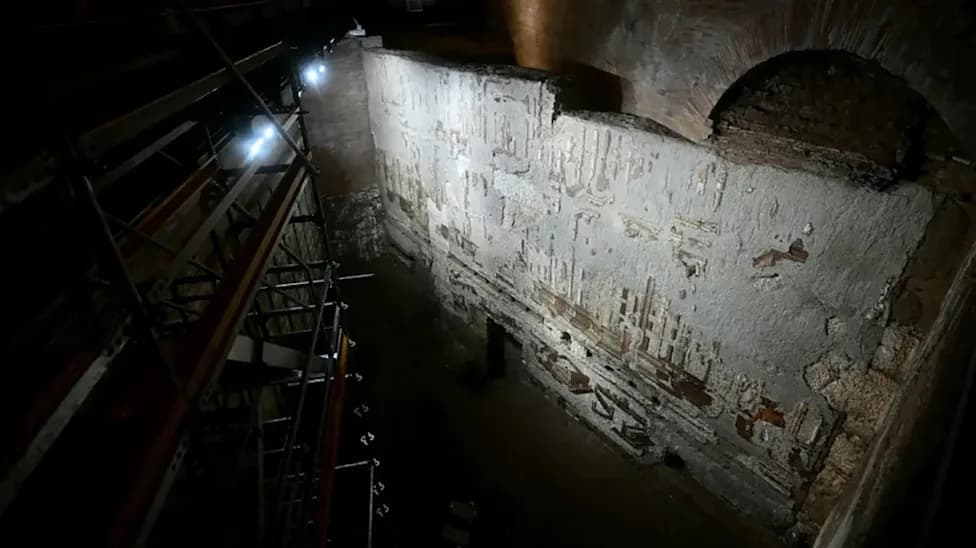
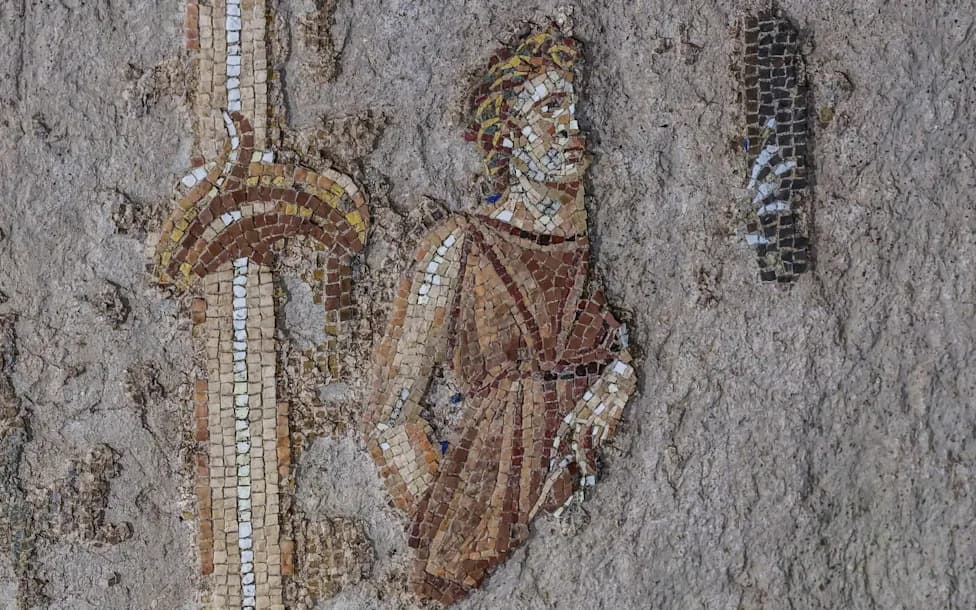
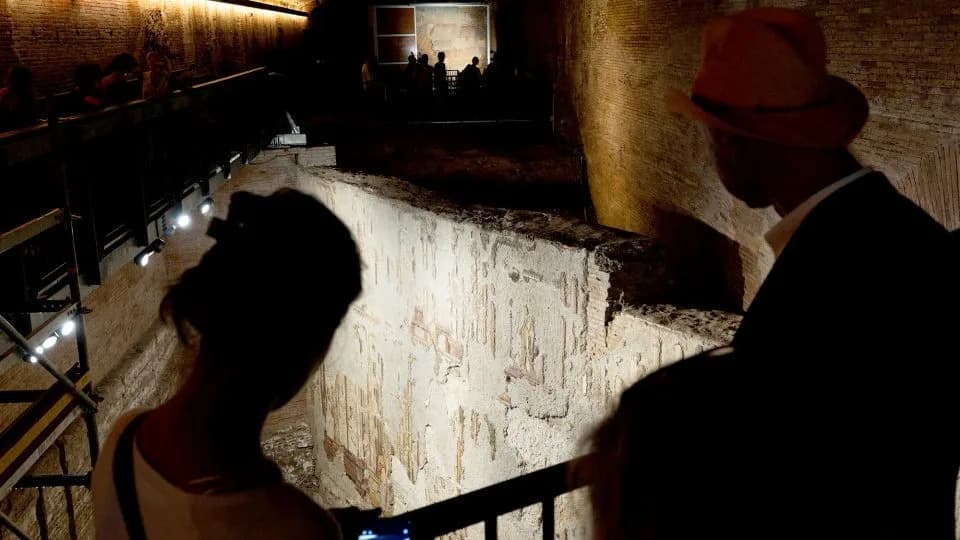
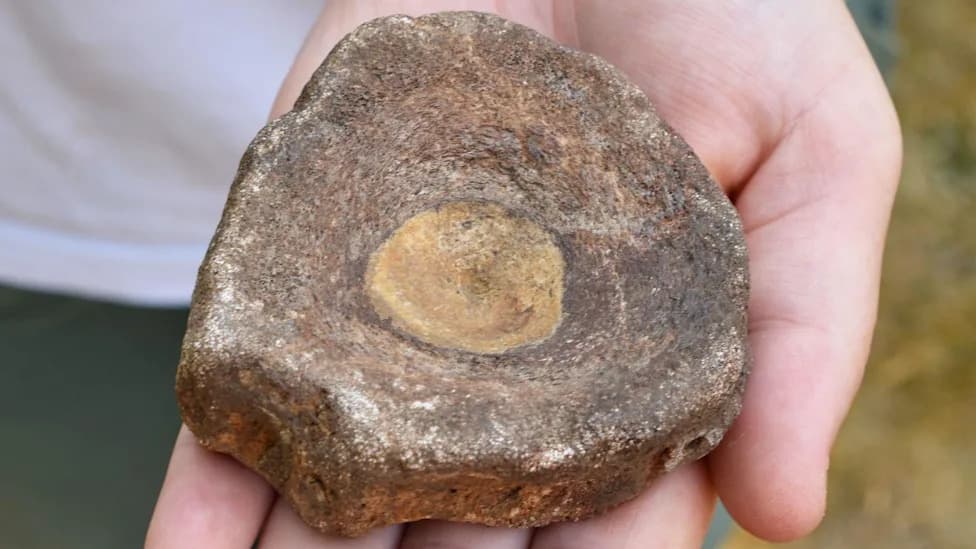
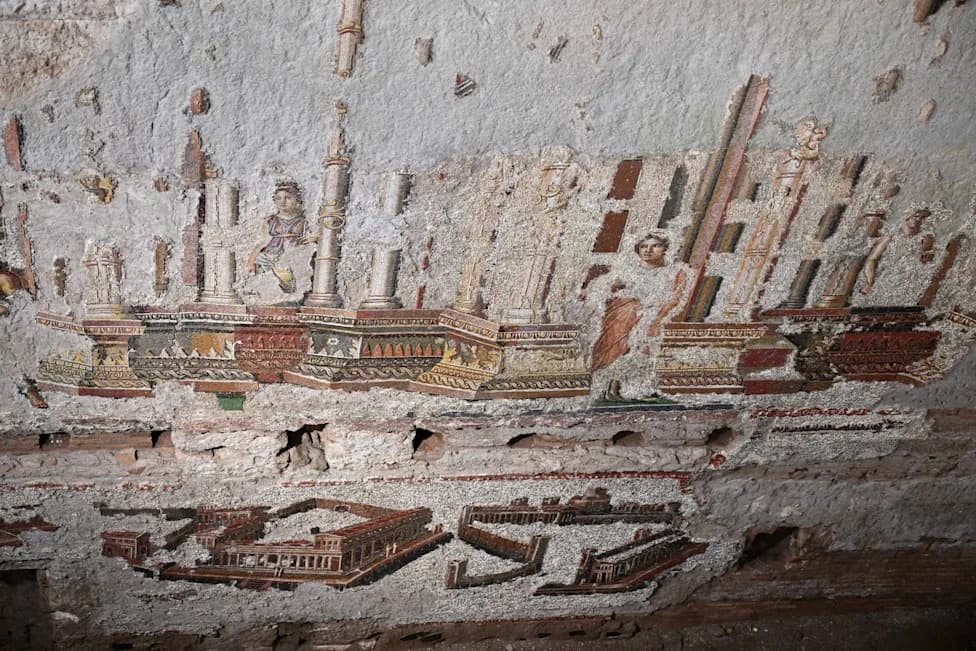
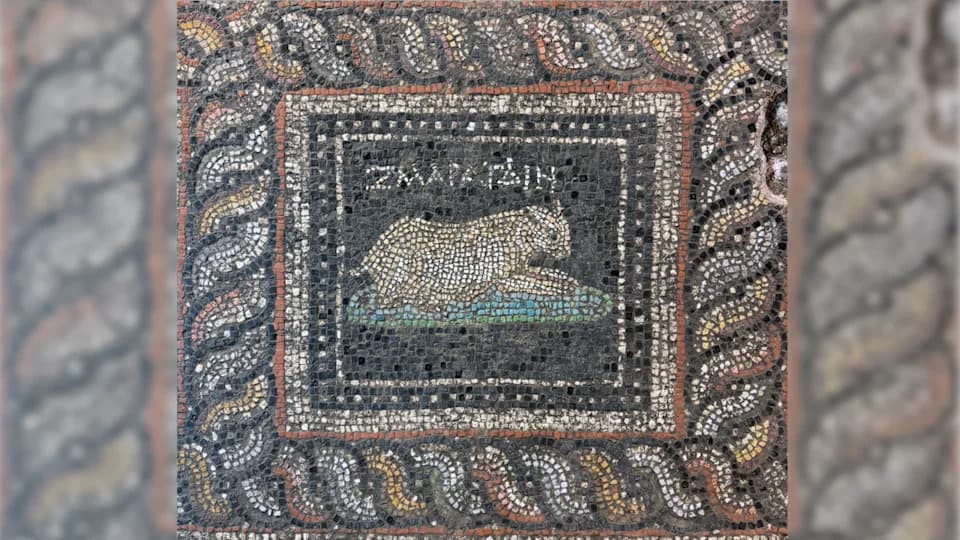
Archaeologists in southwestern England have uncovered the remains of a Roman villa notable for a roughly 130-square-foot polychrome mosaic likely dating to the fourth century C.E. The mosaic — made of tiny tesserae forming an eight-petaled flower within an interwoven border — is the westernmost known example of its kind in Roman Britain. Geophysical surveys also revealed a substantial villa complex and a nearby structure that may be a bathhouse with at least two cold plunge pools. A five-year rescue project involving local volunteers and regional heritage organisations is racing to record and protect the site before ongoing ploughing causes irreversible damage.
130-Sq-Ft Polychrome Roman Mosaic Found in Devon Villa — Westernmost Example in Britain
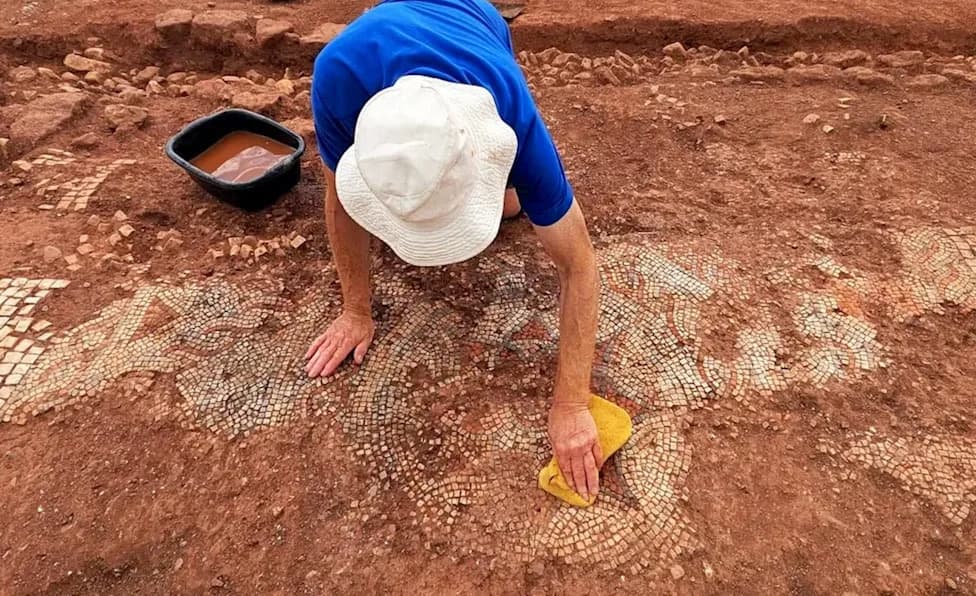
Photo Credit: Cotswold Archaeology
Two decades after a field survey first produced a Roman-era coin beneath arable land, archaeologists in southwestern England have revealed a richer picture of the site: the remains of a substantial Roman villa anchored by an elaborate mosaic floor.
What Was Found
Excavators uncovered a polychrome mosaic covering roughly 130 square feet that is likely datable to the fourth century C.E. The pattern is composed of tiny multicolored stones and ceramic tesserae, each smaller than half an inch, arranged to form an eight-petaled flower set within an ornate double-band interwoven border. Researchers note this is the westernmost recorded polychrome mosaic in Roman Britain.
Associated Structures
Geophysical surveys and test trenches prompted by early finds by a researcher named Hill revealed the farmland once supported a substantial villa complex rather than isolated artifacts. Excavators also identified another building that may have served as a bathhouse, with evidence of at least two cold plunge pools adjacent to the mosaic-bearing structure.
Significance
Bill Horner, county archaeologist and historic environment manager at Devon County Council, said: "This, and the other trappings of Roman civilization and evidence of affluence that have been found, show how much even this far-flung part of the province had been integrated into the Roman Empire."
The discovery challenges assumptions about the western limits of elite Roman life in Britain: villas with such ornate decoration are rare in this region, so the find suggests a higher-than-expected concentration of wealth and imperial connections here in the late Roman period.
Urgency And Community Effort
The University of Exeter and project partners warn there is a narrow window for rescue excavation. Continued ploughing and cultivation risk breaking apart fragile features — mosaics, buried walls, and bathing installations — that cannot be restored in their original archaeological context once damaged.
Archaeology students and volunteers are participating in a five-year initiative, Saving Halberton's Ancient Roman Environment, which brings together Devon County Council, the University of Exeter, Cotswold Archaeology, the Tiverton Archaeological Group and the Sampford Peverell Society to record, protect and involve the local community in the investigation.
Next Steps
Teams plan targeted rescue excavations, detailed recording of the mosaic and associated structures, and conservation work where possible. The combined effort aims to balance urgent intervention with community engagement and long-term protection of the site.
Help us improve.