Researchers at Washington University School of Medicine in St. Louis report encouraging early results from a clinical trial that used CRISPR gene editing to remove CD33 from donor hematopoietic stem cells before allogeneic transplantation. The edited cell product, tremtelectogene empogeditemcel (trem-cel), aims to protect healthy donor marrow so CD33-targeted therapies can attack leukemia without destroying normal blood production. The findings were published online in Nature Medicine.
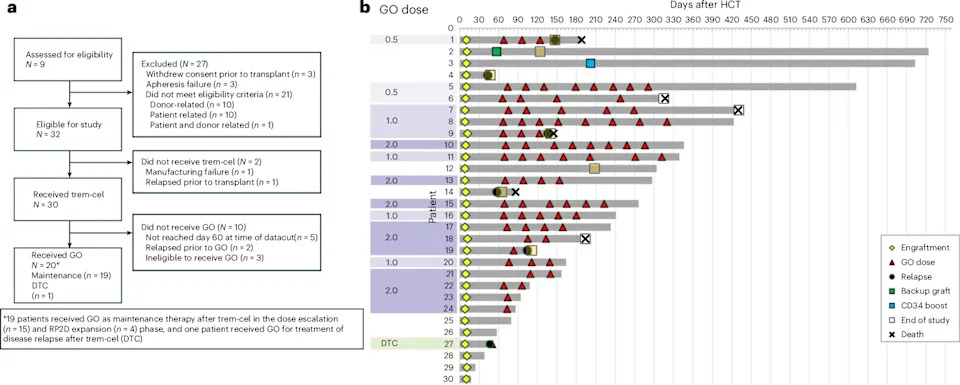
Patient disposition and patient status. (CREDIT: Nature Medicine)
What the researchers did
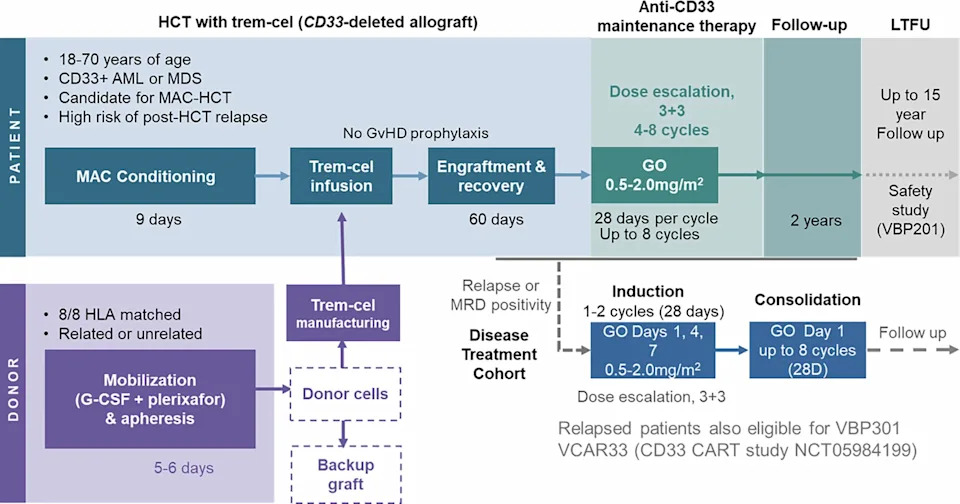
In a phase 1–2 multicenter trial across Siteman Cancer Center and 14 additional sites in the U.S. and Canada, investigators enrolled 30 adults with high-risk acute myeloid leukemia (AML) or myelodysplastic syndrome (MDS). Donor hematopoietic stem cells were edited with CRISPR to delete CD33 and then transplanted after intensive myeloablative conditioning. The study evaluated engraftment, immune reconstitution, persistence of CD33-negative cells, and whether patients could safely receive post-transplant maintenance with the CD33-targeted antibody–drug conjugate gemtuzumab ozogamicin (GO).
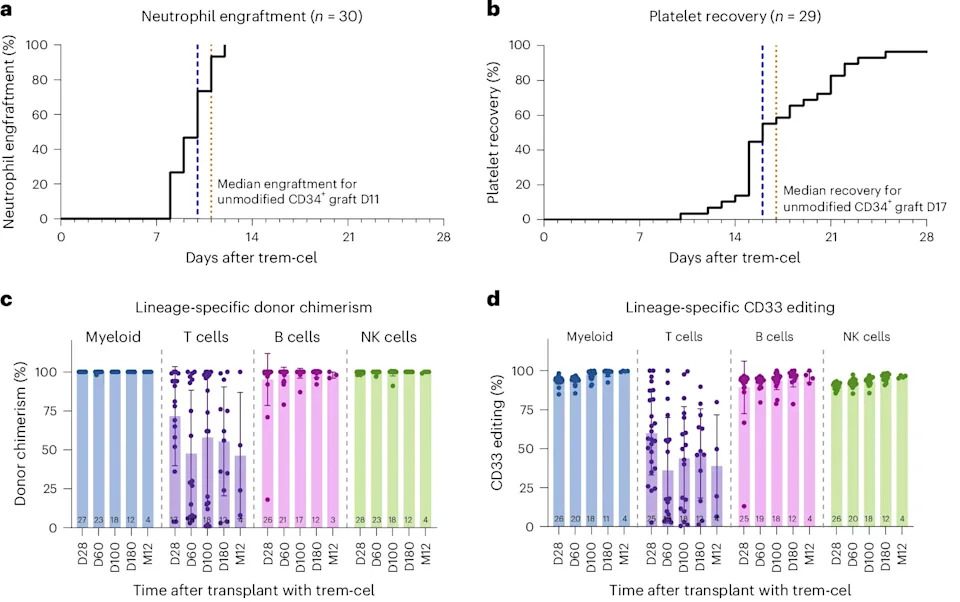
Engraftment and immune reconstitution. (CREDIT: Nature Medicine)
Key results
All 30 patients achieved neutrophil engraftment within 28 days. Median time to neutrophil recovery was 10 days and median platelet recovery was 16 days—kinetics similar to standard allogeneic transplants, suggesting CD33 deletion did not impair marrow reconstitution. Nineteen patients received at least one cycle of GO maintenance; investigators observed stable blood counts during GO exposure and did not see the prolonged high-grade cytopenias that commonly limit post-transplant GO use.
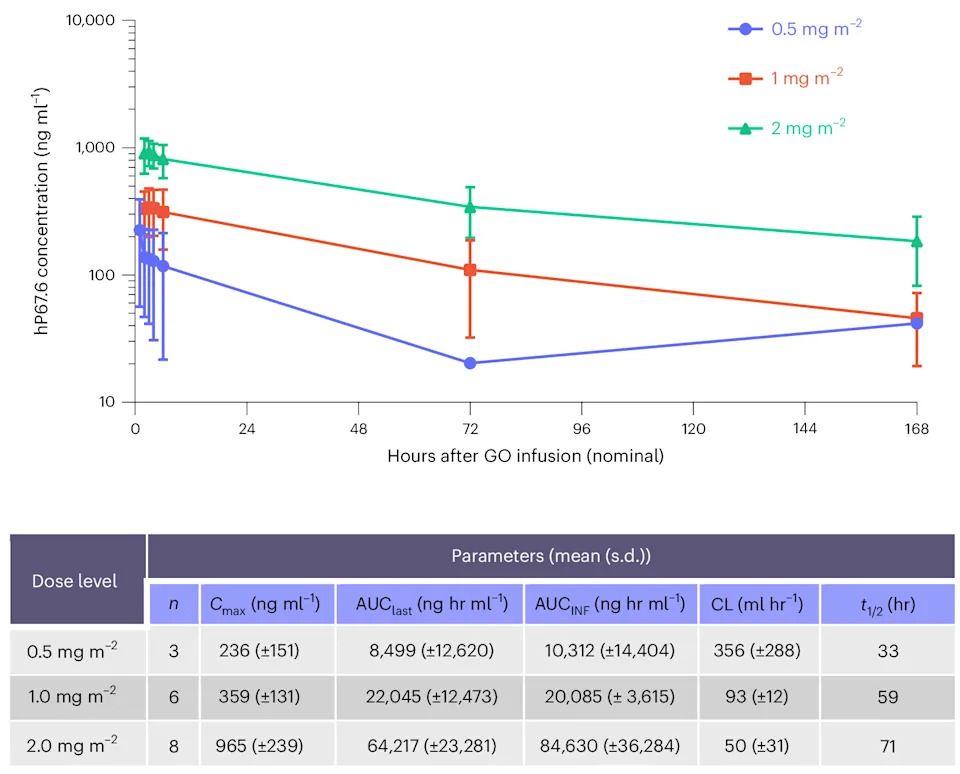
Pharmacokinetic analysis. (CREDIT: Nature Medicine)
Flow cytometry and lineage analyses confirmed that CD33-negative donor cells persisted across multiple immune compartments, including T cells, B cells and natural killer (NK) cells, while hematopoietic function remained intact. These data support the concept that removing CD33 from donor cells can convert CD33 into a safer, tumor-restricted therapeutic target.
VBP101 study design. (CREDIT: Nature Medicine)
Safety and limitations
The treatment carried risks consistent with high-risk allogeneic transplantation. Twenty-six patients experienced infections (including pneumonia and COVID-19), and serious adverse events included anemia, thrombocytopenia and graft-versus-host disease. Seven patients died during the study—four from disease progression and three from transplant-related causes (kidney failure, liver toxicity, or sepsis). Median overall survival in the cohort was 14.1 months, and roughly 40% of patients remained relapse-free at about two years of follow-up, though follow-up is limited and the trial was small.
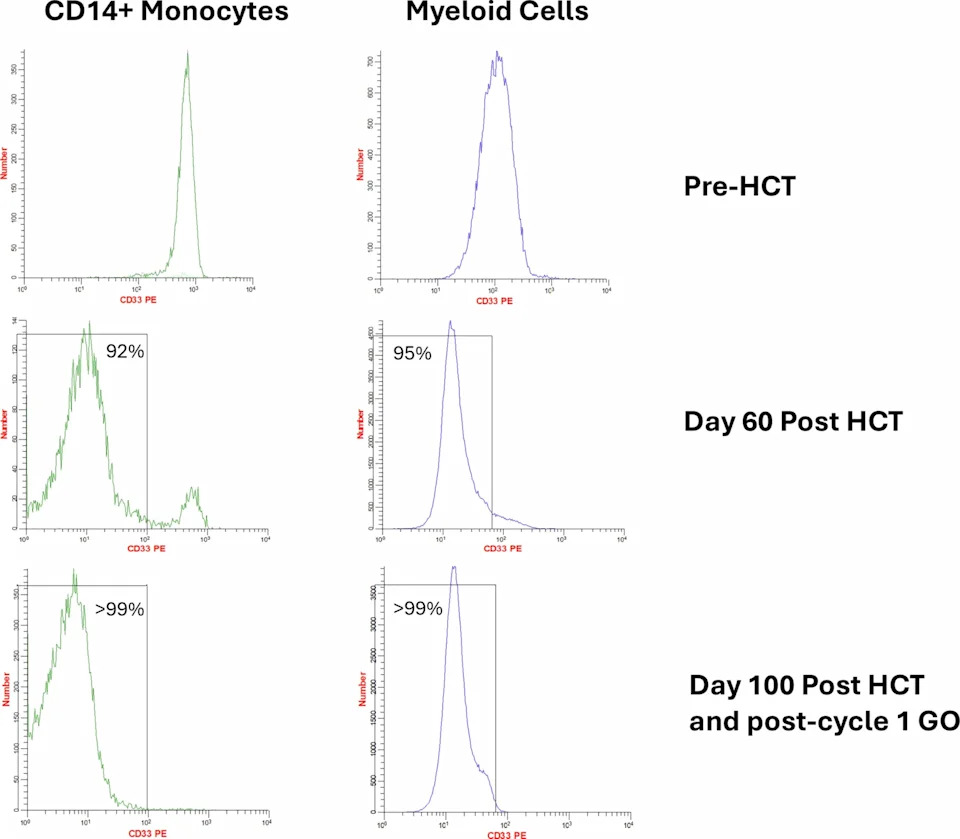
Flow cytometry of peripheral blood monocytic and myeloid fractions before and after first cycle of GO. (CREDIT: Nature Medicine)
Notable illustrative case
One patient with aggressive AML relapsed after receiving a CD33-deleted transplant and was subsequently treated with donor-derived CD33-targeted CAR-T cells. That patient achieved a complete remission and remained disease-free for more than one year, offering a proof of concept for pairing gene-edited allografts with donor-derived targeted immunotherapy.
What this could mean
By removing CD33 from healthy donor cells, the strategy may allow clinicians to use CAR-T cells and other CD33-directed agents after transplant without causing prolonged marrow suppression. If confirmed in larger studies with longer follow-up, CD33-deleted grafts could expand safe post-transplant treatment options and reduce relapse in myeloid malignancies. The approach also illustrates a broader principle: CRISPR editing of normal tissues may enable safer targeting of antigens that are shared between cancer and healthy cells.
Caveats
The trial enrolled only 30 patients and was stopped early for financial reasons; larger cohorts and longer monitoring are required to confirm durability, long-term safety and survival benefit. The approach remains experimental and should be evaluated further in controlled studies.
Source: Findings published in Nature Medicine; multi-site trial led by Washington University School of Medicine in St. Louis.