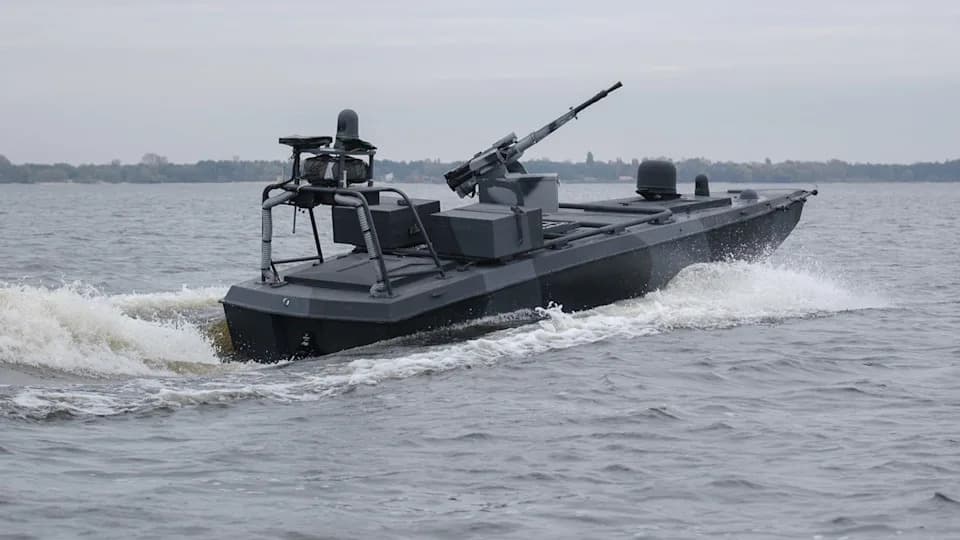
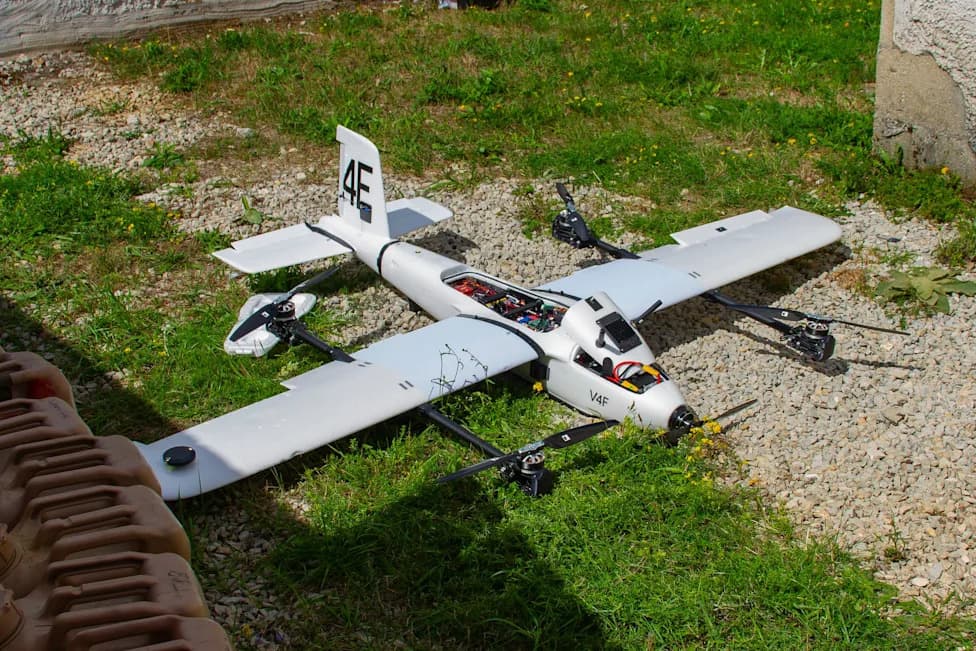
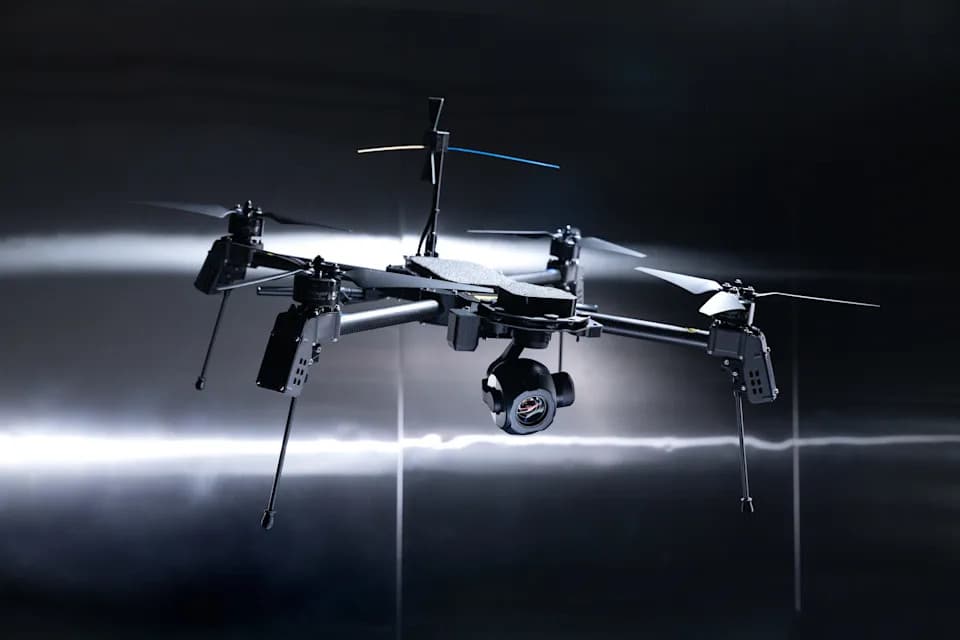
The U.S. is integrating Ukrainian battlefield-tested drone swarm software into American platforms to accelerate AI training and operational capability. Swarmer will combine its algorithms with Brightline Interactive’s SpatialCore, leveraging data from over 100,000 real missions since April 2024. Ukraine’s potential output—millions of low-cost drones annually—far outstrips U.S. plans, and new rules requiring U.S.-made components plus semiconductor shortages complicate rapid scaling. Gauntlet II trials in August 2026 will evaluate U.S. and Ukrainian systems and require joint ventures to build domestic manufacturing capacity.
How Ukraine’s Mass-Produced Drone Tactics Are Shaping U.S. Defense Plans
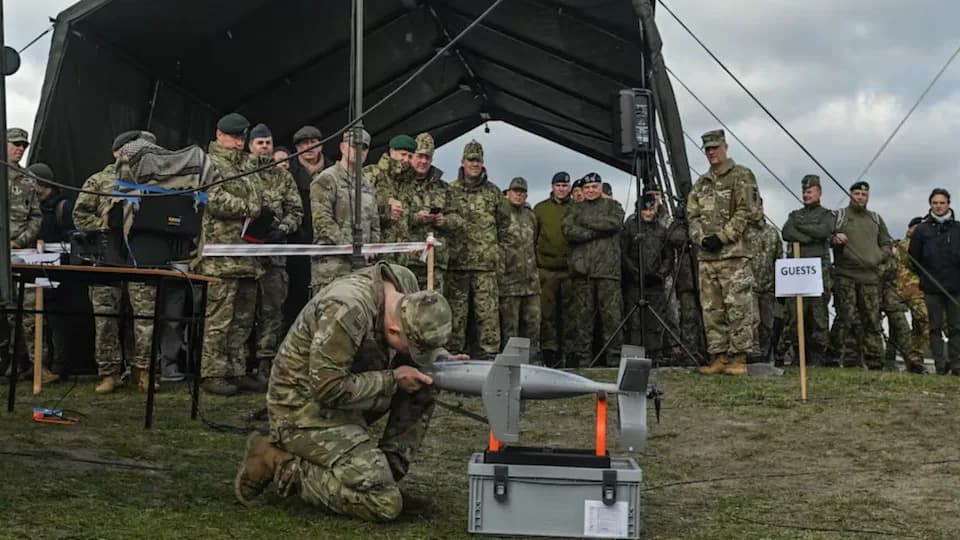
Credit: Artur Widak/NurPhoto via Getty Images
The United States is moving to harness Ukraine’s battlefield experience with low-cost, mass-produced drones to accelerate domestic production, AI training and battlefield awareness. New partnerships will merge Ukrainian swarm software with U.S. platforms, while Pentagon trials and policy changes seek to convert combat-tested know-how into American manufacturing capacity.
Partnerships Turn Combat Data Into U.S. Capability
Ukrainian swarm-software developer Swarmer has signed a memorandum of understanding to integrate its swarm-coordination algorithms with SpatialCore, a U.S. data and operations platform developed by Brightline Interactive. The software involved has been extensively run in real combat conditions since April 2024. Combining these algorithms with SpatialCore will allow data from different drone types to be aggregated and used to train artificial intelligence models more quickly.
Swarmer president Alex Fink said the integration will provide access to mission data from millions of sorties to accelerate AI training. Brightline president Tyler Gates added that the combined system should give military users a clearer, near-real-time picture of complex battlefield conditions.
Scale, Cost And The Production Gap
U.S. officials acknowledge that American drone output currently lags far behind Ukraine’s. Reuters reported Pentagon estimates that Ukraine could produce as many as 7 million small drones this year and Kyiv aims to scale to 20–30 million units annually—numbers that dwarf planned U.S. procurement.
By contrast, the Pentagon’s $1.1 billion drone program will have ordered just under 200,000 units in total by February 2026. Travis Metz, deputy director of the Defense Innovation Unit, observed that “it’s much harder to get from zero to 200,000” than to keep scaling once domestic capacity exists, underscoring the challenge of ramping up production quickly.

Google logo on a black background next to text reading 'Click to follow TechRadar'
Operational Lessons Matter
Recent conflicts, including engagements involving Iranian forces, have highlighted a practical vulnerability: expensive, high-end drones can be degraded or overwhelmed by swarms of inexpensive unmanned aerial vehicles. Ukraine’s approach—employing lower-cost systems in large numbers and leveraging swarm tactics—has shown operational success in that context.
According to Swarmer, its software has supported more than 100,000 real combat missions in the Ukrainian war zone without interruption since April 2024, offering a large and relevant dataset for training and tactics development.
Trials, Rules And Industrial Strategy
The Pentagon plans to test systems from American and Ukrainian manufacturers during the Gauntlet II trials at Fort Carson, Colorado, scheduled for August 2026. Nineteen companies will participate; under new guidance none may use prohibited components sourced from Chinese suppliers.
To channel battlefield knowledge into U.S. production, six Ukrainian firms taking part in the trials will be required to form joint ventures with American manufacturers. The intent is to build domestic manufacturing capacity rather than rely on continued imports.
Supply-Chain Constraints
New rules now require military drones to contain American-made components, which has slowed the program’s near-term expansion. Metz highlighted semiconductors as a particularly difficult input to source domestically—a constraint that affects not only drones but other defense programs as well.
Outlook
Officials remain upbeat about U.S. industrial potential. Metz said he sees “no reason why we shouldn't ... be the world champions of this as well.” Still, converting Ukraine’s rapid production tempo and battlefield-proven tactics into a fully domestic, large-scale U.S. supply chain is a complex task with uncertain timing.
Bottom line: The U.S. is actively importing Ukrainian combat-tested drone software and operational data while reshaping procurement and industrial policy to scale domestic production—yet supply-chain limits and new component rules make rapid parity with Ukraine uncertain.
Help us improve.