The studies show that even a single night of poor sleep can change brain responses and social impressions. Sleep deprivation amplified amygdala reactions by about 60% and weakened connections to regulatory prefrontal regions; it also increased preferred interpersonal distance by roughly 13–18%. Observers who watched one-minute clips rated sleep-deprived people as lonelier and less desirable to collaborate with, and viewers felt lonelier afterward. Small, lab-based samples limit broad generalization, but a sleep-log study of 138 people found similar day-to-day links between sleep quality and loneliness.
One Bad Night’s Sleep Can Change How Others See You — Brain And Social Tests Reveal Why

A woman with blonde hair lies on her side in bed, resting her head on a pillow and looking thoughtfully ahead. Sunlight casts shadows across her face, giving a calm yet pensive mood.
You know that morning: four or five hours of sleep, a quick coffee, a shower and the routine responses at the 10 a.m. meeting. It feels like you’ve managed. Two complementary lines of research suggest otherwise — after a single poor night your nervous system changes in ways that alter both your behavior and how strangers perceive you.
Brain Changes After Sleep Loss
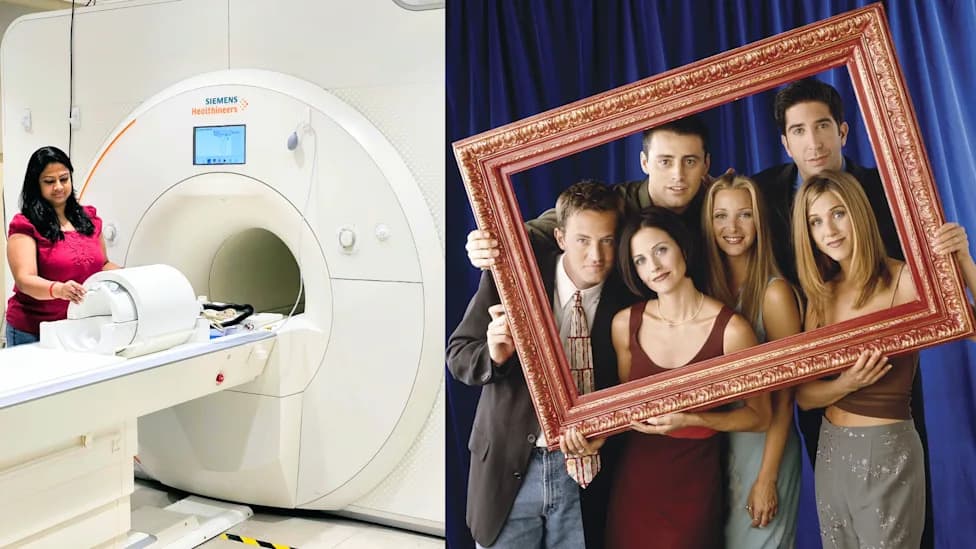
The first study, led by Seung-Schik Yoo with Matthew Walker and colleagues at Harvard Medical School and UC Berkeley, used fMRI to compare 26 healthy adults (ages 18–30) split into two groups. One group stayed awake under supervision for roughly 35 hours; the other slept normally at home. While in the scanner, participants viewed images that progressed from neutral to increasingly disturbing.
Both groups showed amygdala activation — the brain region that flags threat and distress — but the sleep-deprived group's response was much larger. Amygdala reactions were about 60% stronger, and the volume of amygdala tissue that activated was roughly three times greater than in the rested group.
Equally important was how that signal was routed. In rested participants the amygdala remained tightly connected to the medial prefrontal cortex (mPFC), a top-down region that helps put emotions in context. After sleep deprivation that connection weakened significantly. Instead, the amygdala was more strongly coupled with brainstem areas that drive autonomic arousal — the circuitry that governs heart rate and alertness. As Walker put it, without sleep “the brain reverts back to a more primitive pattern of activity.”
Sleep Loss And Social Distance
Eleven years later, Walker and Eti Ben Simon at Berkeley ran a behavioral experiment probing social space. Eighteen healthy adults came to the lab twice (at least a week apart) in randomized order: once after a normal night’s sleep and once after about 24 hours awake. In an in-person task, an experimenter walked toward each participant and the participant said “stop” at the distance they would normally keep from a stranger. After a sleepless night, people stopped the experimenter about 13% farther away than after a normal night. In a computerized version performed inside the scanner, the distance increase was roughly 18%.
The researchers note this shift is roughly one-third the size of distancing reported in conditions partly defined by social withdrawal (for example, autism or schizophrenia). Importantly, the distancing effect persisted after controlling for changes in mood and anxiety, suggesting the behavior was not fully explained by self-reported feelings alone.
How Others Perceive You
The studies then tested how observers respond. After their lab sessions, participants answered short, open-ended questions on camera for about one minute (simple topics such as opinions on higher education). Those clips were shown to 1,033 online observers who were blind to the participants’ sleep status. Each observer watched four clips: two from rested sessions and two from sleep-deprived sessions (never the same person twice) and rated what they saw.
Observers judged the sleep-deprived clips as belonging to people who seemed lonelier and less desirable to interact with. When asked which of the four they would pick as a collaborator, viewers chose rested people more often than chance and ranked sleep-deprived people last more often. The observers were intentionally not asked whether anyone looked tired; instead they rated perceived energy and social qualities, so judgments reflected inferred character rather than obvious fatigue.
Watching a one-minute video of a stranger had measurable effects on viewers too: observers reported feeling lonelier themselves after seeing a sleep-deprived clip, and the two effects tracked together — the lonelier a viewer rated someone, the lonelier that viewer felt afterward. Ben Simon summarized the feedback loop: “Without sufficient sleep we become a social turn-off, and loneliness soon kicks in.”
Real-World Corroboration And Limitations
These lab findings come with important caveats. Sample sizes were small (26 in the imaging study and 18 in the social-distance experiment) and participants were young adults in controlled settings, not representative population samples. The amygdala study used a between-groups design, which leaves room for initial differences between groups, and total sleep deprivation is not the same as the partial, chronic sleep restriction many people experience.
To improve ecological validity, the researchers included a non-lab arm: 138 people logged their own sleep for two nights and answered questions the following days. Those whose sleep quality declined from one night to the next reported feeling lonelier the next day; those whose sleep improved felt less lonely. For context, the National Center for Health Statistics reported that 30.5% of American adults averaged under seven hours a night in 2024.
What To Do With This
The takeaway is practical rather than moralizing: a bad night of sleep doesn't just change how you feel — it measurably alters your emotional wiring and the social signals you send, often outside conscious control. When possible, avoid major social asks (important pitches, difficult conversations, first dates, or interviews) after a short night. And when someone seems distant or flat, consider that you may be reading their sleep state rather than their character.
Bottom line: Short-term sleep loss amplifies emotional reactivity, weakens prefrontal regulation, increases interpersonal distance, and alters how strangers judge and feel about you — effects that can feed back into loneliness for everyone involved.
Help us improve.