Foundation Future Industries, a San Francisco start‑up reportedly worth over $1 billion, is developing Phantom, a six‑foot humanoid robot for industrial tasks and potential military uses. The company says current testing focuses on logistics and reconnaissance, but executives have acknowledged they would comply if asked to weaponize the robots. Human rights groups, the U.N. and many technologists warn of legal, ethical and proliferation risks, urging international guardrails as the technology matures. The debate pits promises of productivity and soldier safety against concerns about an arms race, accountability gaps and the political cost of war.
Inside 'Phantom': The U.S. Start‑up Building Humanoid Robots — Promise, Politics and Peril

Robot soldiers are being built in America to fight tomorrow’s wars – and the alarm is growing
Foundation Future Industries, a San Francisco start‑up founded in 2024 and reportedly valued at more than $1 billion, is developing humanoid robots for industrial use and potential military applications. Its flagship robot, Phantom, is a roughly six‑foot, all‑black humanoid said to carry nearly 90 pounds and perceive the world with a 360‑degree camera and onboard AI.

Foundation Future Industries is building humanoid robots that will serve alongside soldiers and factory workers alike (Courtesy of Foundation Future Industries)
What Foundation Says It Wants
Co‑founder Sankaet Pathak argues that robotics and artificial intelligence can drive a new industrial revolution that increases productivity and reduces harm. Foundation frames defense work as a minority of its business, focused today on logistics and reconnaissance tasks such as moving cargo or mapping building interiors before human forces enter.

Foundation co-founder Sankaet Pathak says 'backwards' thinking is keeping people in the West opposed to military robotics (Courtesy of Foundation Future Industries)
Sankaet Pathak: "Today, no one has asked us to weaponize them." He has also said the company would comply if the U.S. military asked for armed humanoids, arguing that such systems could, in theory, increase precision and save human lives.
Commercial Testing And Military Links
Phantoms have reportedly been trialed in industrial and logistics settings from Atlanta to Singapore. Reuters has reported that robots like Phantom assisted in producing more than 24,000 cars last year, a claim Foundation has not publicly detailed. The company has reportedly secured roughly $24 million in defense‑related testing contracts and is in talks with the Department of Homeland Security about possible border deployments; Foundation has declined to confirm exact contract values.
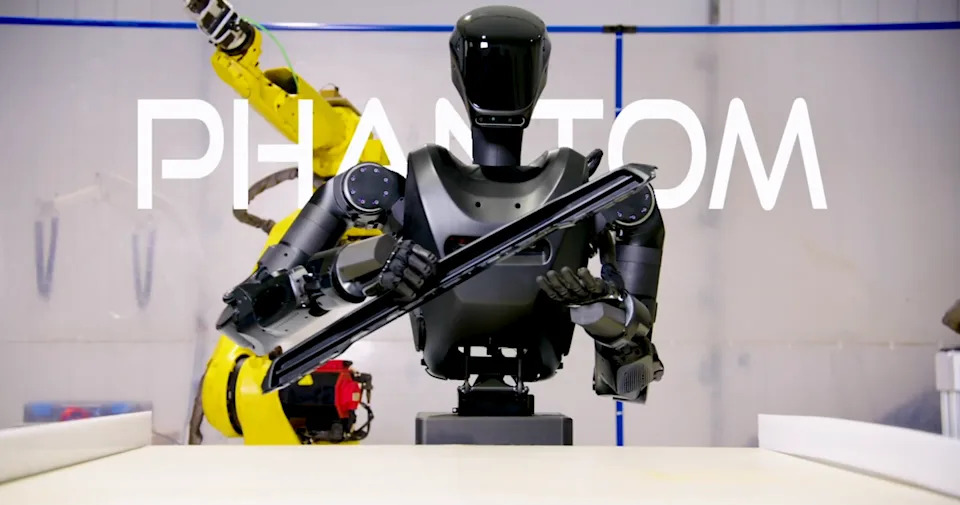
Foundation wants to build futuristic cities that use productivity gains from AI and robotics to deliver abundant housing and other necessities (Courtesy of Foundation Future Industries)
Foundation has also disclosed private investment and an advisory role from Eric Trump. The company and the White House say this relationship has not yielded improper advantages.
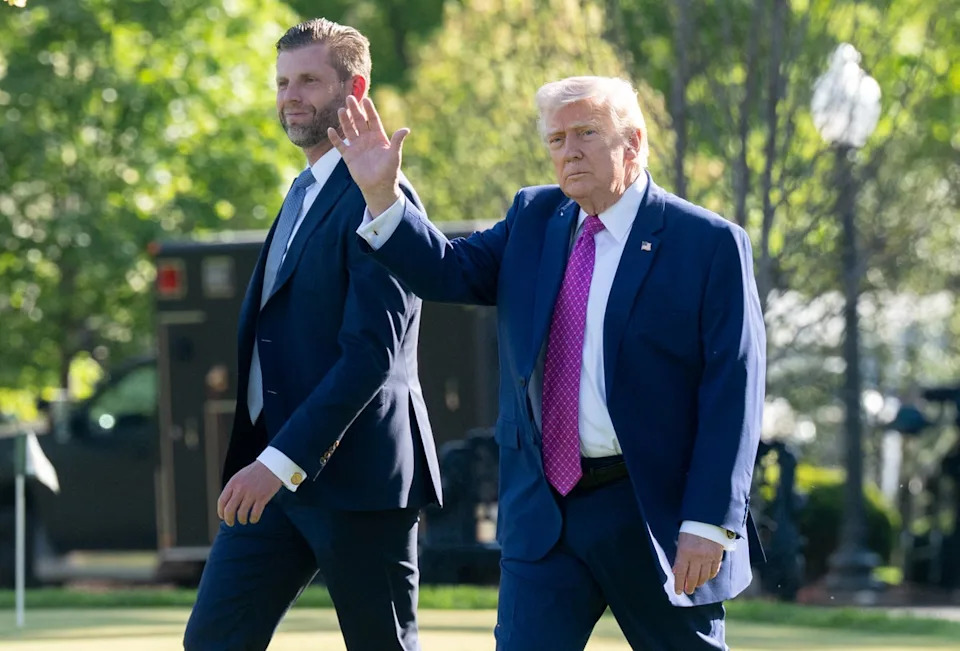
Eric Trump, is an investor in Foundation, one of a string of defense-related companies seeking government business that the president's sons have backed (AFP/Getty)
Critics, Regulators And Ethical Concerns
Religious institutions and international bodies including the United Nations have warned against autonomous lethal systems. U.N. Secretary‑General António Guterres has urged international law to ban "killer robots." Human rights groups, including Human Rights Watch, stress that without strong legal safeguards and clear human control, autonomous weapons risk catastrophic mistakes, accountability gaps and rapid proliferation — a trajectory seen before with drones.
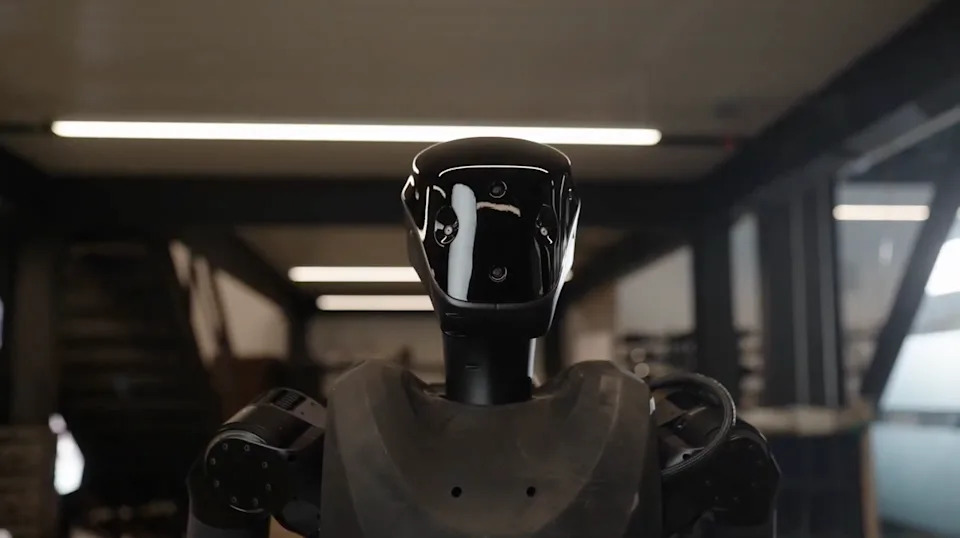
Foundation's core offering is Phantom, an all-black, roughly six-foot tall humanoid robot with a sleek face shield (Courtesy of Foundation Future Industries)
Experts also warn of broader political effects. Joe Costa of the Atlantic Council has said robotic combatants could lower the political cost of initiating conflict if nations no longer need to send human soldiers, potentially increasing the likelihood of military action.
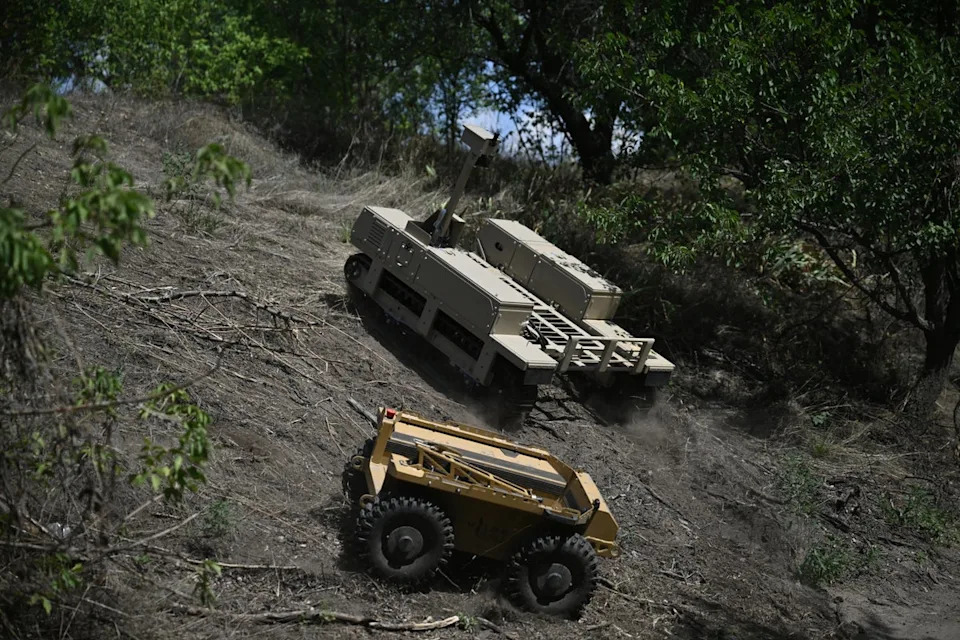
Drones and non-armed military robotics are in heavy use in the Ukraine war, as is pictured here, serving roles ranging from bomb disposal to evacuating wounded troops, and experts urge the international community to establish guardrails around these new technologies as they continue to proliferate (AFP/Getty)
Longer‑Term Vision And Broader Debate
Beyond defense and industry, Foundation's leadership envisions robot‑built green mega‑cities and a post‑work future in which machines handle dangerous or repetitive labor. The company takes its name from Isaac Asimov's Foundation novels and speaks in generational terms about shaping societies over decades.
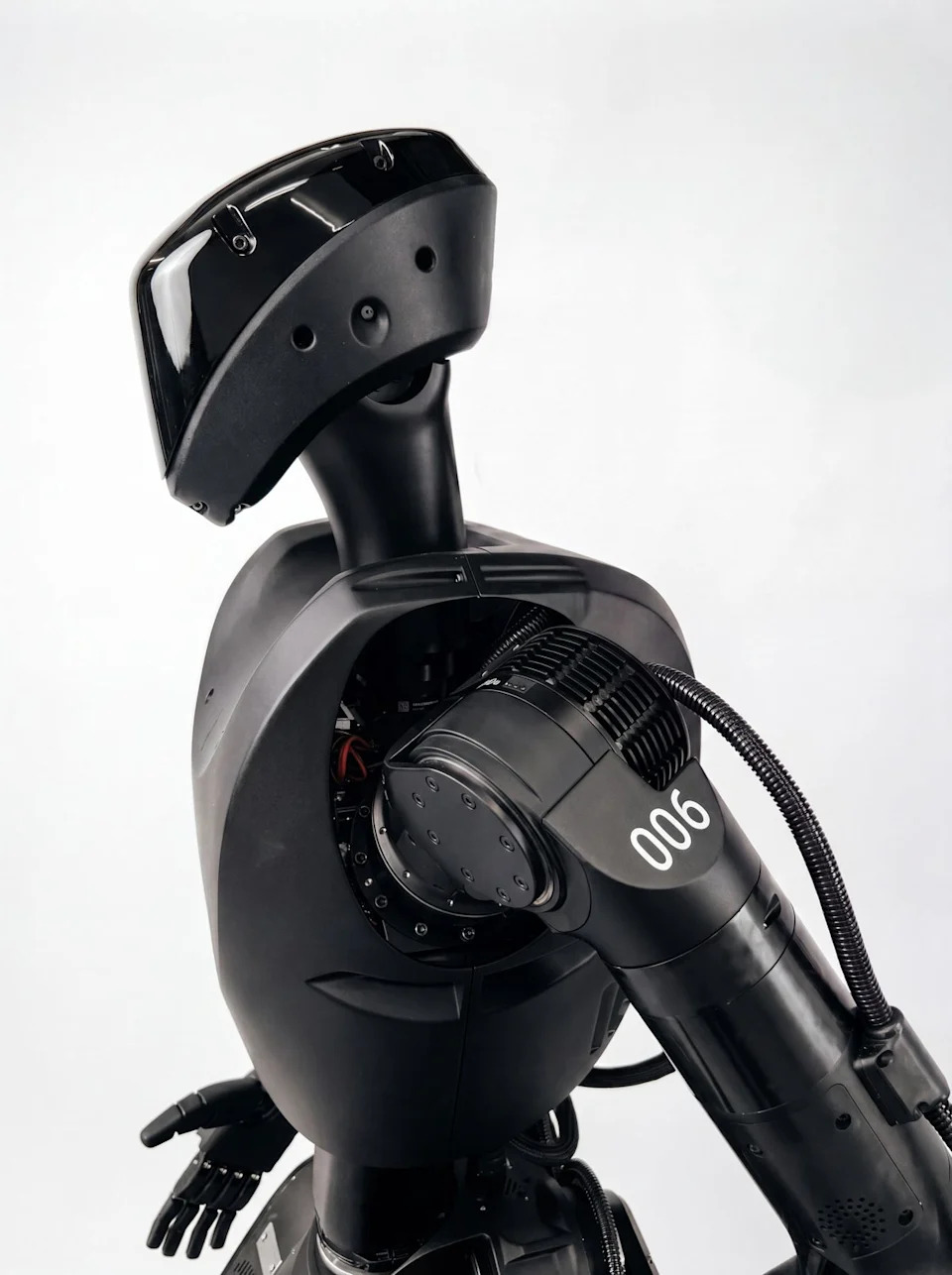
Human rights experts worry that military robots could make targeting errors or allow nations to avoid accountability for war crimes (Courtesy of Foundation Future Industries)
Whether that vision is realistic — or desirable — is hotly contested. Supporters see productivity and safety gains; critics warn of an escalating arms race, legal and ethical gaps, and the social consequences of widescale automation concentrated in a few hands.

Pathak worries a 'populist mutiny' targeting the tech industry could derail his plans (Getty)
What To Watch
Key developments to monitor include further confirmation of Foundation's defense contracts, DHS discussions about border deployments, the progress of Phantom's next generation, any formal requests from the U.S. military to arm humanoid platforms, and international moves to regulate or ban lethal autonomous weapons.
Help us improve.