Hummingbird hawk-moths have been widely reported in UK gardens this summer, with photos and sightings coming from across the country. Experts point to warm weather, strong southerly winds and drying of Mediterranean food plants as likely drivers of the influx, and say 2026 could be a strong year for the species. While early reports don't yet prove a long-term population boom, clear dated photos and habitat-friendly gardening can help conservationists track and support these striking migrants.
Hummingbird Hawk-Moths Buzz Across UK Gardens — Could 2026 Be A Boom Year?
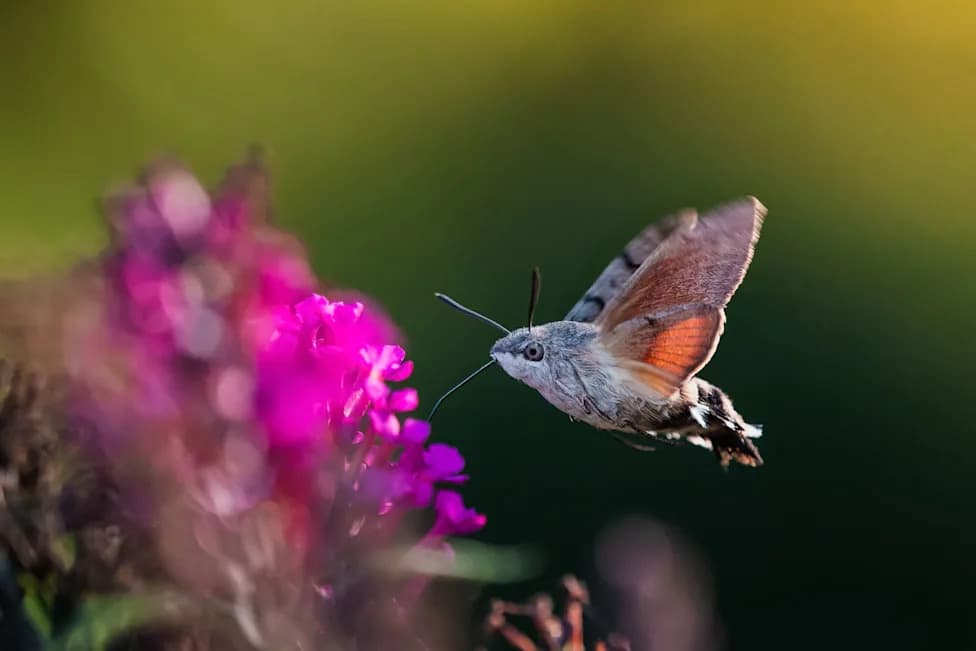
Photo Credit: iStock
Hummingbird hawk-moths are drawing fresh attention in gardens across the UK this summer, with reports and photographs arriving from many parts of the country. These fast, birdlike moths hover at flowers to feed, briefly resembling tiny hummingbirds as they probe blooms for nectar.
Why Sightings May Be Rising
The species is a migrant, arriving in the UK each year from mainland Europe and North Africa. Experts told the Guardian that a recent increase in reports and inquiries suggests 2026 could be a particularly strong year for the moth. Warm weather and strong southerly winds likely helped bring larger numbers north this season, and drying of larval food plants in Mediterranean breeding areas may also be encouraging migration.
Could They Become Resident?
Scientists warn that early-season sightings do not yet confirm a long-term population boom. However, if milder winters allow more adults to survive and reproduce locally, the hummingbird hawk-moth could gradually become more established in parts of the UK. Ray Barnett, a council member at the British Entomological and Natural History Society, said the moth is "almost becoming a resident species rather than a purely migratory species." Recording schemes officer Richard Austin of Butterfly Conservation noted a large increase in sightings and inquiries this year and said, "We expect it is going to be a great summer for them."
How The Public Can Help
Experts are tracking the apparent rise mainly through public reports. Casual observers can make a real contribution: clear photographs with the date and location are especially valuable for recorders and conservation groups. If you see one, try to:
- Take a sharp photo showing the body and wings.
- Note the date and location (ideally GPS or a nearby town/park).
- Record the plant it was feeding on, such as buddleia or other nectar-rich flowers.
Garden Tips To Support Visiting Moths
Gardeners can help by planting and maintaining nectar-rich flowers, allowing common wildflowers to grow where appropriate, and providing sunny, sheltered spots that support pollinators. Even small wildlife-friendly patches make a difference for migrating and resident insects.
"I first noticed a fast-moving shape and described it as a 'grey lump with orange wings,'" said software project manager Luke Burstow, who photographed a hummingbird hawk-moth feeding on buddleia in late June.
While the exact long-term implications are still uncertain, the current influx offers a chance for the public to help scientists monitor changes in species distributions — and to enjoy a striking visitor in their gardens this summer.
Help us improve.