Three independent voters in Florida, Texas and Pennsylvania explain how they approach the upcoming midterms and why unaffiliated voters are increasingly central to election outcomes. Polls from Gallup, Pew and The Independent Center show independents now make up roughly a third to two-fifths of the electorate and helped shift support in 2024. Key concerns include closed primaries, ballot-access rules and pocketbook issues such as health care and the cost of living. With many races close, independents could determine control of crucial governorships, Senate seats and the House.
Independent Voters Could Decide Tight Midterms — What Moves Them in FL, TX and PA
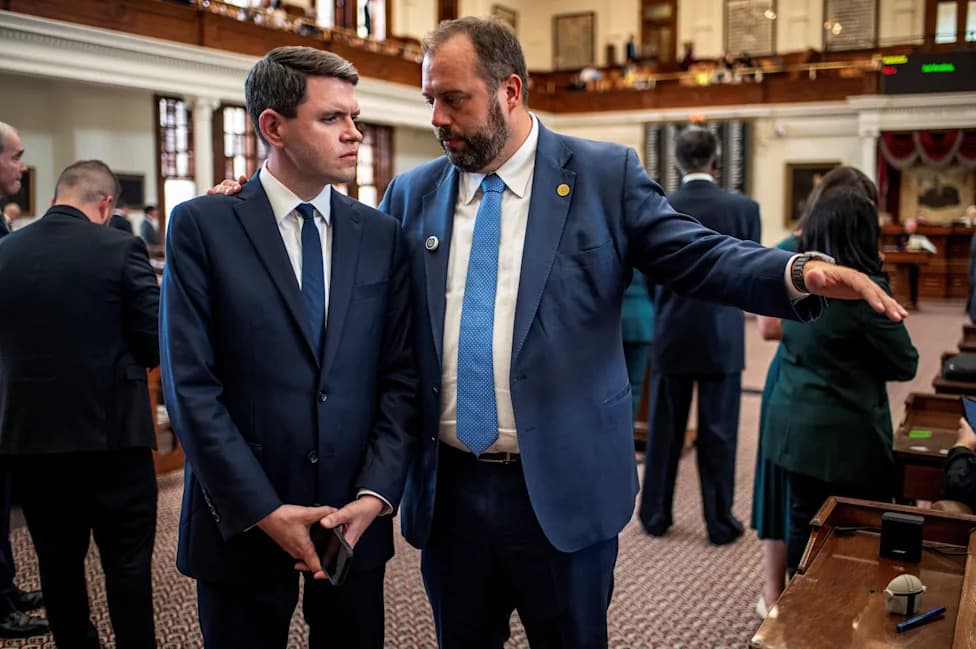
Texas State Representatives James Talarico and John Bucy III (D-TX) converse during a session as Democratic lawmakers, who left the state to deny Republicans the opportunity to redraw the state's 38 congressional districts, begin returning to the Texas State Capitol in Austin, Texas on Aug. 20, 2025.(Sergio Flores, REUTERS)
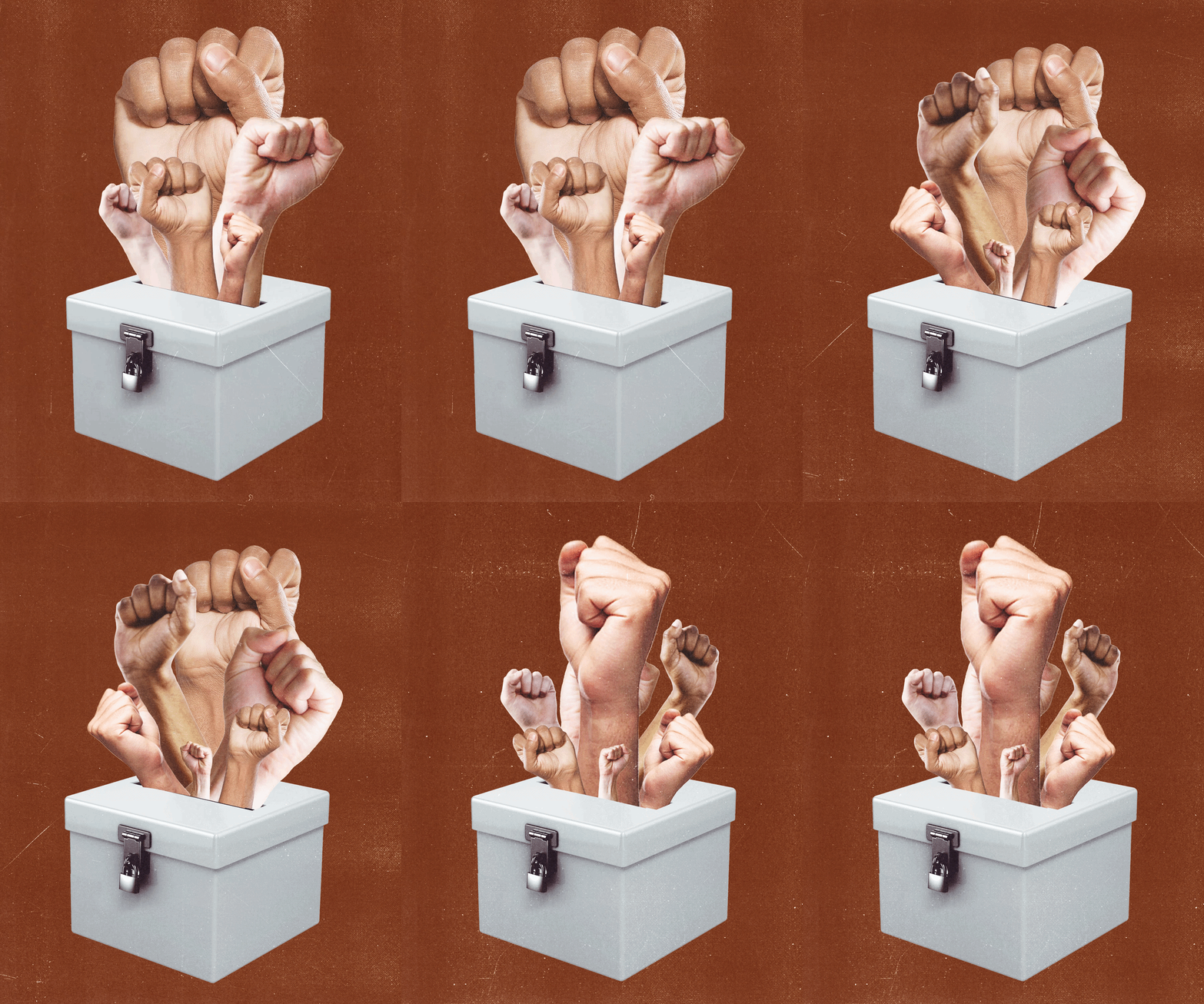
Independent voters are a growing and often decisive force in U.S. elections. Recent polls and advocacy research show unaffiliated voters now make up a large slice of the electorate — and in close contests, their choices can tip the balance. Three independents from Florida, Texas and Pennsylvania describe what matters to them this midterm season and why access to primaries and ballot rules are central concerns.
Why Independents Matter
Surveys from Gallup and the Pew Research Center find roughly four in ten registered voters identify as independent. Research from The Independent Center reported that independents shifted 8–11 percentage points toward Donald Trump in 2024 and that independents accounted for roughly 34% of the 2024 electorate — a share similar to Republicans and slightly larger than Democrats. Advocacy groups and analysts say those trends make unaffiliated voters especially influential in races decided by narrow margins.
Profiles From Three Key States
Florida — John Marvin (St. Petersburg)
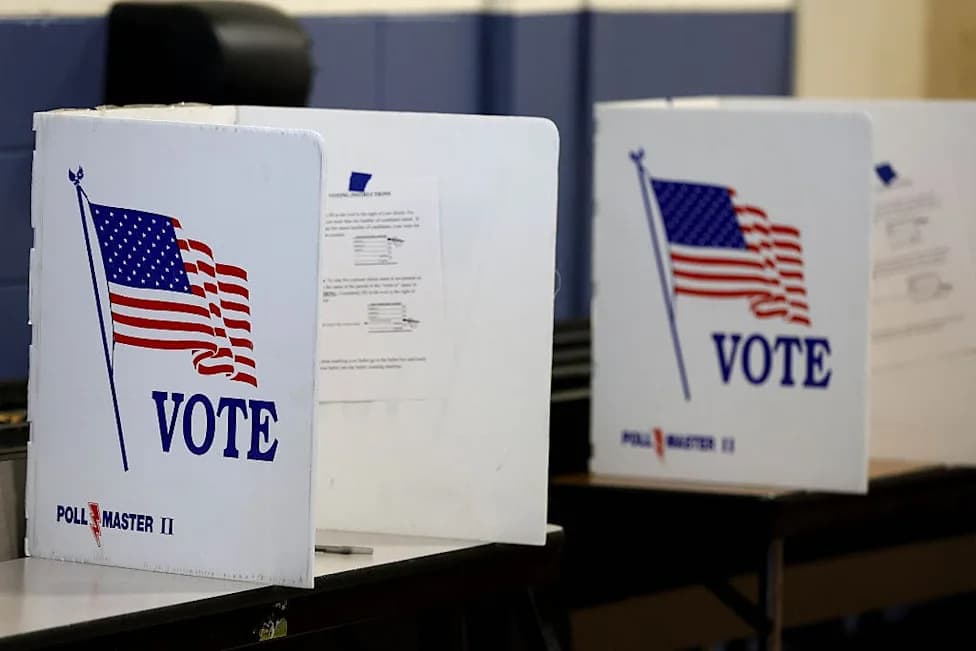
John Marvin, 63, is a retired education administrator who has long voted as an independent. He supports open primaries and says closed primary systems — like Florida’s Aug. 18 closed primary — leave independent voters sidelined in critical nominating contests. Marvin watches closely as Florida’s political landscape has shifted toward Republican leadership and says he will be deeply engaged in the November general election despite being unable to vote in some primaries.
“My tax dollars pay for these elections. I feel like I’m an outsider looking in. I shouldn’t be forced to associate with either party in one of the most consequential midterm elections of this century,” Marvin said.
Texas — Sandi Hebley (Dallas)
Sandi Hebley, 77, is a longtime independent who often splits her ticket based on candidates rather than party labels. In Texas, she is weighing a close U.S. Senate contest between Democrat James Talarico and Republican Ken Paxton and is also watching ballot-access fights that affect independent candidates. Hebley volunteers to protect voting access and worries about efforts that she sees as intimidating or restrictive to voters. She also follows Mike Collier’s bid to get on the November ballot as an independent, which requires more than 81,000 valid signatures and remains the subject of a federal challenge.
Pennsylvania — Sophie Gelling (Philadelphia area)
Sophie Gelling, 27, grew up in a family of independents and has become an outspoken advocate for open primaries. She points to a generational shift: Gallup finds a record share of Gen Z adults now identify as independent or unaffiliated, and The Independent Center reports large shares of Gen Z and millennial voters describe themselves the same way. Gelling organized demonstrations to highlight how closed primaries exclude unaffiliated voters and argues open primaries are a voting-rights issue.
What Independents Say They Care About
- Voting access and open primaries — many independents want a say in candidate selection.
- Ballot access rules and redistricting — legal and procedural barriers can limit independent options.
- Everyday pocketbook issues — cost of living, health care and education are central to voter decisions.
- Candidate qualities over party loyalty — independents often switch support based on individuals and issues.
Looking Ahead
With many races expected to be close, campaigns on both sides will court independents with targeted messaging. Small swings in turnout or preference among unaffiliated voters could determine control of key governorships, Senate seats and the balance of power in the U.S. House. Analysts warn that unless a viable third-party alternative emerges, many independents will continue to act as swing voters — deciding races by comparing candidates rather than following party lines.
This reporting was adapted from a USA TODAY piece profiling independent voters in Florida, Texas and Pennsylvania.
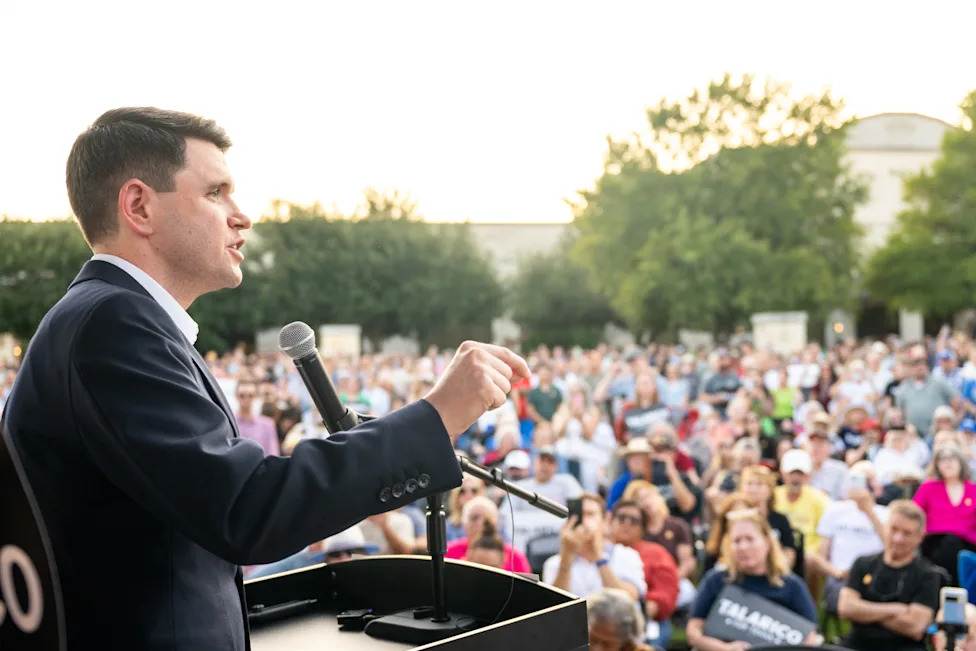
Democratic Texas State Rep. James Talarico speaks during a campaign launch rally on Sept. 9, 2025 in Round Rock, Texas. Rep. Talarico announced earlier today that he will be running for U.S. Senate in Texas.(Brandon Bell, Getty Images)
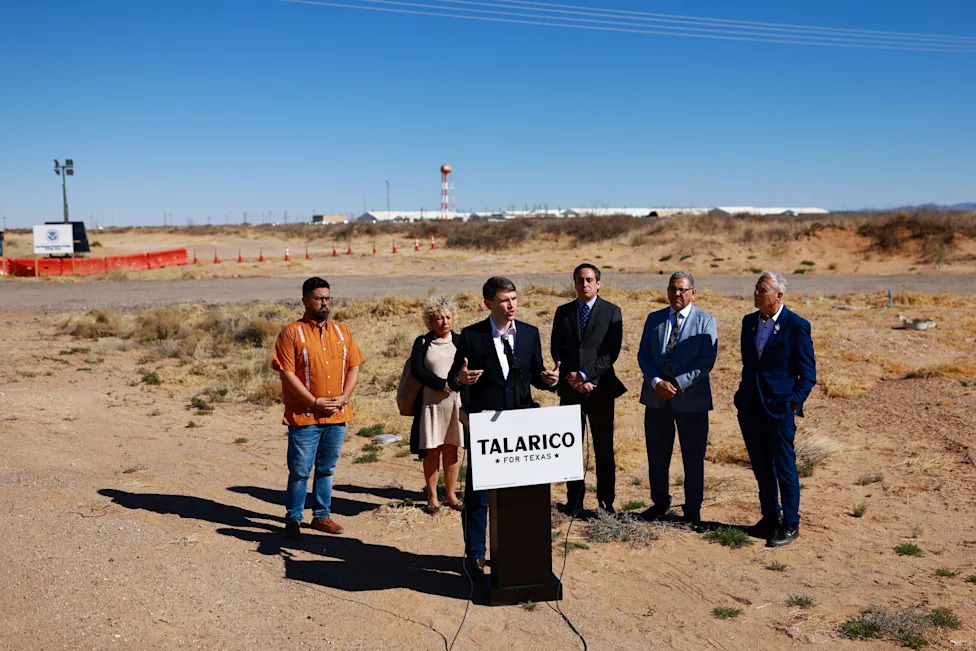
James Talarico, a Democratic candidate for the U.S. Senate seat representing Texas, holds a press conference outside an ICE detention center during a visit as part of his "Take Back Texas" tour, in El Paso, Texas on Feb. 21, 2026.(Jose Luis Gonzalez, REUTERS)
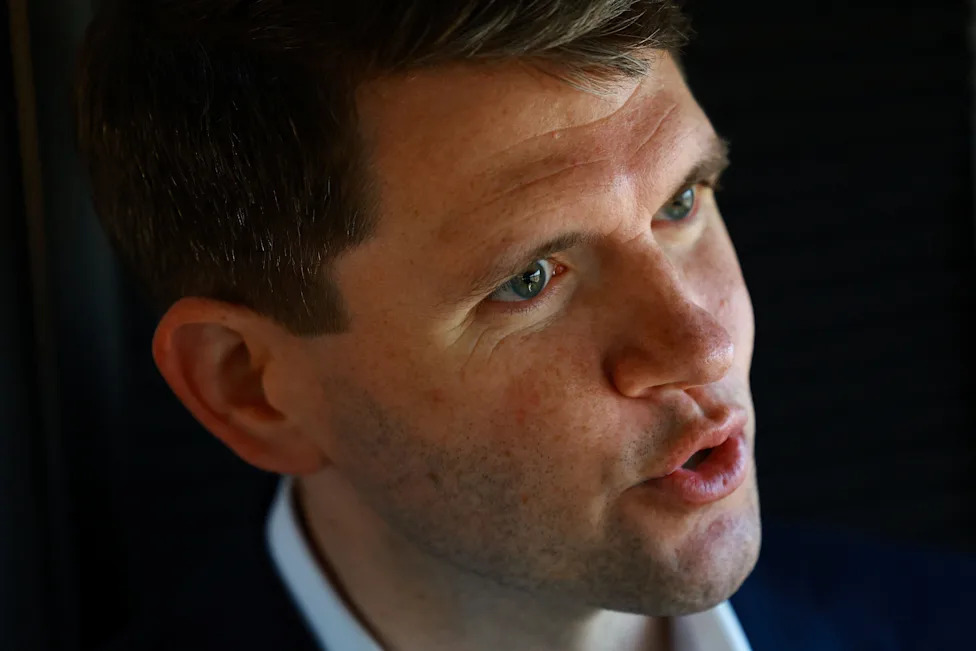
James Talarico, a Democratic candidate for the U.S. Senate seat representing Texas, gives an interview aboard his campaign bus parked outside an ICE detention center during a visit as part of his ÒTake Back TexasÓ tour, in El Paso, Texas on Feb. 21, 2026.(Jose Luis Gonzalez, REUTERS)

Campaign pins are displayed at a rally for Democratic U.S. Senate candidate for Texas, James Talarico, during his "Take Back Texas" tour ahead of the primary elections that will determine his party's nominee for the 2026 midterms, in El Paso, Texas on Feb. 21, 2026.(Jose Luis Gonzalez, REUTERS)
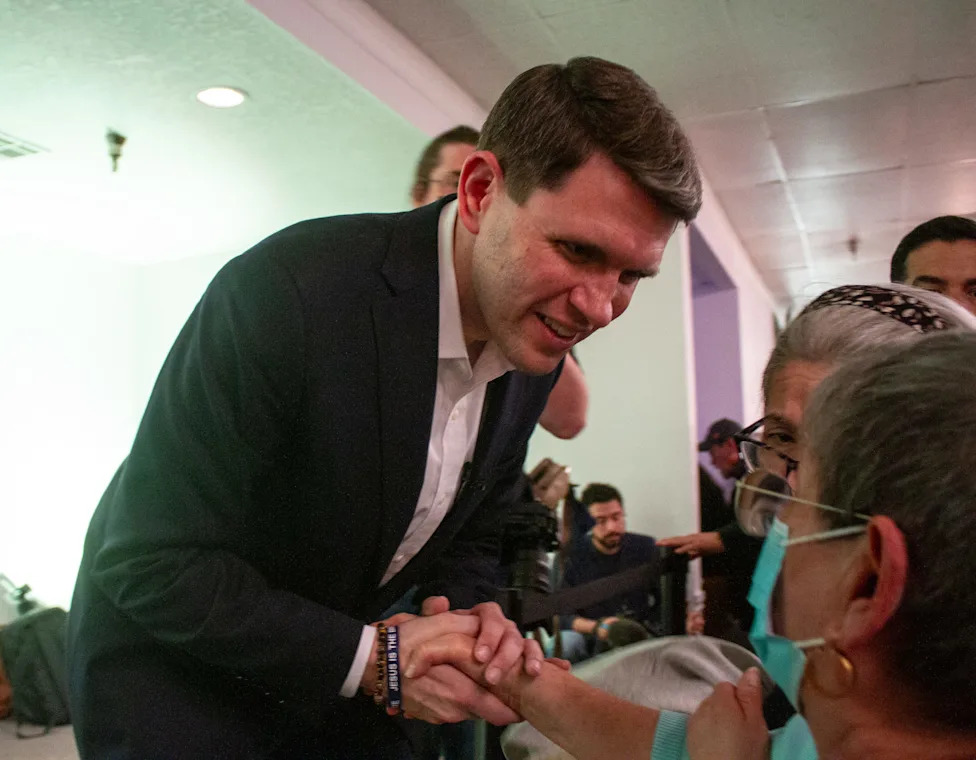
Democratic Texas State Rep. James Talarico speaks to supporters at the Fire Fighters Hall Feb. 21, 2026 in El Paso, Texas. Talarico faces Dallas Congresswoman Jasmine Crockett in the March 3rd primary.(Alberto Silva Fernandez, Getty Images)

Texas State Representative James Talarico poses for a selfie with Jordan Rhoads on February 26, 2026 in Richardson, Texas. Talarico is facing off against Jasmine Crockett in Tuesday's democratic senate primary.(Richard Rodriguez, Getty Images)
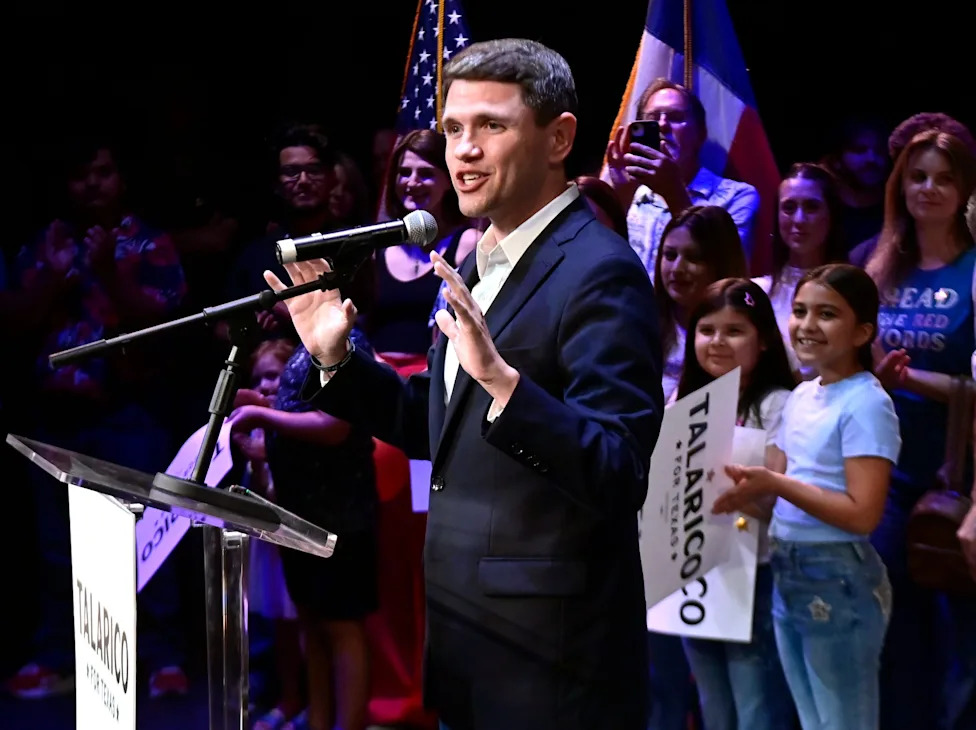
James Talarico delivers his remarks during his campaign rally in San Angelo Thursday, Oct. 9, 2025. Talarico is running to be the Democratic PartyÕs nominee in 2026 for the U.S. Senate seat held by Republican John Cornyn.(Ronald W. Erdrich, Reporter-News via USA TODAY NETWORK)
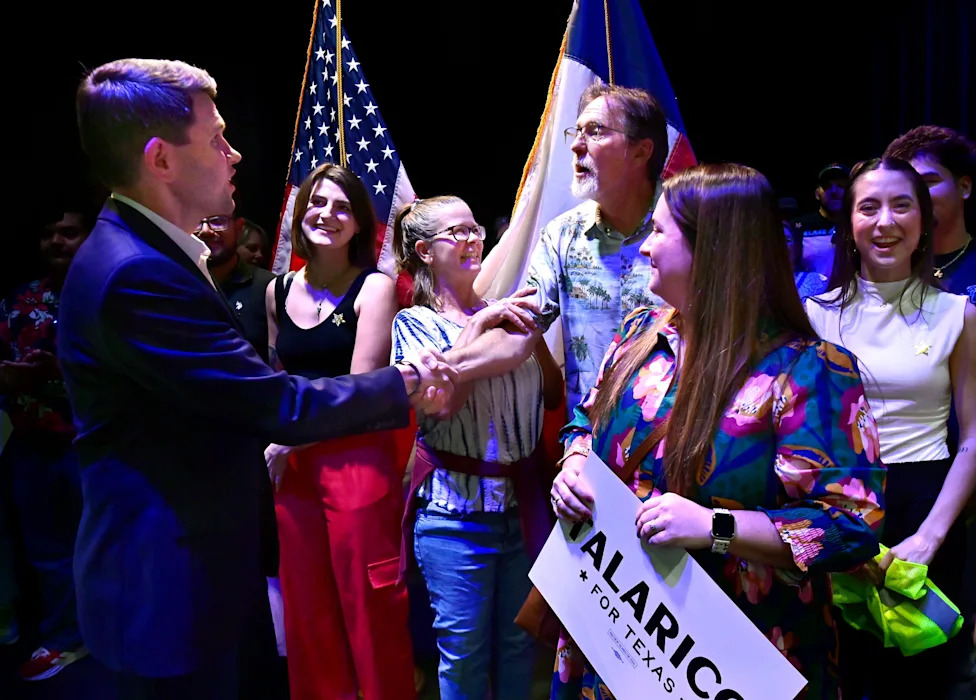
James Talarico greets supporters onstage at the Brooks and Bates Theatre at the start of his rally in San Angelo Thursday, Oct. 9, 2025.(Ronald W. Erdrich, Reporter-News via USA TODAY NETWORK)
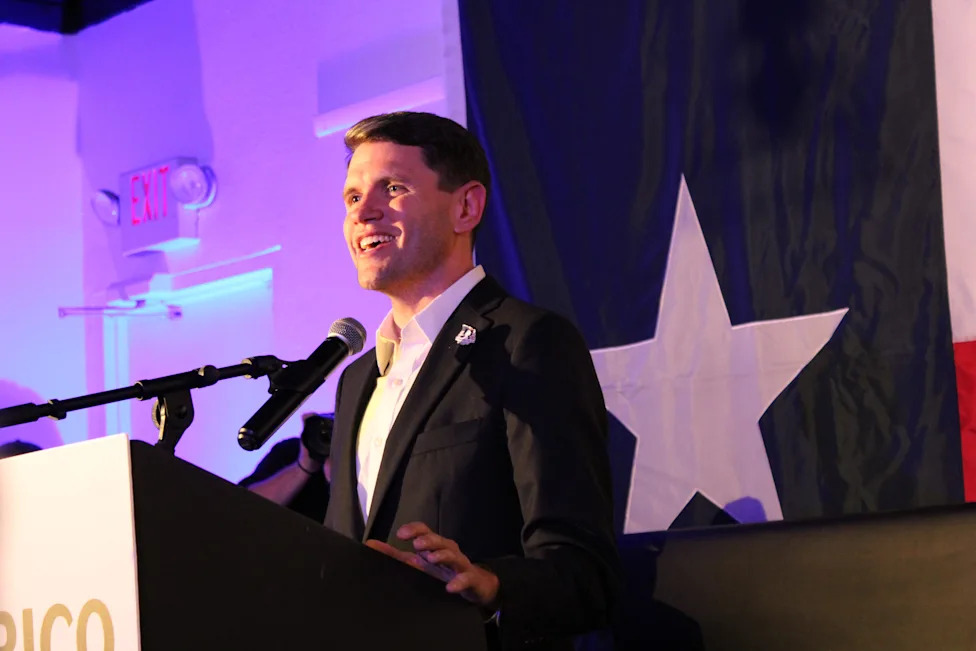
State Rep. James Talarico, D-Austin, speaks during a campaign stop at El Paso's Firefighters Hall on Wednesday, Oct. 29, 2025. Talarico is vying to unseat U.S. Sen. John Cornyn, R-TX, in the November 2026 General Election.(Adam Powell, El Paso Times via USA TODAY NETWORK)
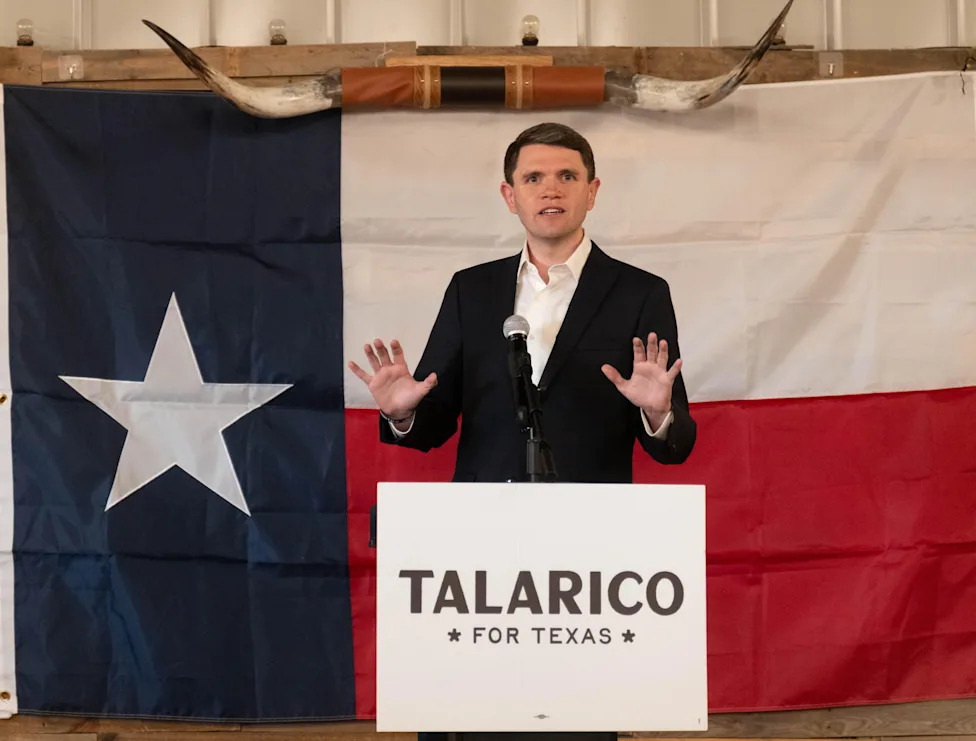
Texas Senate candidate James Talarico speaks during his campaign rally Thursday, Oct. 30, 2025 at The Shop Event Venue in Amarillo.(Michael Cuviello, Amarillo Globe-News via USA TODAY NETWORK)
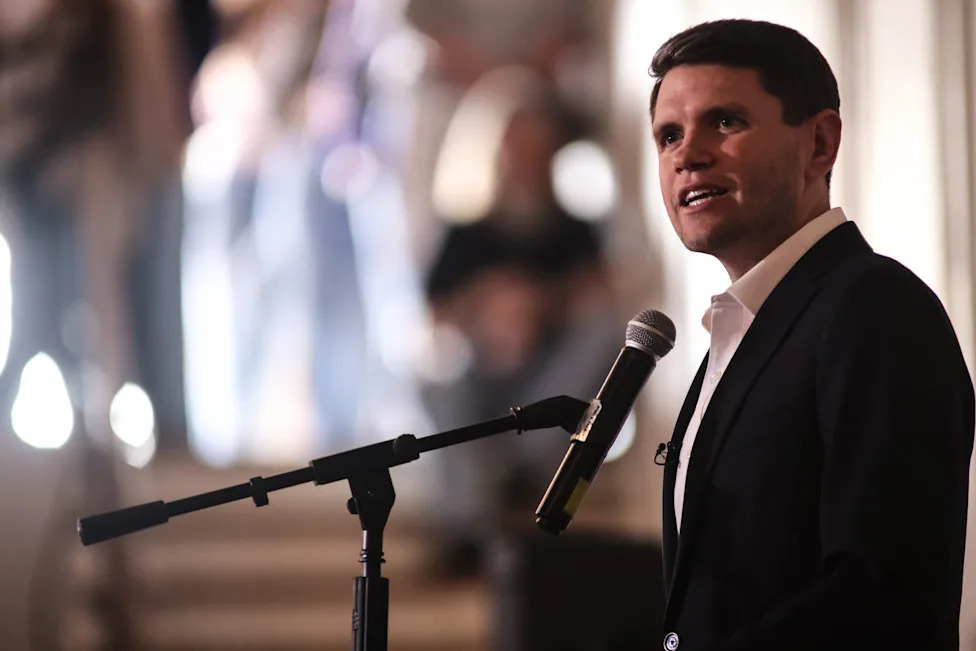
James Talarico, a candidate in the Democratic primary for Texas' U.S. Senate seat and a current Texas State Representative, speaks to the Lubbock community at the Historic Watson Building during his Take Back Texas Tour, Feb. 22, 2026, in Lubbock.(Jacob Lujan, for the Avalanche-Journal via USA TODAY NETWORK)
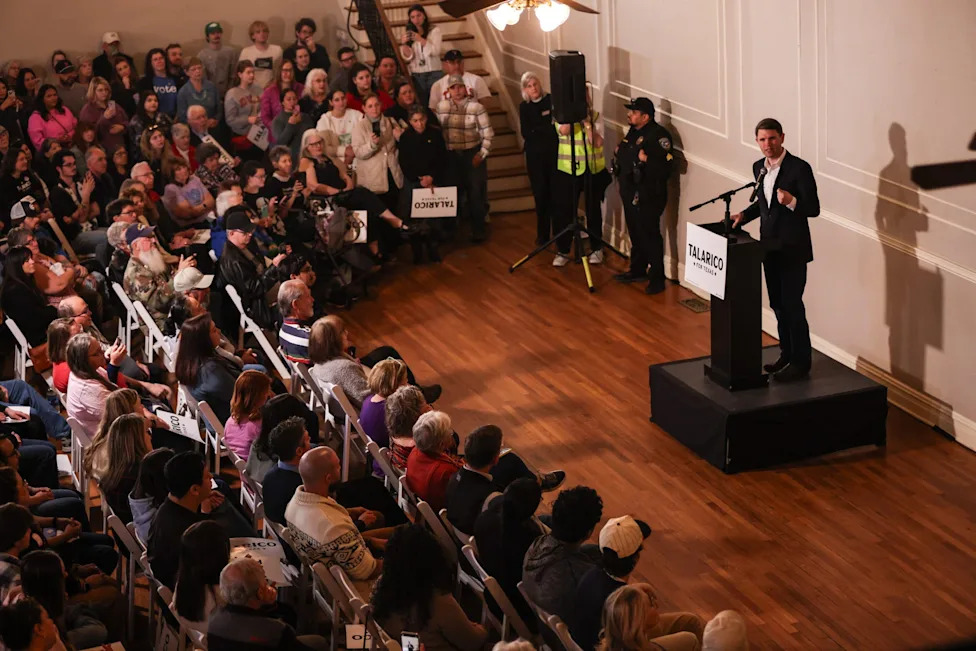
James Talarico, a candidate in the Democratic primary for Texas' U.S. Senate seat and a current Texas State Representative, speaks to the Lubbock community at the Historic Watson Building during his Take Back Texas Tour, Feb. 22, 2026, in Lubbock.(Jacob Lujan, for the Avalanche-Journal via USA TODAY NETWORK)
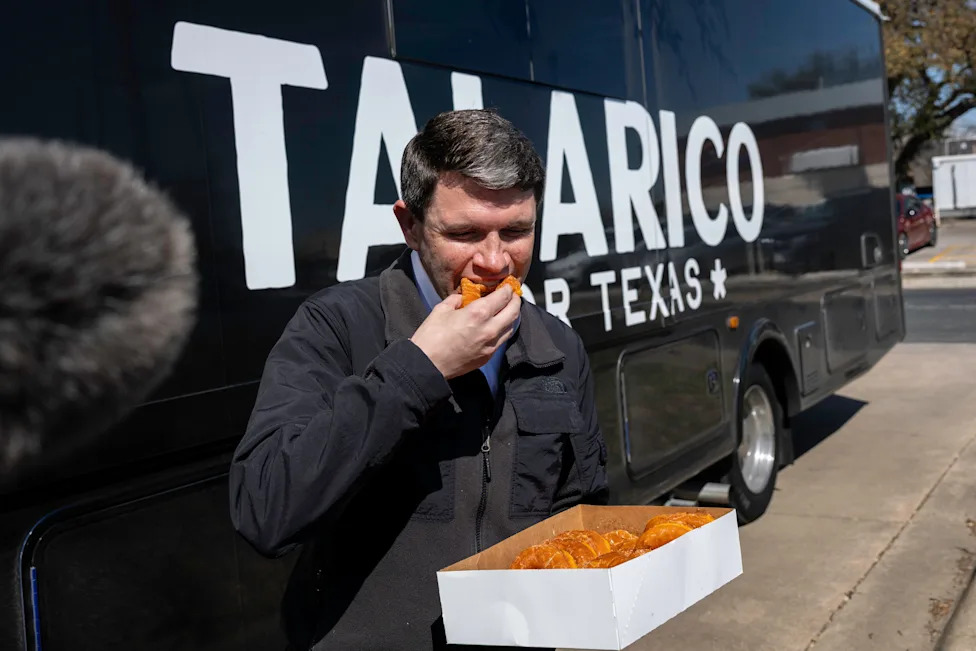
Texas Senate candidate James Talarico (D-TX) takes part in a campaign event outside Round Rock Donuts on March 3, 2026 in Talarico's hometown of Round Rock, Texas. Texans went to the polls to vote for Democratic and Republican primary candidates ahead of November's midterm elections.(John Moore, Getty Images)
Supporters of Texas Senate candidate James Talarico (D-TX) cheer when seeing early results on election night March 3, 2026 in Austin, Texas. Texans went to the polls to vote for Democratic and Republican primary candidates ahead of November's midterm elections.(John Moore, Getty Images)
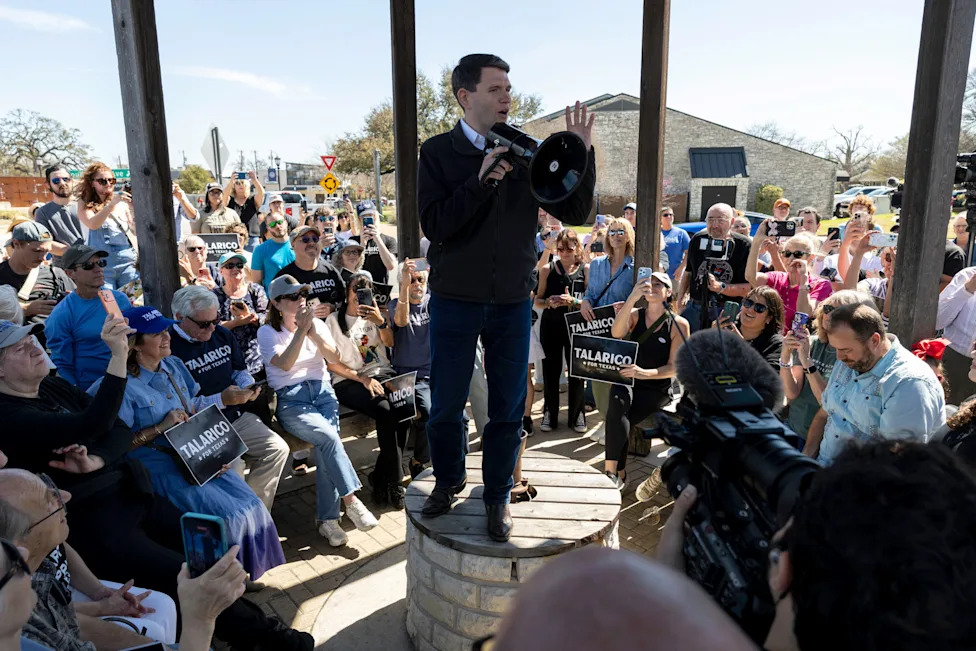
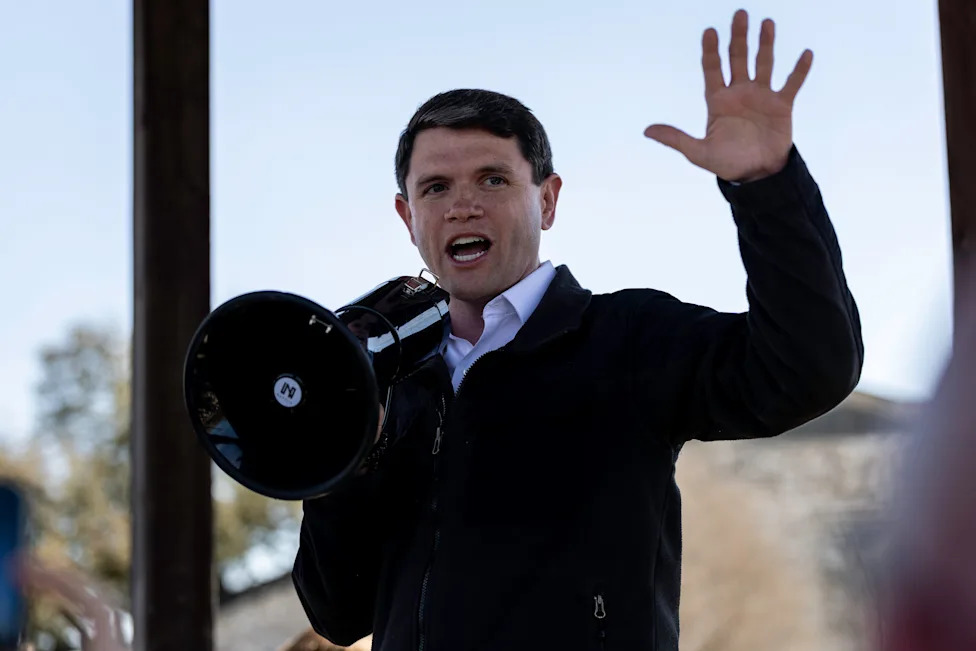
Texas Senate candidate James Talarico (D-TX) speaks to supporters at a campaign event on March 3, 2026 in Talarico's hometown of Round Rock, Texas. Texans went to the polls to vote for Democratic and Republican primary candidates ahead of November's midterm elections.(John Moore, Getty Images)
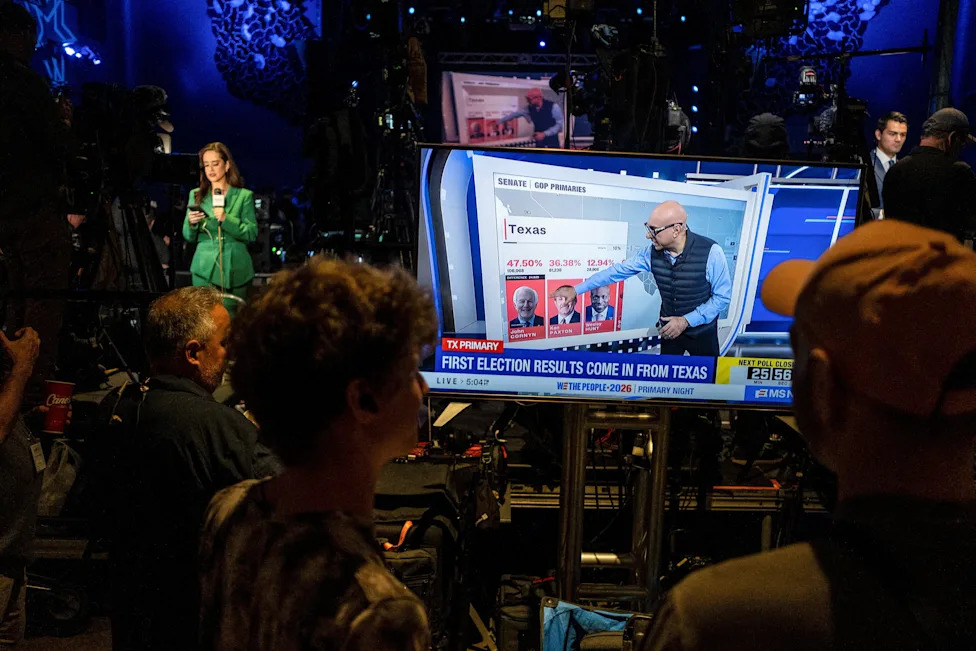
Supporters of Democratic U.S. Senate candidate for Texas, James Talarico, watch as primary election results are reported on MS NOW during Talarico's primary election night party in Austin, Texas on March 3, 2026.(Joel Angel Juarez, REUTERS)
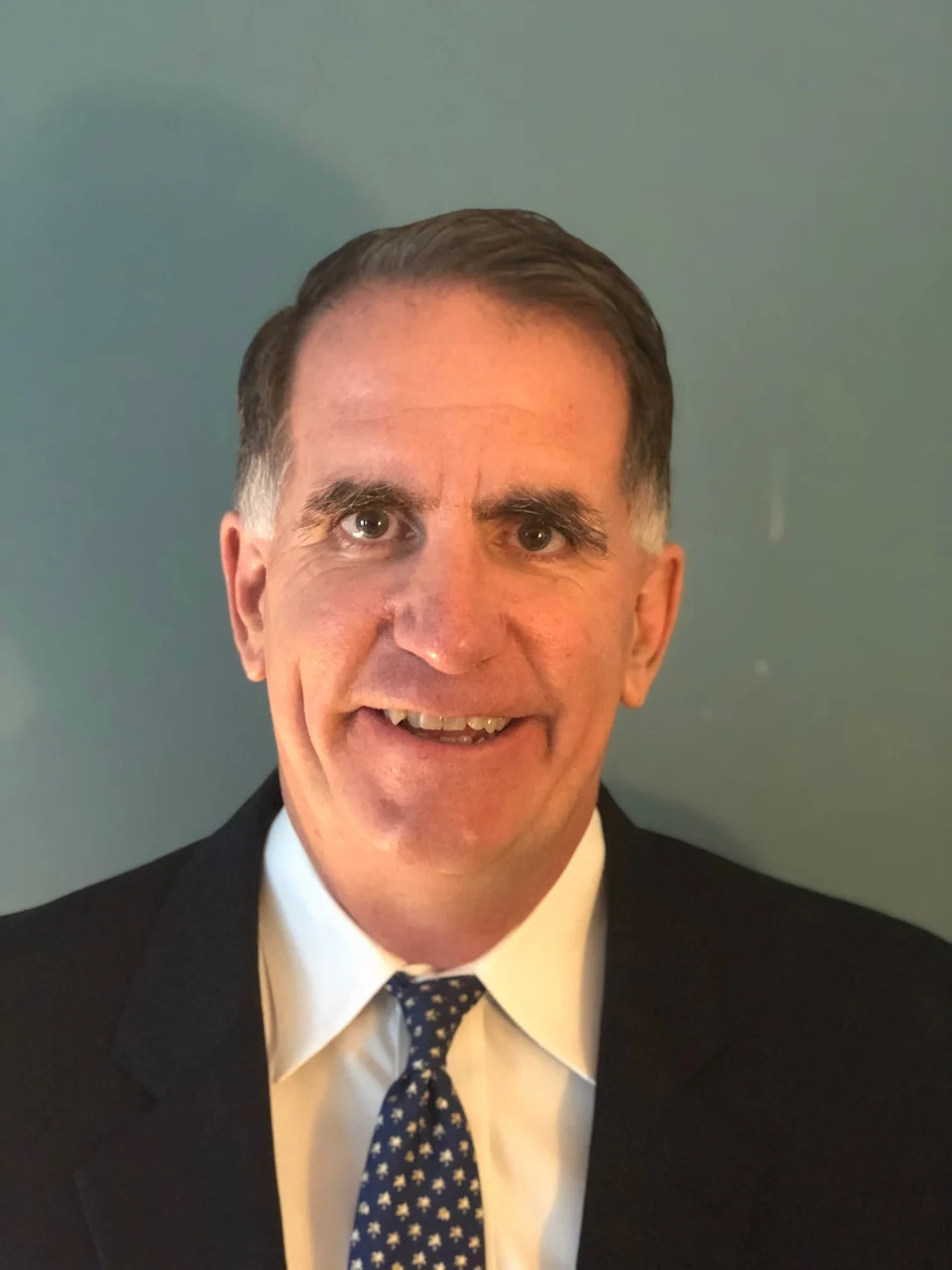
Longtime independent voter John Marvin of St. Petersburg, Florida, feels that his state should hold open election primaries for all political parties as they've become even more important for voters seeking to exercise their rights during such politically divisive times.
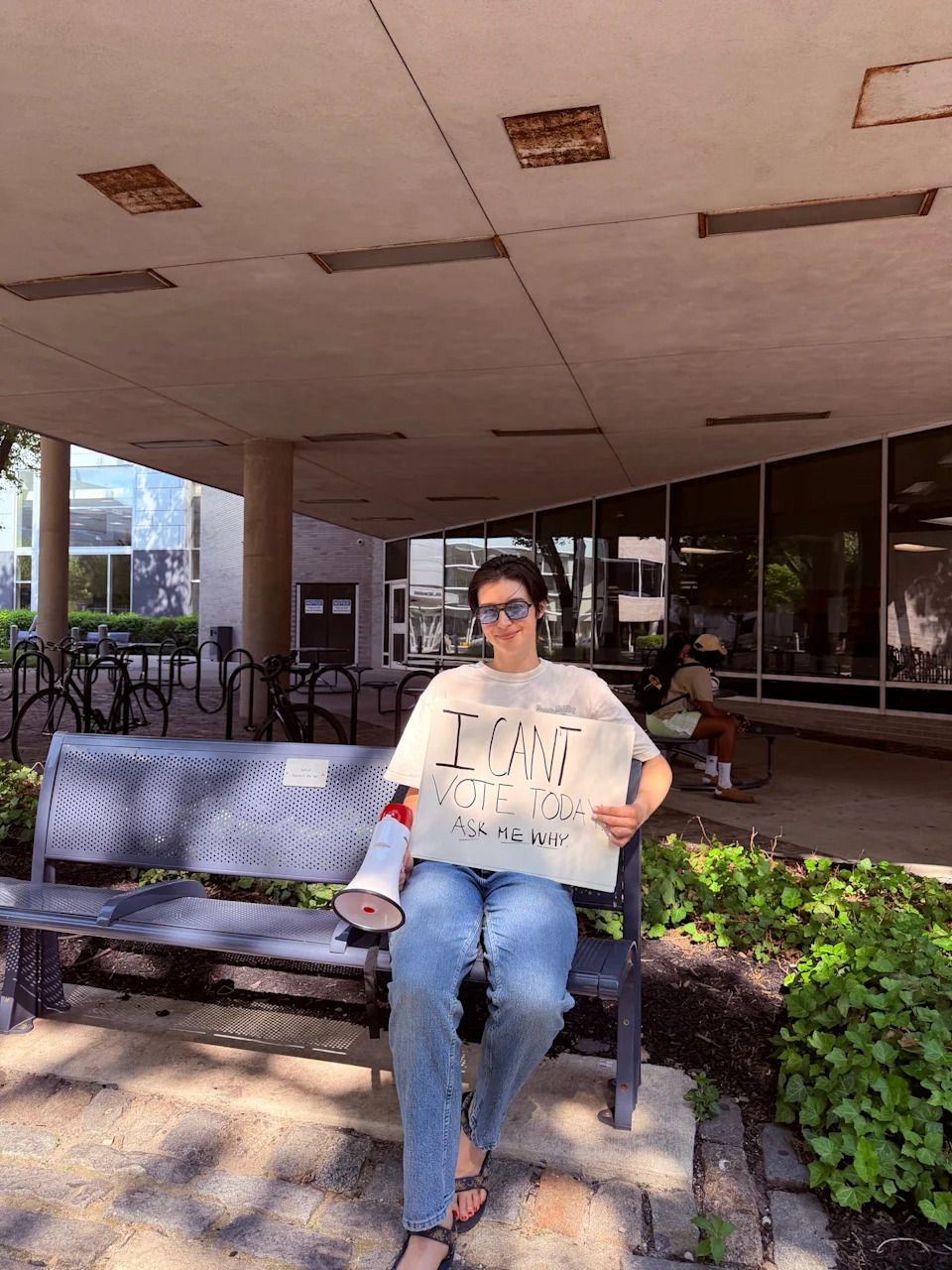
Sophie Gelling is an independent voter in Pennsylvania who advocates for open primaries.
Help us improve.