China has issued a white paper rebutting a USTR Section 301 probe that accuses Beijing of maintaining harmful industrial 'excess capacity' and using subsidies to undercut foreign producers. The paper argues that shifts in industrial capacity are historical and dynamic, and that subsidies can serve public-policy goals such as innovation and environmental protection. Beijing warns that tariffs and unilateral restrictions would disrupt global supply chains and risk long-term damage to world growth, and calls for objective, multilateral solutions rather than politicized protectionism.
China Rebuts USTR 'Excess Capacity' Probe, Warns Tariffs Could Destabilize Global Supply Chains
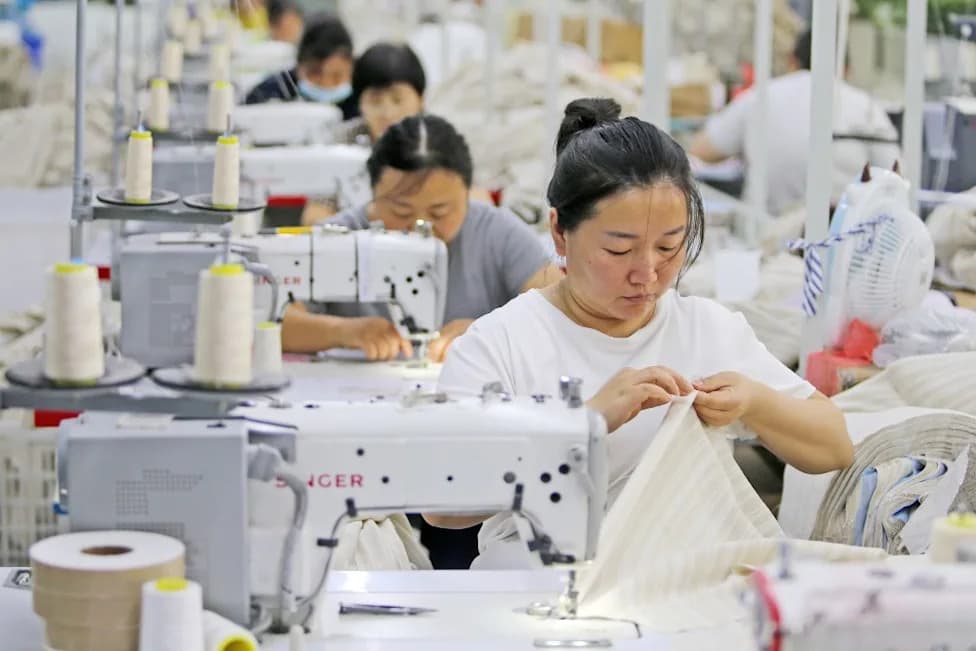
China Hits Back At USTR Investigation Targeting ‘So-Called Excess Capacity’
China has published a formal white paper rebutting a U.S. Trade Representative (USTR) Section 301 inquiry that alleges Beijing maintains industrial production capacity beyond domestic needs and uses state support to undercut foreign manufacturers. The paper responds point-by-point to USTR claims that Chinese overcapacity and subsidies flood global markets with low-priced goods and contribute to persistent trade imbalances.
USTR Investigation and Scope
The USTR has said it opened a Section 301 probe into China on the grounds that subsidized capacity gives Chinese exporters an unfair advantage and may warrant new tariffs if U.S. industry is harmed. Ambassador Jamieson Greer has said related probes launched in March also targeted a wide range of trading partners, including the European Union, Singapore, Switzerland, Norway, Indonesia, Malaysia, Cambodia, Thailand, South Korea, Vietnam, Taiwan, Bangladesh, Mexico, Japan and India.
China's Rebuttal
China's Ministry of Commerce argues the allegations are politically motivated and reflect broader shifts in the global economy. The white paper contends that industrial capacity has migrated over decades—from the United States to Europe, then to East Asia, and more recently to Southeast Asia—and that China's role as a major manufacturer reflects active participation in globalization and international labor division.
China warned that 'hyping the so-called excess capacity' has been used as a pretext to impose restrictions and protectionist measures that would harm global trade and growth.
The paper also challenges a simple link between trade surpluses and harmful overcapacity, arguing that subsidies can serve legitimate policy goals: correcting market failures, driving innovation, protecting the environment, reducing poverty and supporting balanced development. It frames excess capacity as a dynamic market phenomenon that tends toward a new equilibrium as supply and demand adjust over time.
Potential Global Impact
China's Ministry of Commerce cautioned that tariffs and unilateral restrictions would disrupt global industrial and supply chains and could pose long-term risks to world economic growth. The white paper urges multilateral, evidence-based approaches to address capacity imbalances rather than politicized restrictions.
What This Means
The dispute highlights competing views on how to manage cross-border industrial change: whether to treat large-scale manufacturing shifts as economic evolution that requires cooperation, or as a policy problem to be corrected with trade measures. The USTR's probe could still lead to tariffs if it concludes that subsidies and capacity materially harm U.S. manufacturing; China, for its part, is calling for dialogue and a rules-based, multilateral response.
Key quote: China wrote that 'economies make progress through exchange and inter-connectivity and fall behind because of seclusion and closeness,' adding that isolating China would be detrimental to global prosperity.
Help us improve.