Researchers studying Okunoshima — Japan's famous "Rabbit Island" — report that wild boars have begun preying on live rabbits. The rabbit population, boosted by decades of tourist feeding, has exceeded the island’s natural capacity, creating food waste and carcasses that attract boars and other scavengers. The study warns these novel interactions can reshape the island’s ecosystem and recommends stricter feeding rules, better waste management, population monitoring, vegetation surveys, and public education.
Wild Boars Turn Predator: Okunoshima's 'Rabbit Island' Faces New Ecological Risk
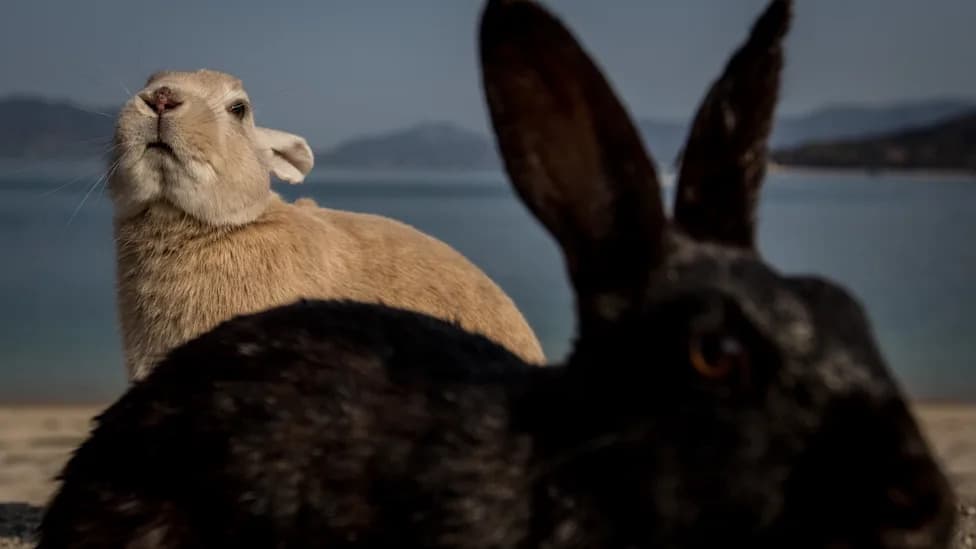
Tourist feedings have sustained more rabbits than the island's natural environment could otherwise support.
Okunoshima — widely known as Japan's "Rabbit Island" — is famous for its dense population of free-roaming European domestic rabbits introduced after World War II. A new study in the Journal of Ecotourism reports that wild boars on the island have begun preying on live rabbits, a surprising behavioural shift researchers link to intensive wildlife tourism and altered food availability.
According to the research team led by Shingo Kaneko of Fukushima University, decades of tourist feeding have allowed rabbit numbers to swell beyond the island’s natural carrying capacity. The overabundance of rabbits has stripped low vegetation across wide areas — producing a visible "rabbit line" — and created new food resources in the form of leftover feed and an increased number of carcasses.
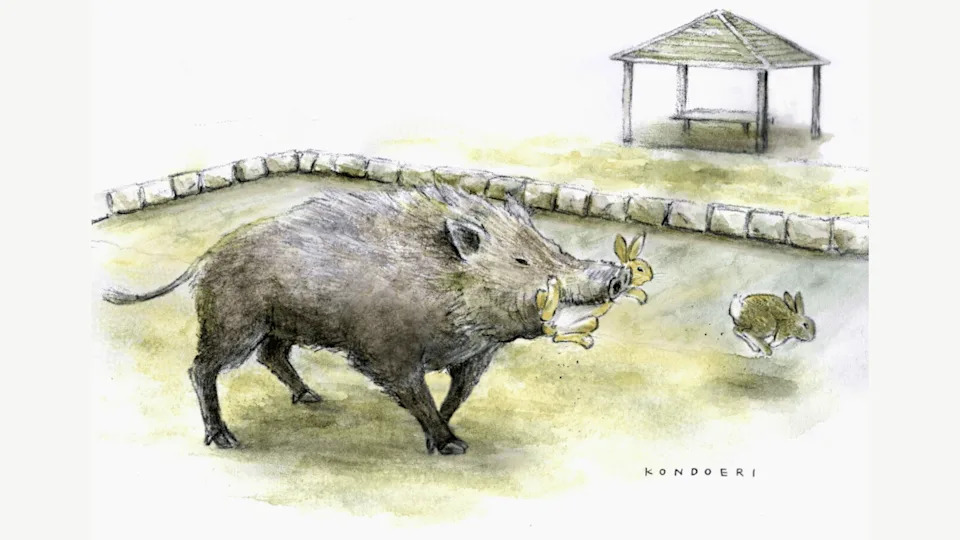
The illustration depicts an unusual event observed on Okunoshima Island, where wild boars have been seen capturing rabbits. Researchers suggest that tourist feeding, high rabbit densities, and the availability of leftover food and carcasses may be contributing to these novel interactions. Credit:Eri Kondo
"When we first heard that a wild boar had preyed on a live rabbit, we were surprised," said Shingo Kaneko. "Wild boars are known to scavenge animal carcasses, but they are not generally regarded as animals that actively hunt live prey."
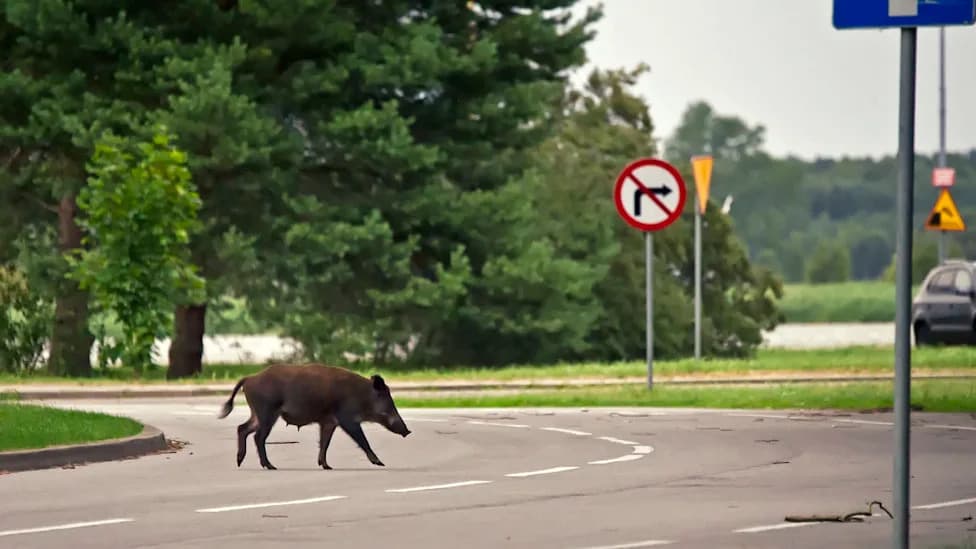
Field observations and environmental surveys show that wild boars, crows, and black kites are increasingly exploiting these human-provided resources. Some boars have been observed actively hunting and killing rabbits — behaviour rarely documented on the island before these population changes.
Researchers warn that these novel predator–prey interactions could reverberate through Okunoshima’s ecosystem, altering food webs and accelerating vegetation loss. The study underscores how routine tourist activities, such as feeding wildlife and leaving food waste behind, can produce unintended ecological consequences in isolated environments.
Recommendations
- Implement Stricter Feeding Rules: Prohibit or tightly regulate visitor feeding and ensure accessible, enforced guidance for tourists.
- Improve Waste Management: Reduce food left in rabbit zones by installing secure bins and regular clean-up protocols.
- Monitor Populations: Conduct ongoing surveys of rabbit and boar numbers to detect shifts and inform management action.
- Survey Vegetation: Track habitat degradation and recovery to assess ecological impacts and restoration needs.
- Public Education: Educate visitors and local officials about how feeding and waste affect wildlife behaviour and ecosystem health.
Okunoshima’s unusual history — introduced rabbits and its former role as a chemical-weapons testing site — makes it both a cultural attraction and an ecologically sensitive area. The authors call for coordinated management to protect wildlife, preserve visitor experiences, and restore ecological balance. Credit: Eri Kondo (illustration)
Help us improve.