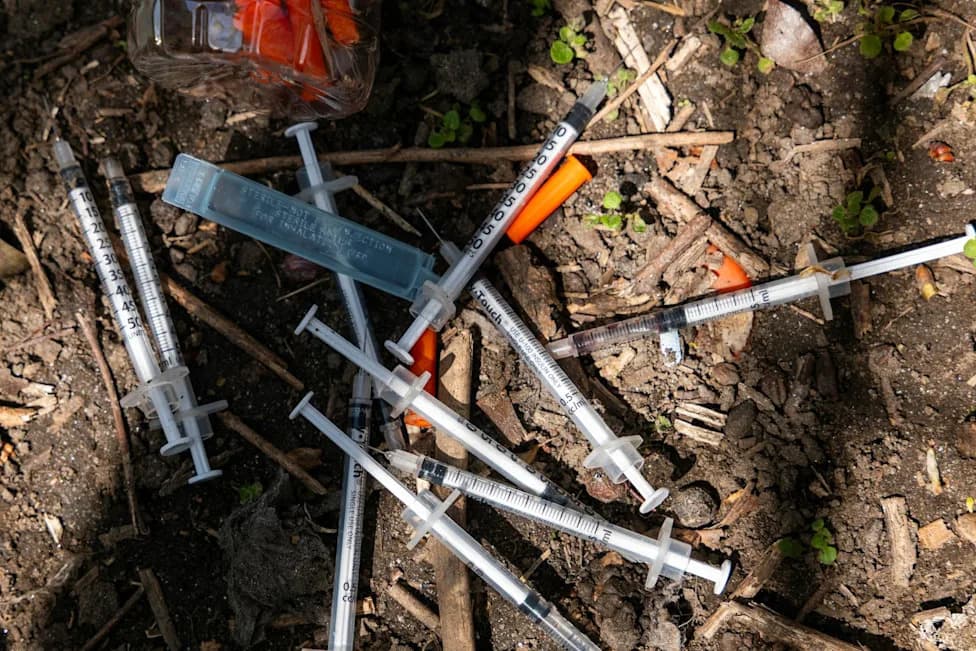
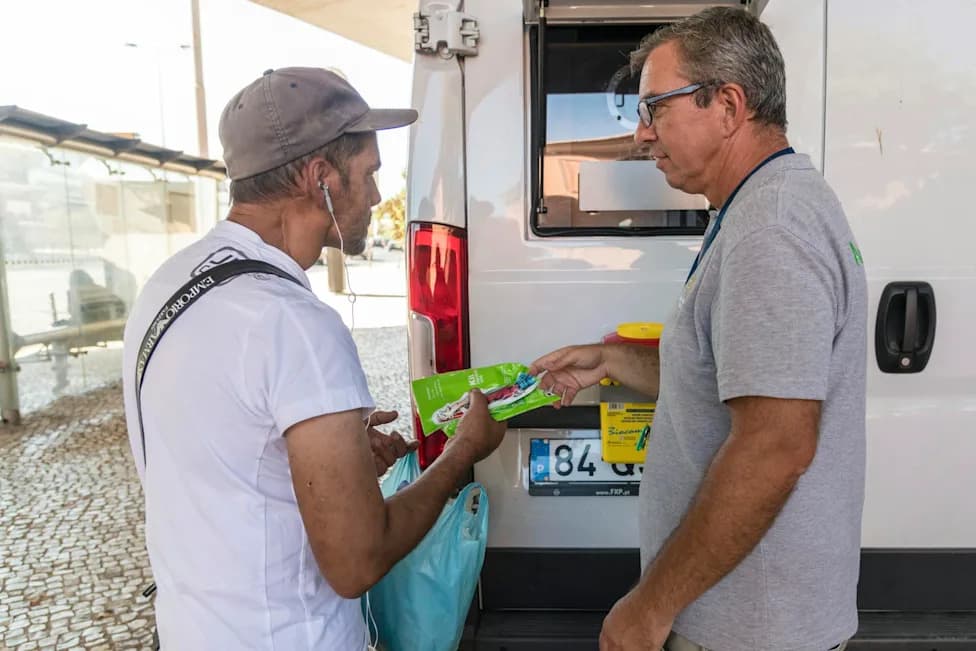
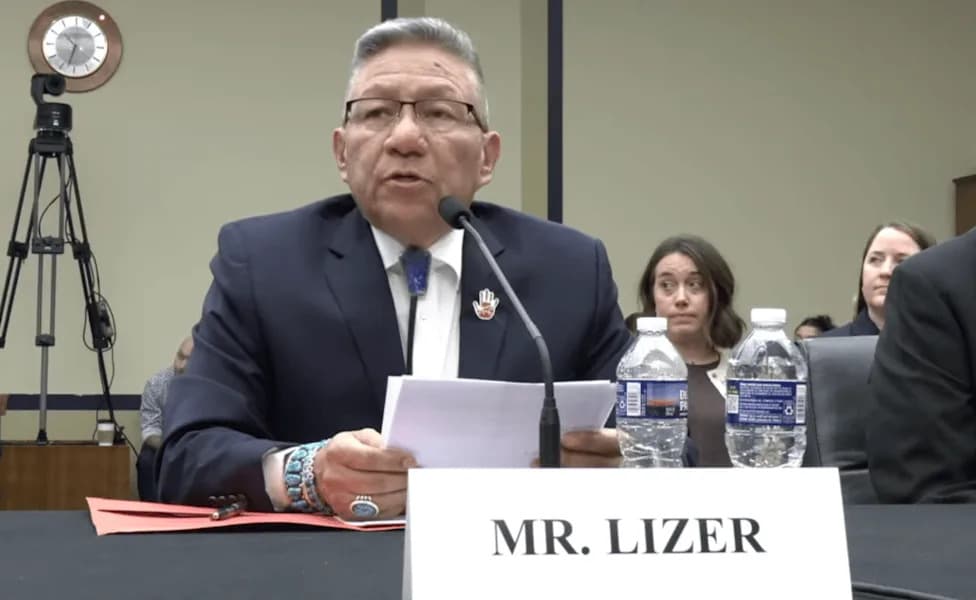
Investigation: A visit to the Skid Row Care Campus in Los Angeles found a walk-up counter distributing syringes, glass pipes and testing strips as part of California's Harm Reduction Initiative. The campus operates a "low-touch" model that provides meals, basic medical care and amenities while also supplying paraphernalia. Critics and local officials link the site to increased disorder, while proponents say harm reduction prevents overdoses and connects people to services.
Investigation: California-Funded Skid Row Campus Distributes Needles and Meth Pipes, Critics Say It Enables Drug Use
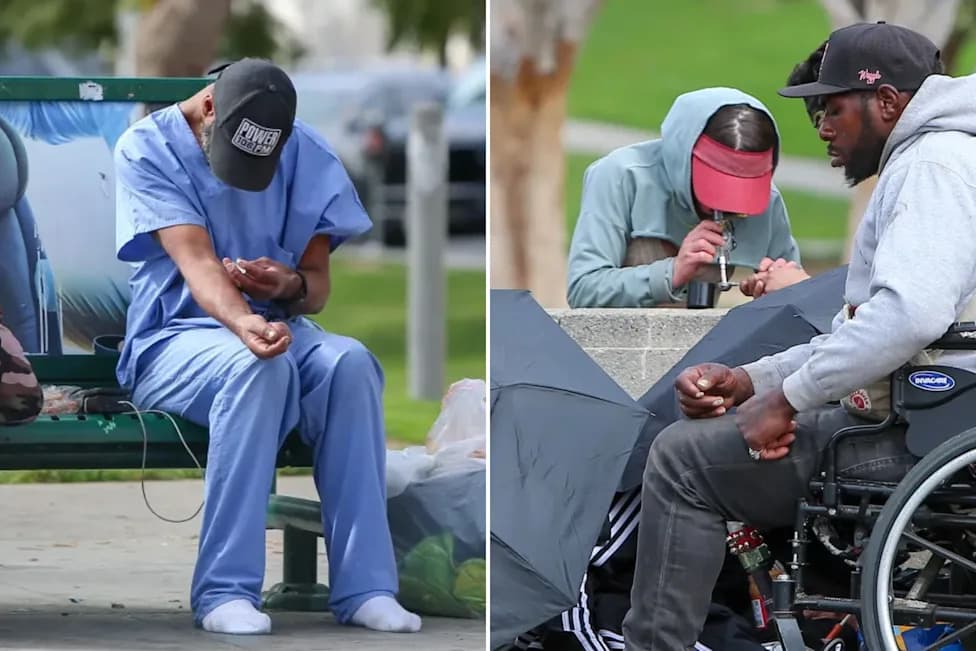
An image collage containing 2 images, Image 1 shows Two homeless men on a park bench in MacArthur Park, Los Angeles, one in blue scrubs preparing to inject something into his arm, Image 2 shows A man in a wheelchair and a person using a pipe in MacArthur Park, Los Angeles
We visited the Skid Row Care Campus in downtown Los Angeles after reports that California's Harm Reduction Initiative funds programs that supply syringes and glass pipes to people who inject or smoke fentanyl and methamphetamine. Our reporting found a low-touch, walk-up counter where staff distribute paraphernalia alongside a range of services designed for people experiencing homelessness.
Harm Reduction Policy and State Support
Governor Gavin Newsom launched the state's Harm Reduction Initiative, which funds "syringe services programs" intended for people who inject or smoke fentanyl and/or methamphetamines. The California Department of Public Health has endorsed distributing syringes, glass pipes and "containers for mixing injectable drugs" to people who use drugs. The governor has argued that harm-reduction measures can "increase the likelihood of people entering substance use treatment," though whether they effectively push people toward treatment remains disputed.
What We Observed at Skid Row Care Campus
The campus, enclosed by pastel-colored buildings and a metal gate, presented a bleak scene. People experiencing homelessness—some appearing to be actively using substances—were present in shared outdoor areas. When we entered from the street, no one checked our identification or searched us for weapons or drugs.
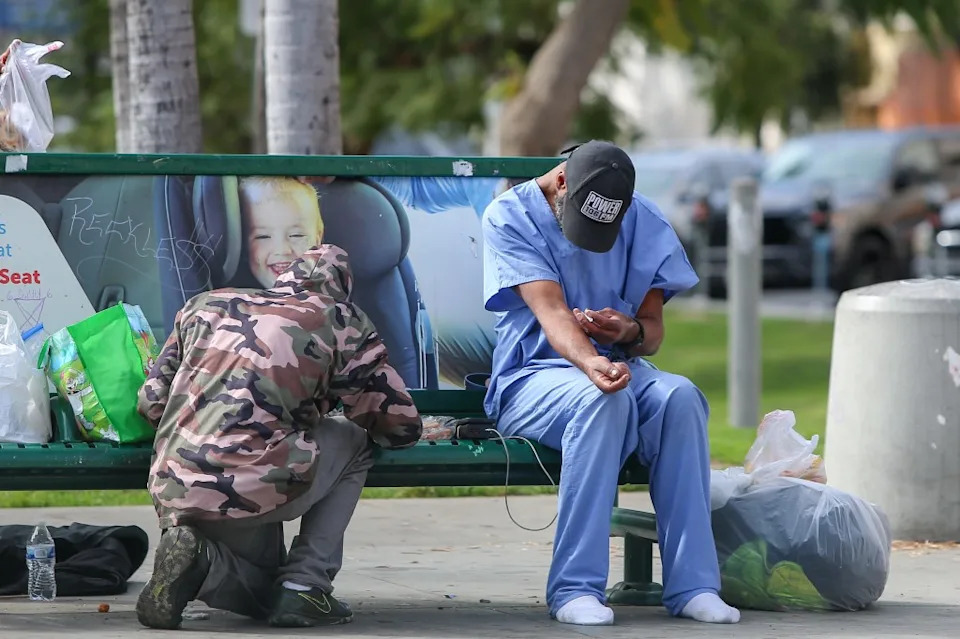
Rafael Fontoura for California Post
Inside, a walk-up counter was staffed in front of shelves stocked with harm-reduction supplies. Clients routinely approach the counter to receive free needles, glass pipes and drug-testing strips.
'What can I get you? We have oil burners, we have spray shooters, we have socks, we have petroleum jelly,' the attendant said.
Across several visits, we were able to obtain drug-testing strips, syringes and glass pipes. One worker told us that while on-site drug use is officially prohibited, patrons "wouldn't be bothered" if they used just outside the campus—unless they overdosed.
The campus follows a "low-touch" philosophy. In addition to meals, laundry and some medical care, services include dog daycare, lawn meditation and a "valet" cart parking service. Around midday we observed people queuing in the cafeteria for snacks while others sat in reclining chairs watching the film "127 Hours."
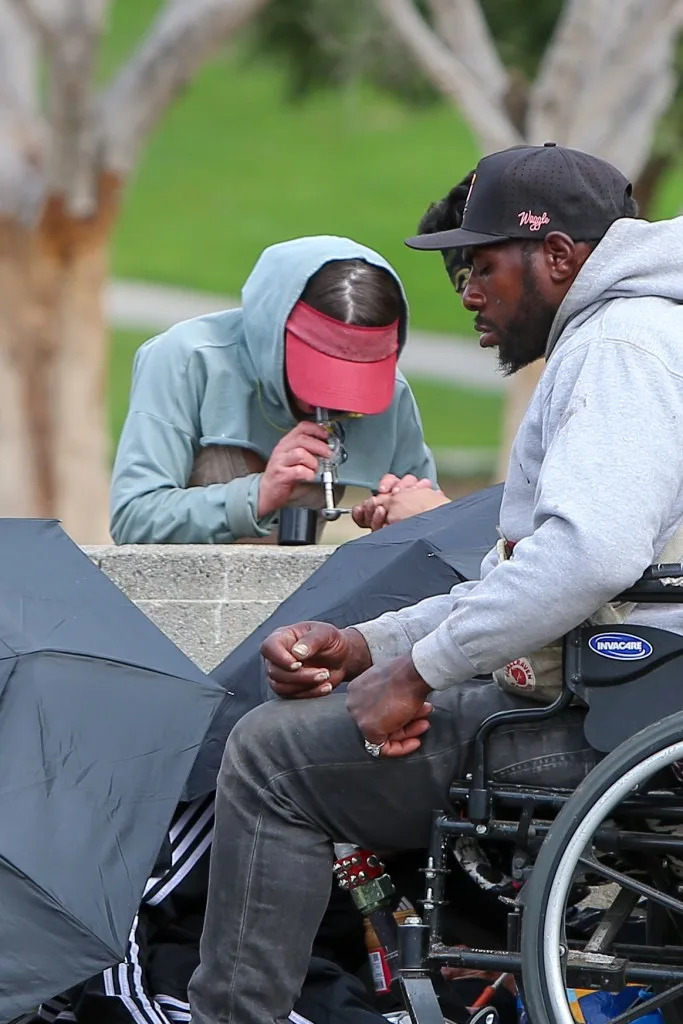
We stepped onto the courtyard connected to the street. No one stopped us, asked for identification or searched us for weapons or drugs. Rafael Fontoura for California Post
Funding, Operators and Local Impact
The Skid Row site reportedly opened in 2025 and is operated by a coalition of nonprofits committed to harm reduction; one partner has publicly criticized "the long-standing criminalization of substance use." According to public reporting, the campus is listed as a federally funded health center and draws roughly $26 million a year from local, state and federal sources. Partner organizations such as Homeless Health Care Los Angeles and Wesley Health Centers (JWCH Institute) have reported substantial revenue increases in recent years.
Neighborhood leaders and some law enforcement sources say the campus has contributed to disorder. Estela Lopez, executive director of the LA Downtown Industrial District, said: "You want a meth pipe? Here you go. You want needles? Here you go. Everything that you need in order to get high, stay high, is provided, no questions asked." An LAPD source told us officers logged about 1,200 radio calls for service and four murders in the area so far this year; a staff member from one nonprofit said drug dealers were "fighting over the guests."
The federal government has also scrutinized such programs: in 2024 President Donald Trump signed an executive order directing reviews of federally funded drug-paraphernalia distribution sites and criticizing efforts that, in his view, facilitate illegal drug use.

"You want a meth pipe? Here you go. You want needles? Here you go," she said, describing the campus' "harm reduction" approach. "Everything that you need in order to get high, stay high, is provided, no questions asked." Los Angeles Times via Getty Images
We sought comment from the named nonprofits, the Los Angeles mayor's office and the governor's office; most did not provide substantive responses. LA County said the campus "adheres to all local, state, and federal laws" and confirmed the site "is funded by L.A. Care Health Plan and Health Net." Health Net said the launch was supported by California's Housing and Homelessness Incentive Program with matching funds from the American Rescue Plan Act.
What This Means
Our observations at Skid Row align with critics who contend that some harm-reduction operations can enable continued drug use by providing paraphernalia and permissive enforcement. Proponents of harm reduction counter that these services reduce overdose deaths, prevent infectious-disease transmission and create points of contact that can lead people into treatment. The debate over whether such programs primarily enable use or primarily save lives and connect people to care remains unresolved—and is central to ongoing policy discussions in California and beyond.
By Christopher F. Rufo (Manhattan Institute) and Austen Hufford (City Journal)
Help us improve.